

As an experienced hair accessories manufacturer exporting globally, I've witnessed firsthand how classification decisions can dramatically impact import costs and market competitiveness. The distinction between hair ornaments and jewelry represents one of the most significant—and often misunderstood—customs classification challenges in our industry.
Hair ornaments typically classify under HTSUS 9615.19 with duties around 4-8%, while jewelry falls under 7117.90 with duties reaching 5-11%, plus potential additional tariffs depending on materials and country of origin.This classification difference can create substantial cost variations that directly affect your profit margins and pricing strategy, particularly for products that blur the lines between functional hair accessories and decorative jewelry.
The classification decision hinges on multiple factors including primary function, material composition, and marketing presentation. Understanding these nuances is crucial for optimizing your supply chain costs and maintaining competitive pricing in international markets.
How Does Customs Classification Affect Import Costs?
Customs classification serves as the foundation for determining import duties, taxes, and regulatory requirements. The distinction between hair ornaments and jewelry might seem subtle, but it carries significant financial implications that can impact your bottom line.
Proper classification directly determines duty rates, eligibility for trade preference programs, and compliance with various regulatory requirements, making accurate categorization essential for cost-effective international trade.Misclassification can lead to substantial financial penalties, shipment delays, and potential legal complications that disrupt your supply chain and damage business relationships.

What Are the Key HTS Codes for Hair Accessories?
The Harmonized Tariff Schedule provides specific classifications for different types of hair accessories. Hair ornaments primarily fall under HTSUS 9615.19 as "combs, hair-slides and the like; hairpins, curling pins, curling grips, hair curlers and the like." This category typically carries duty rates between 4-8%. Meanwhile, hair accessories containing precious metals or stones may classify under jewelry headings like 7113 or 7117, attracting higher duty rates and additional regulatory requirements. Understanding these distinctions helps optimize your product design and sourcing strategy to minimize import costs while maintaining product appeal.
How Do Material Choices Impact Classification?
Material composition significantly influences classification decisions and resulting duty rates. Products made primarily from base metals, plastics, or textiles typically maintain their classification as hair ornaments. However, when precious metals, genuine pearls, or precious stones constitute the primary value, customs authorities often reclassify them as jewelry. The substantial transformation test helps determine whether manufacturing processes have created a new article with a different character. For example, adding a simple crystal to a hair clip might not change classification, while incorporating valuable gemstones could trigger jewelry classification with corresponding higher duty rates.
What Distinguishes Hair Ornaments from Jewelry in Customs Terms?
The line between hair ornaments and jewelry often appears blurred, but customs authorities apply specific criteria to make classification determinations. Understanding these distinctions helps manufacturers design products that maintain favorable classification while meeting market demands.
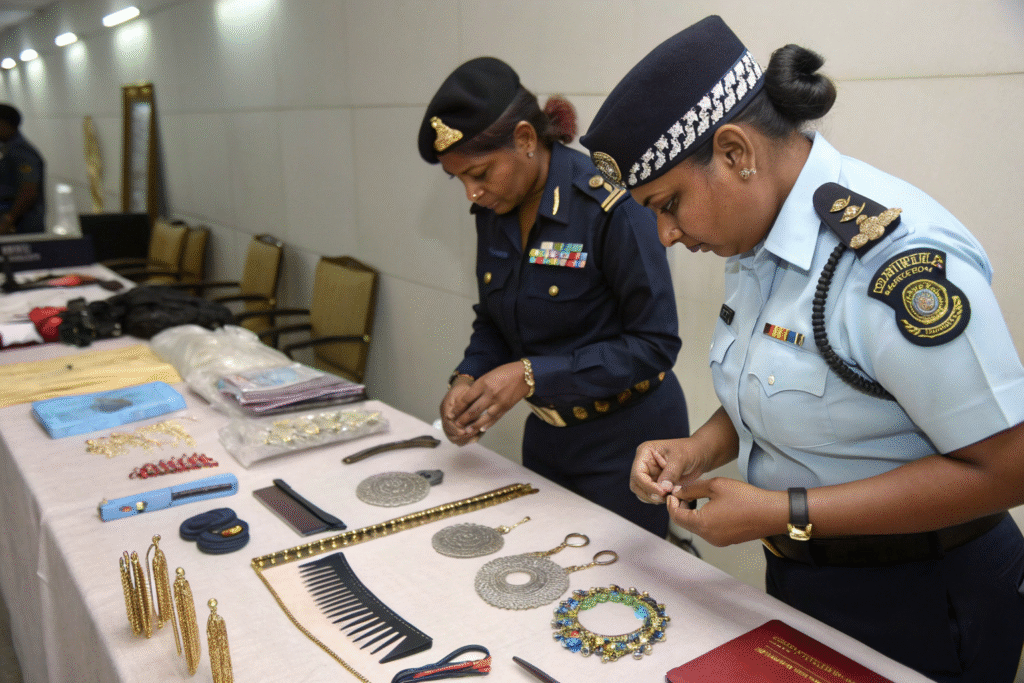
Customs authorities primarily distinguish hair ornaments from jewelry based on functional purpose, primary design intention, marketing presentation, and whether the item serves utilitarian hair-holding functions versus purely decorative purposes.This distinction proves crucial because it determines which tariff schedule applies and what duty rates your products will incur upon importation.
What Functional Characteristics Determine Classification?
Customs classification focuses heavily on functional characteristics and intended use. Hair ornaments must be designed and primarily used for holding, fastening, or arranging hair. Functional elements like clips, combs, or elastic components that provide secure hair attachment strongly support hair ornament classification. Products that merely decorate hair without serving functional purposes often classify as jewelry. The essential character test helps determine whether utilitarian or decorative aspects dominate the product's nature. For example, a decorative hairpin with a functional clasp would likely classify as a hair ornament, while a purely decorative hairpiece without functional elements might be considered jewelry.
How Does Marketing Affect Product Classification?
Product marketing and presentation significantly influence customs classification decisions. How you describe products in catalogs, websites, and marketing materials creates evidence of intended use. Describing items as "decorative hair clips" or "functional hair accessories" supports hair ornament classification, while terms like "hair jewelry" or "wearable art" might trigger jewelry classification. Customs authorities review product marketing materials as part of their classification analysis, considering how the average consumer would perceive and use the product. Consistent marketing that emphasizes functional hair management purposes helps maintain favorable classification as hair ornaments rather than jewelry.
How Can Manufacturers Optimize Classification for Cost Efficiency?
Strategic product design and classification planning can significantly reduce import costs while maintaining product appeal and functionality. Proactive classification management represents an often-overlooked opportunity for cost savings and competitive advantage.
Manufacturers can optimize classification through strategic material selection, functional design emphasis, careful marketing language, obtaining binding rulings, and maintaining detailed product documentation that supports desired classification outcomes.This proactive approach requires understanding both regulatory requirements and market preferences to develop products that satisfy both commercial and compliance objectives.

What Design Strategies Support Favorable Classification?
Strategic design choices can help maintain hair ornament classification while preserving aesthetic appeal. Incorporating functional elements like secure clasps, combs, or elastic components demonstrates practical hair management purposes. Using base metals, plastics, or costume materials rather than precious metals and genuine gemstones helps avoid jewelry classification. Maintaining a clear functional purpose in product design provides strong evidence for hair ornament classification. Even highly decorative items can maintain favorable classification if they incorporate functional elements and are marketed primarily for hair management rather than pure decoration.
What Documentation Supports Proper Classification?
Comprehensive documentation creates a strong foundation for defending your classification decisions during customs reviews. Maintain detailed product specifications highlighting functional features and materials. Preserve design process records showing intentional inclusion of hair management features. Keep marketing materials consistently describing functional uses. Consider obtaining binding rulings from customs authorities for complex or borderline products, providing legal certainty about classification. Detailed photographs showing products in use for hair management purposes can provide valuable supporting evidence during classification reviews or disputes.
What Are Common Classification Challenges and Solutions?
Even with careful planning, manufacturers often face classification challenges, particularly for innovative products that don't fit neatly into existing categories. Understanding common pitfalls and solutions helps navigate these complexities successfully.
Common classification challenges include borderline products, innovative designs without clear precedents, inconsistent rulings across different ports, and evolving interpretations by customs authorities across various markets.Successful navigation requires proactive strategies including advance rulings, consistent documentation, and flexible product planning that accommodates potential classification variations.

How to Handle Borderline Product Classification?
Borderline products that incorporate both functional and highly decorative elements present particular classification challenges. For these products, consider obtaining advance rulings from customs authorities before shipping. Develop flexible pricing strategies that accommodate potential classification variations. Maintain detailed product usage documentation showing how consumers primarily use the products for hair management. In some cases, minor design modifications can shift products clearly into the hair ornament category while maintaining market appeal. Professional customs brokerage assistance often proves valuable for navigating these complex classification decisions.
What About Regional Classification Variations?
Classification standards and interpretations can vary significantly between different countries and regions. The European Union, United States, and Asian markets may apply different criteria and duty rates to identical products. Develop market-specific classification strategies that account for regional variations in interpretation and duty structures. Consider regional product variations that optimize classification in specific markets while maintaining brand consistency. Work with local customs experts in each target market to understand specific requirements and avoid unexpected classification issues that could disrupt market entry plans.
Conclusion
Understanding the tariff implications between hair ornament and jewelry classification represents a critical competency for successful international trade in fashion accessories. The distinction, while sometimes subtle, carries significant cost implications that directly impact profitability and market competitiveness. By strategically designing products, maintaining consistent documentation, and proactively managing classification processes, manufacturers can optimize their international trade position while complying with regulatory requirements.
If you're facing classification challenges or seeking to optimize your hair accessories for international markets, we invite you to contact HairAcc for expert guidance. With our extensive experience navigating global customs requirements and optimizing product classification, we can help you develop strategies that minimize costs while maximizing market appeal. Reach out to our Business Director Elaine at elaine@fumaoclothing.com to discuss how we can support your international trade success.