
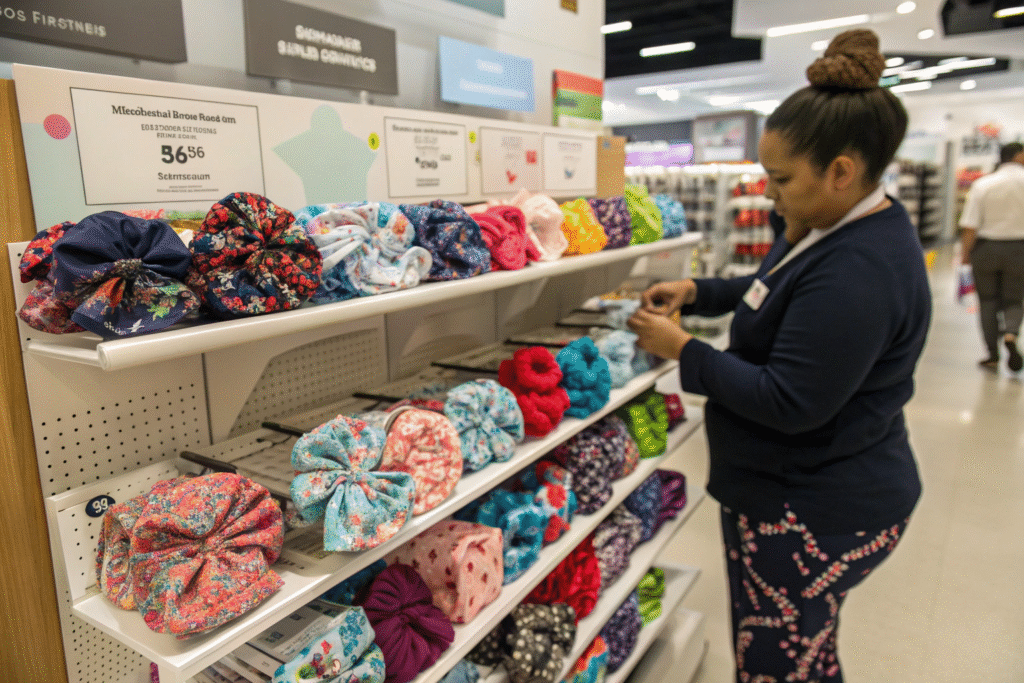
The scrunchie market has experienced a remarkable resurgence, creating both opportunities and inventory challenges for large retail partners. Consignment stocking represents a strategic partnership model that benefits both manufacturers and retailers by aligning inventory risk with sales performance.
Hair scrunchie factories can offer consignment stocking through inventory ownership retention, sales-based payment terms, automated replenishment systems, and shared risk management protocols.This approach allows retailers to maintain extensive scrunchie varieties without capital commitment while ensuring factories maintain production efficiency through predictable order patterns. The most successful consignment programs feature real-time inventory tracking, flexible return policies, and collaborative sales forecasting that optimize inventory turns while minimizing stockouts and overstock situations.
Implementing effective consignment programs requires sophisticated systems and trust-based partnerships between manufacturers and retailers. Let's examine the operational frameworks and strategic considerations that enable successful scrunchie consignment arrangements.
What Operational Systems Support Consignment Inventory Management?
Effective consignment programs require robust operational infrastructure that maintains inventory visibility, controls quality, and ensures timely replenishment. The foundation lies in integrated systems that bridge factory and retail environments.
Successful consignment operations combine physical inventory management with digital tracking and automated replenishment triggers that respond to actual sales data rather than forecast predictions.

How Do Inventory Tracking Systems Maintain Control?
RFID tagging enables real-time inventory visibility from factory to retail floor, providing accurate stock levels without manual counting. Barcode scanning systems at point-of-sale automatically trigger replenishment requests when inventory reaches predetermined thresholds. Cloud-based inventory platforms allow both factory and retail partners to monitor stock levels, sales velocity, and turnover metrics simultaneously. Automated alert systems notify both parties of slow-moving inventory, potential stockouts, or unusual sales patterns requiring attention.
What Quality Control Measures Protect Consigned Inventory?
Pre-shipment inspection protocols ensure only perfect products enter the consignment pipeline, reducing returns and customer dissatisfaction. Regular quality audits at retail locations identify potential issues with materials, construction, or packaging before they affect sales. Rotation systems ensure older inventory sells before newer shipments, maintaining product freshness and reducing obsolescence risk. Condition monitoring tracks products through the supply chain to identify handling or storage issues that could compromise quality.
What Financial Structures Make Consignment Mutually Beneficial?
Consignment success depends on financial arrangements that balance risk and reward for both factories and retail partners. The most effective structures align incentives while protecting both parties' financial interests.
Financial frameworks must account for payment timing, inventory ownership, risk allocation, and performance incentives that encourage collaborative success.

How Do Payment Terms Typically Work in Consignment?
Sales-triggered payments transfer ownership and initiate payment only when products scan at point-of-sale, eliminating retail capital commitment. Monthly settlement cycles provide regular payment based on actual sales while allowing for returns and adjustments. Minimum sales guarantees ensure factories receive some revenue even if products underperform expectations. Performance-based pricing offers better terms for retailers achieving higher turnover rates or sales volumes.
What Risk Management Approaches Protect Both Parties?
Inventory insurance protects against loss or damage while products are in retail possession but still owned by the factory. Return agreements define clear parameters for unsold inventory, including condition requirements and timing for returns. Markdown funding shares the cost of price reductions for slow-moving inventory between factory and retailer. Obsolescence clauses establish responsibility for products that become outdated due to fashion changes or seasonality.
How Can Technology Enable Efficient Consignment Operations?
Modern consignment programs leverage technology to reduce administrative burden, improve accuracy, and enhance partnership transparency. The right technological solutions make consignment scalable and profitable for both parties.
Integrated systems automate routine tasks while providing the data visibility needed for collaborative decision-making and performance optimization.

What Software Platforms Support Consignment Management?
Enterprise Resource Planning (ERP) systems with consignment modules track inventory ownership, sales triggers, and payment calculations automatically. Retail management platforms with vendor portal access allow factories to monitor their inventory performance across multiple retail locations. Data analytics tools identify sales patterns, seasonal trends, and optimal inventory levels based on historical performance. Electronic Data Interchange (EDI) systems automate purchase order generation, inventory reporting, and payment processing between systems.
How Does Automation Enhance Consignment Efficiency?
Automated replenishment algorithms calculate optimal order quantities based on sales velocity, lead times, and seasonal patterns. Payment processing automation triggers invoices and transfers based on predefined sales data without manual intervention. Performance reporting automatically generates insights on sell-through rates, inventory turns, and profitability metrics. Exception management flags discrepancies between shipped inventory, sales data, and payments for quick resolution.
What Partnership Frameworks Ensure Long-Term Success?
Consignment relationships require clear expectations, shared goals, and structured communication to thrive over the long term. The most successful partnerships function as strategic alliances rather than transactional arrangements.
Effective partnership frameworks establish mutual responsibilities, performance standards, and conflict resolution processes that maintain alignment as business conditions change.

How Should Performance Expectations Be Established?
Sales productivity metrics define minimum sales per square foot or inventory turn expectations that justify space allocation. Inventory service levels establish target in-stock rates and maximum out-of-stock situations to balance inventory investment with sales potential. Quality and presentation standards ensure products maintain their appeal and functionality throughout the consignment period. Marketing collaboration outlines shared responsibilities for product promotion, display, and customer education.
What Communication Protocols Support the Partnership?
Regular business reviews assess performance, address challenges, and identify opportunities for improvement on a quarterly or monthly basis. Issue resolution processes establish clear escalation paths and timeframes for resolving inventory, payment, or quality concerns. Planning meetings coordinate seasonal introductions, promotional calendars, and inventory adjustments in advance of execution. Performance reporting provides transparent, timely data that both parties can use for decision-making and planning.
How Can Factories Mitigate Consignment Risks?
While consignment offers significant sales opportunities, it also introduces unique risks that factories must manage proactively. Successful consignment programs implement comprehensive risk mitigation strategies.
Risk management balances opportunity with protection, ensuring that consignment relationships remain profitable despite the inherent uncertainties.

What Financial Safeguards Protect Factory Interests?
Credit limits establish maximum inventory exposure for each retail partner based on their financial stability and payment history. Diversification strategies spread consignment inventory across multiple retail partners and geographic regions to minimize concentrated risk. Reserve accounts hold back a percentage of payments to cover potential returns, damages, or disputes. Collateral requirements for new partners provide security during the initial relationship establishment period.
How Can Operational Risks Be Minimized?
Inventory reconciliation processes regularly verify physical inventory against system records to identify shrinkage or recording errors. Contractual protections clearly define ownership, responsibility, and liability throughout the consignment relationship. Audit rights allow factories to physically verify inventory and review sales records at retail locations. Performance triggers automatically adjust terms or inventory levels based on predefined performance thresholds.
Conclusion
Consignment stocking for hair scrunchies represents a sophisticated partnership model that, when implemented effectively, creates significant advantages for both factories and retail partners. Factories gain expanded distribution and sales data insights, while retailers access extensive product assortments without inventory investment.
The most successful consignment programs combine robust operational systems, fair financial structures, advanced technology, and strong partnership frameworks to create mutually beneficial relationships. By carefully managing risks while maximizing opportunities, scrunchie factories can leverage consignment to build durable competitive advantages in a crowded market.
If you're considering consignment arrangements for your hair scrunchie products, we've developed comprehensive consignment systems that balance opportunity with protection. Contact our Business Director, Elaine, at elaine@fumaoclothing.com to discuss your specific consignment needs and review our proven framework for successful retail partnerships. We've helped numerous scrunchie brands expand their retail presence through risk-managed consignment programs.