
Struggling to figure out which hair tie sizes will actually sell? It's a common headache for buyers. You invest in a huge wholesale order, only to find that half the sizes are gathering dust on your shelves while the most popular ones sell out in a week. This guesswork eats into your profits and leaves you with unwanted inventory. What if you could know exactly which sizes your customers are looking for before you even place your order?
The most popular wholesale hair tie sizes are the standard 2-inch (5 cm) diameter for regular elastic ties, the 1.5-inch (3.8 cm) diameter for thin elastics, and the 6-inch (15 cm) length for scrunchies. For spiral coil ties, the most common size is a 1.5-inch (3.8 cm) outer diameter. These sizes consistently dominate the market because they cater to the widest range of hair types and styles, from fine ponytails to thick, voluminous updos, ensuring high demand from end consumers.
As someone who has been in the hair accessories business for over two decades, I've seen trends come and go. But one thing remains constant: the importance of stocking the right sizes. Getting this wrong is a costly mistake. In this article, I'll walk you through the exact sizes that are flying off the shelves right now, why they're so popular, and how you can make the best purchasing decisions for your business. We'll look at everything from standard elastics to trendy scrunchies, so you can stock your inventory with confidence.
What are the standard elastic hair tie dimensions?
Are you trying to find that one-size-fits-all elastic that works for almost everyone? It's tough when you see so many options. You might worry that picking the wrong dimension will lead to customer complaints—either the tie is too tight for thick hair or too loose for fine hair. This uncertainty can make ordering in bulk feel like a gamble.
The industry-standard dimension for a regular elastic hair tie is approximately 2 inches (about 5 cm) in diameter and 2-4 mm in thickness. This size is considered the universal standard because it offers the perfect balance of stretch and hold for the average ponytail. It's versatile enough to secure most hair types without causing breakage or slipping, making it the top choice for wholesale buyers targeting a broad consumer market.
I remember a time early in my career when we produced a batch of slightly larger elastics, thinking "more stretch is better." It was a miscalculation. Our clients reported that while they were great for very thick hair, the average customer found them too loose. We learned a valuable lesson: the 2-inch standard exists for a reason. It's the result of decades of consumer feedback. Stick to this dimension for your core inventory, and you'll satisfy the vast majority of your customers. From there, you can explore other sizes for niche markets. As we'll see when discussing What is the best size for a scrunchie?, different products have their own "sweet spot."

What is the best size for thin hair?
Finding hair ties for thin or fine hair can be a real challenge for consumers. Have you ever tried to secure a sleek ponytail, only to have the hair tie slip out within minutes? This is a common pain point. For a retailer, offering a solution to this problem can create very loyal customers.
The best size for thin hair is a smaller, thinner elastic, typically 1.5 inches (about 3.8 cm) in diameter and around 1-2 mm in thickness. These are often called "ouchless" or fine hair elastics. Their smaller circumference allows them to wrap around a smaller volume of hair more times, creating a secure grip without the bulk. The reduced thickness also means less weight, which prevents the hair tie from sliding down. We at Shanghai Fumao Clothing have found that offering these alongside standard sizes significantly boosts sales, as it caters to a specific, and grateful, customer segment. For more options, you can explore various hair accessories for fine hair that are designed to hold without slipping.
What about thick or curly hair?
On the other end of the spectrum, customers with thick, curly, or textured hair have the opposite problem. Standard hair ties can be a nightmare, often snapping after just a few uses or causing painful tension headaches because they are too tight. They need something with superior strength and stretch.
For thick or curly hair, the ideal choice is a larger and more robust elastic. Look for ties that are 2.5 to 3 inches (6-7.5 cm) in diameter and 4-5 mm in thickness. These heavy-duty bands provide the necessary elasticity to wrap comfortably around a large volume of hair without breaking. Materials also matter here; seamless nylon or silicone spiral ties are excellent choices. These products are a must-have for any inclusive hair accessory line. To learn more about managing voluminous hair, check out these tips for thick hair which often recommend larger, more durable accessories.
What is the best size for a scrunchie?
Scrunchies have made a huge comeback, but their sizing can be confusing. Do you go for a mini scrunchie, a standard one, or an oversized "cloud" scrunchie? If you stock up on a size that isn't popular, you risk being left with inventory that feels dated. You need to know what customers are actually buying right now.
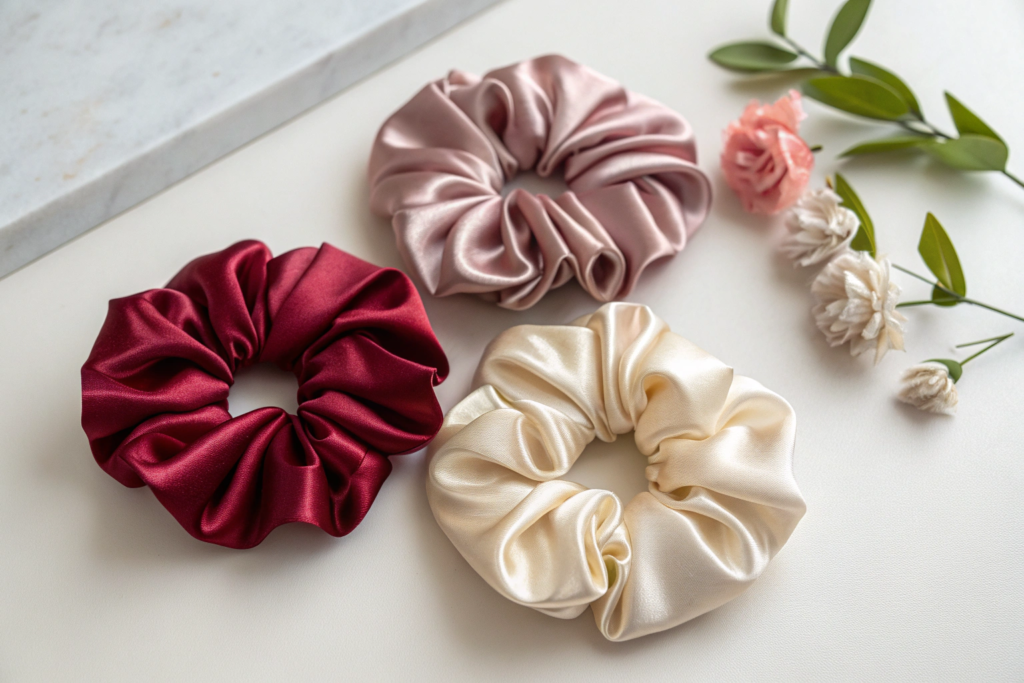
The best-selling and most versatile scrunchie size features an elastic that is approximately 6 inches (15 cm) in length before being sewn, with the fabric width being around 1.5 to 2 inches (3.8-5 cm). This creates a standard-sized scrunchie that is full enough to be stylish but not so large that it overwhelms the hair. It's the perfect middle ground that works for ponytails, buns, and wrist-wear, making it the go-to for wholesale.
When we first started producing scrunchies again at Shanghai Fumao Clothing, we experimented heavily with sizing. We found that while oversized scrunchies were a fun, niche trend, the 6-inch elastic model was our consistent bestseller. It's the size that retailers reorder the most because it has the broadest appeal. It provides that classic scrunchie look without being too extreme for daily wear. It's the reliable choice that your customers will reach for again and again. This size is a safe bet, but as we covered with What are the standard elastic hair tie dimensions?, offering a few variations can capture more of the market.
Are mini scrunchies popular?
You might wonder if smaller scrunchies are just for kids. It's a valid question, as you want to ensure your products appeal to your target demographic. Are adults actually buying and wearing mini scrunchies?
Yes, mini scrunchies are surprisingly popular with adults, especially for styling half-up looks, braids, or for those with finer hair. The ideal mini scrunchie uses a 4-5 inch (10-12.5 cm) elastic. This smaller size provides a subtle pop of color or texture without the bulk of a standard scrunchie. They are seen as a more delicate and understated accessory. Many brands have successfully marketed them as part of a "scrunchie stack" or set, which has proven to be a great upselling strategy. They are a fantastic addition to any wholesale catalog.
What about oversized scrunchies?
Oversized, or "jumbo," scrunchies are a bold fashion statement. Are they a fleeting trend or a style with staying power? As a buyer, you need to know if investing in this larger size will pay off in the long run.
Oversized scrunchies are definitely a trend-driven item, but they have shown remarkable staying power, particularly with younger demographics (Gen Z and Millennials). The best size for an oversized scrunchie uses an 8-10 inch (20-25 cm) elastic and a fabric width of 3 inches (7.5 cm) or more. They are designed to be a centerpiece accessory. While they may not be your top volume seller, they are essential for any brand that wants to be seen as trendy and current. Offering them in luxurious materials like organza or silk can position them as a premium, high-margin product.
How do you measure a spiral hair tie?
Spiral hair ties are a modern staple, but their sizing is not as straightforward as a simple elastic. Do you measure the diameter? The thickness of the coil? The number of rings? Ordering the wrong size can lead to products that are either too weak for thick hair or too bulky for thin hair, resulting in customer dissatisfaction.
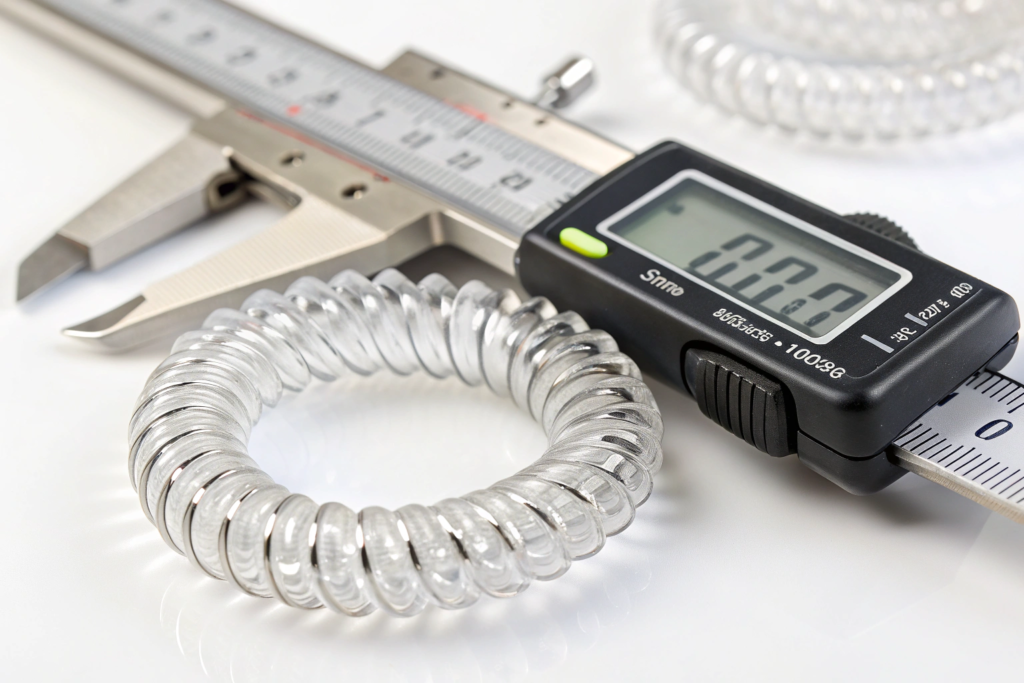
Spiral hair ties are measured by their outer diameter when coiled and at rest. The most popular and versatile wholesale size is the standard 1.5-inch (3.8 cm) outer diameter. This size provides a strong, crease-free hold for a wide variety of hair types, from a simple ponytail to a messy bun, making it the safest and most in-demand option for bulk orders.
I'll never forget our first bulk order of spiral ties. We focused only on the color, assuming the size was universal. The shipment arrived, and they were tiny—less than an inch in diameter. They were practically useless for the average adult. It was a costly learning experience that taught me the importance of specifying the outer diameter. The 1.5-inch standard is the workhorse of the spiral tie world. It's what consumers expect, and it delivers the performance they need. While other sizes exist, this is the one you can build your core collection around. It's a principle that applies to other accessories too; for example, understanding What is the best size for a scrunchie? is key to success in that category.
What is the small size for spiral ties?
Is there a market for smaller spiral hair ties, or are they just a novelty? You might see them sold in multi-packs and wonder if they have a practical use or if they are just filler.
The small size for spiral ties, often called "micro" or "slim" coils, typically has an outer diameter of about 1 inch (2.5 cm). These are not just for children. They are incredibly popular for securing the ends of braids, for creating intricate updos, or for people with very fine or thin hair. Their smaller size allows for a tighter, more discreet hold on smaller sections of hair. Offering these can be a great way to differentiate your brand. Many hairstyling tutorials for braided looks specifically call for these smaller coils, driving their demand.
Is there a large size for spiral ties?
What about customers who find the standard spiral ties just aren't enough for their thick, heavy hair? Is there a heavy-duty option available that can provide a secure hold without stretching out permanently after one use?
Yes, there is a large or "mega" size for spiral hair ties designed specifically for thick and voluminous hair. These typically have an outer diameter of 2 to 2.5 inches (5-6.3 cm). The larger coil provides a wider distribution of pressure, which helps to hold heavy hair up comfortably without causing tension or leaving a deep crease. These are a game-changer for many customers and a fantastic product to offer. They solve a real problem, and as any good business owner knows, solving problems is the key to building a loyal customer base.
What are the most popular hair tie materials?
You know the right sizes, but what about the material? Choosing the wrong material can lead to a product that snaps, snags, or loses its shape, damaging your brand's reputation. With so many options—nylon, cotton, silk, silicone—it's hard to know which ones will deliver the quality and performance your customers expect.
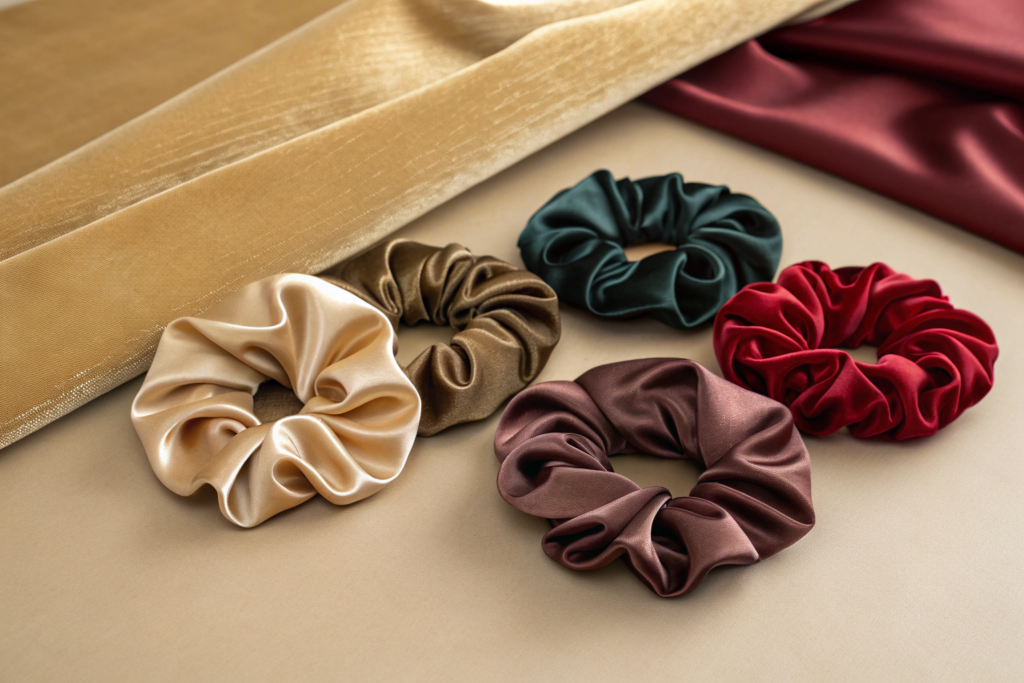
The most popular wholesale hair tie materials are seamless nylon for standard elastics, polyester satin for scrunchies, and thermoplastic polyurethane (TPU) for spiral coils. Nylon is favored for its superior stretch and durability, satin for its gentle, hair-friendly texture and luxe appearance, and TPU for its flexibility and crease-free hold. These materials represent the best combination of performance, cost-effectiveness, and consumer demand.
At our company, Shanghai Fumao Clothing, we have access to a vast network of material suppliers. This allows us to test everything. We've found that while cheaper options exist, they almost always lead to higher rates of customer complaints. For instance, elastics with metal clasps are notorious for snagging hair. By focusing on high-quality seamless nylon and premium satin, we ensure our clients receive products that reflect well on their brand. Your choice of material says as much about your brand as your design. It's a crucial decision that impacts everything from production to final sale. This is just as important as selecting the right dimensions, as we discussed in What are the standard elastic hair tie dimensions?.
Why is seamless nylon the best for elastics?
You see "seamless" advertised everywhere, but what does it actually mean, and is it worth the extra cost? Is the traditional elastic with a metal clamp or glue joint good enough?
Seamless nylon is considered the best for elastics because it is a single, continuous loop of material. This design completely eliminates the weak point—the metal clamp or glued seam—found in traditional hair ties. As a result, seamless ties are significantly stronger, less likely to snap, and guaranteed not to snag or pull on hair. This "ouchless" quality is a major selling point for consumers. While the production cost is slightly higher, the increase in customer satisfaction and the reduction in negative reviews make it a worthwhile investment for any serious retailer.
What's the difference between satin and silk?
Satin and silk scrunchies both look luxurious and are gentle on hair, but there's often a significant price difference. As a buyer, you need to understand what you're paying for and how to market each material to your customers.
The key difference is that silk is a natural fiber, while satin is a type of weave. Satin can be made from various materials, including polyester, nylon, or even silk itself. Most satin scrunchies on the market are made from polyester satin, which mimics the smooth, glossy surface of silk at a much lower cost. It is durable and vegan. True silk, a protein fiber produced by silkworms, is more breathable, hypoallergenic, and renowned for its hair benefits, but it is also more expensive and delicate. For wholesale, polyester satin offers the best balance of a premium feel and accessible pricing, making it the more popular choice.
Conclusion
Choosing the right hair tie sizes and materials doesn't have to be a guessing game. By focusing on the industry standards that have been proven to sell, you can build a strong, profitable core inventory. The universal 2-inch standard elastic, the versatile 6-inch scrunchie, and the 1.5-inch spiral coil are your safest bets. From there, you can strategically expand your offerings with sizes for thin and thick hair, and trendy options like mini or oversized scrunchies, to capture the entire market. Quality materials like seamless nylon and polyester satin will ensure your products are not only stylish but also durable and gentle on the hair, building trust and loyalty with your customers.
If you're ready to build a high-quality, in-demand hair accessory line, our team is here to help. We can guide you through the entire process, from selecting the perfect sizes and materials to creating custom designs. Contact our Business Director, Elaine, at elaine@fumaoclothing.com to get started on your next wholesale order.