
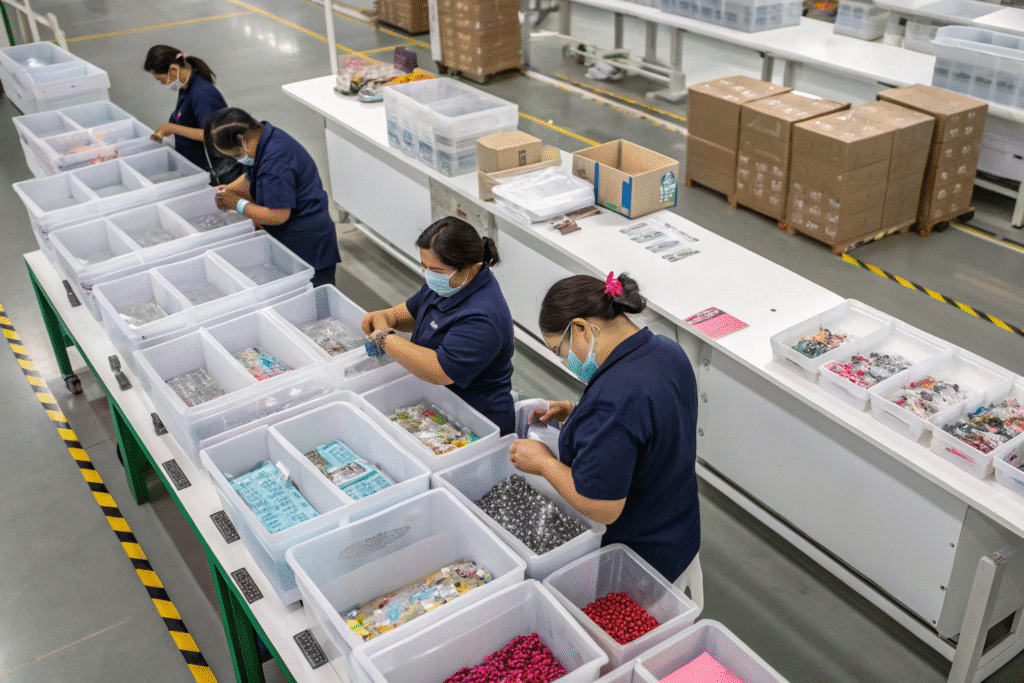
The unboxing experience starts long before a customer places an order. It begins on the factory floor, where the packaging process is a critical bridge between production and presentation. For wholesalers and brands, understanding this step is not about the box itself, but about protecting your investment, upholding your brand's reputation, and ensuring products arrive store-ready. In today's market, packaging must be efficient for shipping, attractive for retail, and increasingly mindful of environmental impact.
At shanghaifumaoclothing, we treat packaging as the final, essential stage of quality control. A broken clip or a scratched barrette upon arrival means an immediate return and a lost customer, regardless of how beautiful the product is. For our global clients, especially those in the US and EU, packaging is also a key tool in managing logistics costs and meeting specific retail compliance standards. Let's explore the systems and strategies that define professional hair accessory packaging.
What Are the Standard Bulk Packaging Methods for Shipping?
Before individual retail packaging, accessories must be safely consolidated for international transit. The primary goal here is maximum protection with minimal bulk to control shipping costs—a major concern for buyers like Ron. Factories use a layered approach to prevent damage, tangling, and moisture exposure.
How Are Hair Clips and Barrettes Packed for Export?
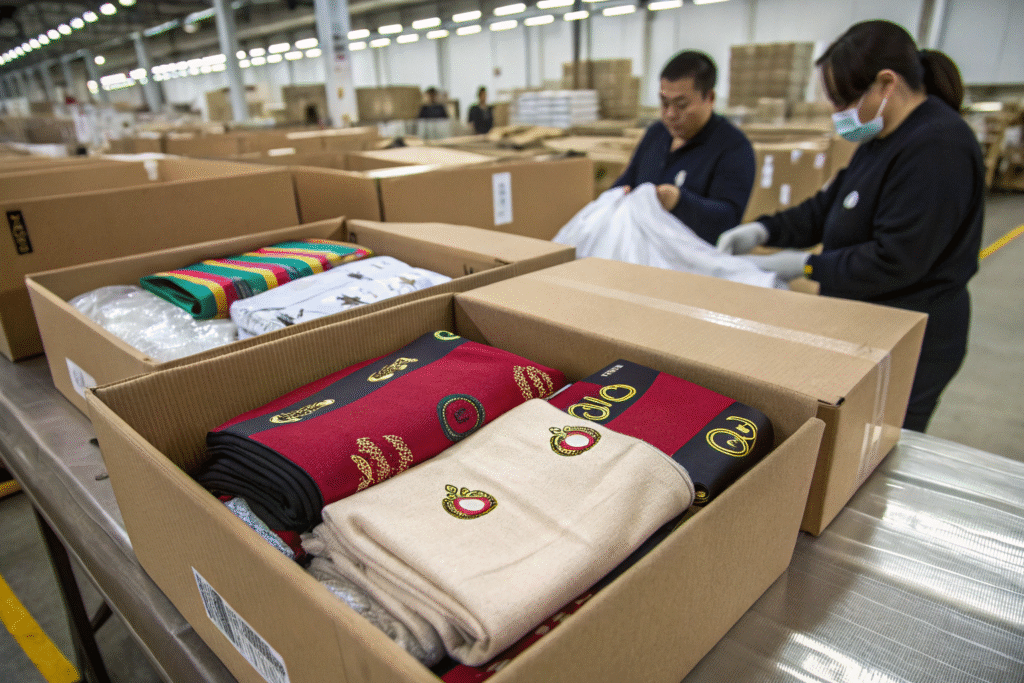
For bulk orders of items like hair clips, barrettes, and claw clips, the most common and cost-effective method is polybagging. Small items are grouped by style and color, often in quantities of 12, 24, or 48, and sealed inside clear polyethylene bags. This prevents pieces from scratching each other and keeps sets together. For extra protection, especially for delicate finishes like matte satin or pearl details, each item may first be wrapped in a thin tissue paper or a small bubble wrap sleeve before being bagged. These grouped polybags are then neatly stacked and packed into double-walled corrugated cartons. The cartons are lined with plastic sheets or moisture-resistant paper to guard against humidity during ocean freight, a crucial step for maintaining product quality. For high-volume orders, this method optimizes space and weight, directly impacting the final logistics cost.
How Are Delicate Items Like Headbands and Scarves Protected?
Larger or more delicate items like wide headbands, scrunchies, and silk scarves require different handling. Headbands are often individually rolled or laid flat and wrapped in tissue to maintain their shape. They may then be placed in larger polybags or stacked in partitioned boxes. Scarves are typically folded to a standard size, wrapped in tissue, and may be sealed with a sticker before being bagged. For very high-end items, factories might use fluted cardboard trays inside the master carton to prevent any crushing. The key is to eliminate movement inside the carton. Professional factories conduct drop tests on their packed cartons to ensure the internal packing method can withstand the rigors of the global supply chain.
What Retail Packaging Options Do Factories Offer?
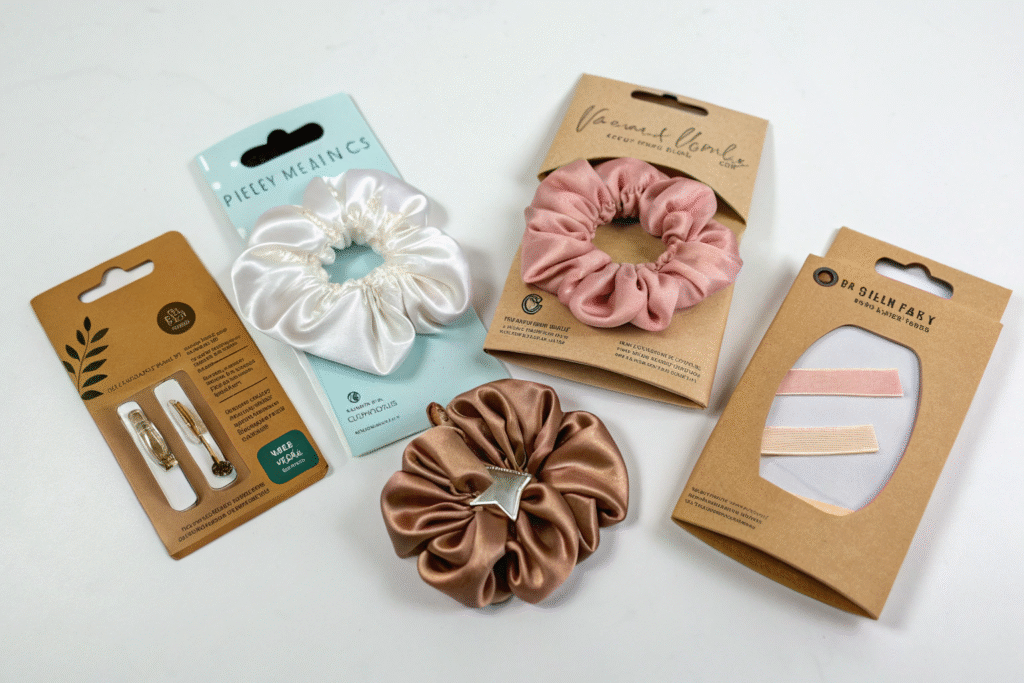
Once the product survives the journey, it needs to shine on the shelf. Retail packaging is the brand's handshake with the end consumer. Factories typically offer several tiered options, from basic to premium, to align with different brand identities and price points.
| Packaging Type | Typical Use Case | Key Advantages | Considerations |
|---|---|---|---|
| Header Cards & Blister Packs | Low to mid-range clips, bobby pins, small bows. | Excellent visibility, tamper-proof, easy to hang on pegs. | Plastic use; can be less premium. |
| Flat Polybags with Header | Scrunchies, hair ties, bands, simple clips. | Very cost-effective, lightweight, good for multi-packs. | Minimal protection, basic look. |
| Rigid Gift Boxes | Premium clips, sets, bridal accessories (veils, hair chains). | High perceived value, superior protection, gift-ready. | Higher unit cost, more shipping weight. |
| Sustainable Options | All product types, for eco-conscious brands. | Appeals to modern values, can use recycled/recyclable materials. | Often higher cost, material sourcing varies. |
How Does Blister and Card Packaging Work?
Blister packaging is a staple for small, discrete items. The process involves heat-sealing a molded plastic "blister" onto a printed cardboard backing (the header card). This method is highly automated and efficient. For a factory, producing this requires designing the header card (which includes your logo, branding, and barcode) and creating a custom mold for the plastic blister to hold the specific clip shape securely. The main benefit is 100% product visibility and security—the customer can see but cannot touch the product until purchase. It's ideal for mass-market retail environments. The challenge for brands is balancing attractive design with the practical costs of custom tooling and the environmental perception of plastic.
What Makes a Good Gift Box for Hair Accessories?
For luxury or delicate items, a rigid box is the gold standard. A well-made box serves two purposes: exceptional protection and an unboxing experience that elevates the brand. The process starts with high-quality custom printing on sturdy paperboard. Inside, the accessory is secured with precision-cut inserts made from foam, cardboard, or velvet. A satin clip might be nestled in a foam slot, while a hair chain might be laid on a velvet pad and secured with a pin. Some boxes include a clear acetate window to maintain visibility. Partnering with a manufacturer like shanghaifumaoclothing that controls this process in-house means you can ensure every element—from the box's embossed logo to the color of the interior insert—matches your brand identity perfectly, creating a cohesive and memorable brand presentation.
How Is Quality Control Integrated into the Packaging Line?
Packaging is the last line of defense before a product leaves the factory. A rigorous Quality Control (QC) protocol integrated into the packaging line is non-negotiable for preventing costly returns and protecting brand equity.
What Are the Final Checks Before Sealing the Package?
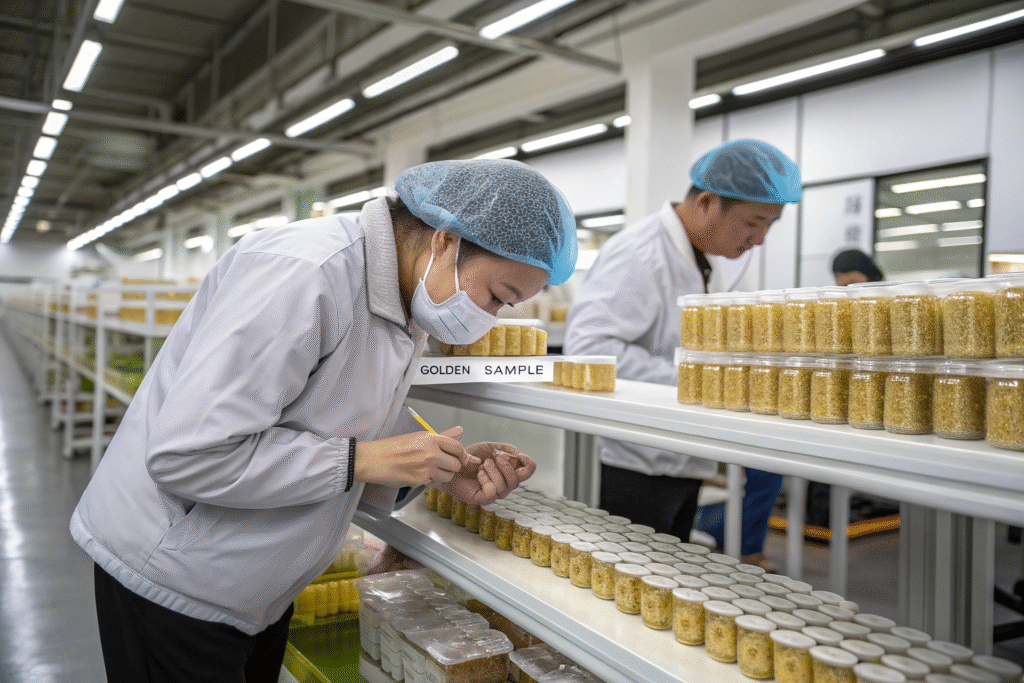
The packaging QC check is a multi-point inspection. First, workers or automated systems verify that the correct product is being paired with the correct packaging—avoiding a style/color mix-up. They then perform a final visual inspection of the accessory itself, looking for any manufacturing defects (scratches, glue stains, misaligned parts) that may have been missed earlier. Next, they check the packaging components: Is the print quality good? Is the blister seal complete with no gaps? Is the box insert properly fitted? For branded orders, this stage also verifies that all private label elements (logos, tags, labels) are correctly applied. Finally, the functionality is tested; for example, ensuring a clip opens and closes smoothly even in its package. This meticulous final review is crucial for quality assurance.
How Do Factories Ensure Consistency in Large Orders?
For bulk shipments, consistency across thousands of units is key. Professional factories use standardized packing procedures and clear work instructions for each order. QC supervisors conduct AQL inspections on packaged goods. They randomly pull a statistical sample from a finished batch (e.g., checking 200 pieces from an order of 10,000) against defined acceptance criteria for both product and packaging. This systematic approach, rather than checking every single piece, provides a reliable measure of the overall batch quality. Furthermore, a sample of the fully packaged product is often kept for a period as a "golden sample" for future reference, ensuring that every subsequent order for that SKU matches the original standard. This systemic approach to production consistency builds long-term trust with buyers.
Conclusion
Packaging in a hair accessories factory is a sophisticated operation that blends logistics, marketing, and quality management. From the polybags that ensure safe ocean transit to the luxurious gift box that creates a moment of joy for the end customer, each step is designed to add value and mitigate risk for the buyer.
For wholesalers and brands, collaborating with a factory that has deep expertise in this area—like shanghaifumaoclothing—is a strategic advantage. It means your products are not only well-made but also presented and protected in a way that reflects your brand's standards and meets the practical demands of global retail.
Ready to discuss packaging solutions for your next hair accessory order? Our team can guide you from material selection to custom design. For a detailed consultation, please contact our Business Director, Elaine, at elaine@fumaoclothing.com.