
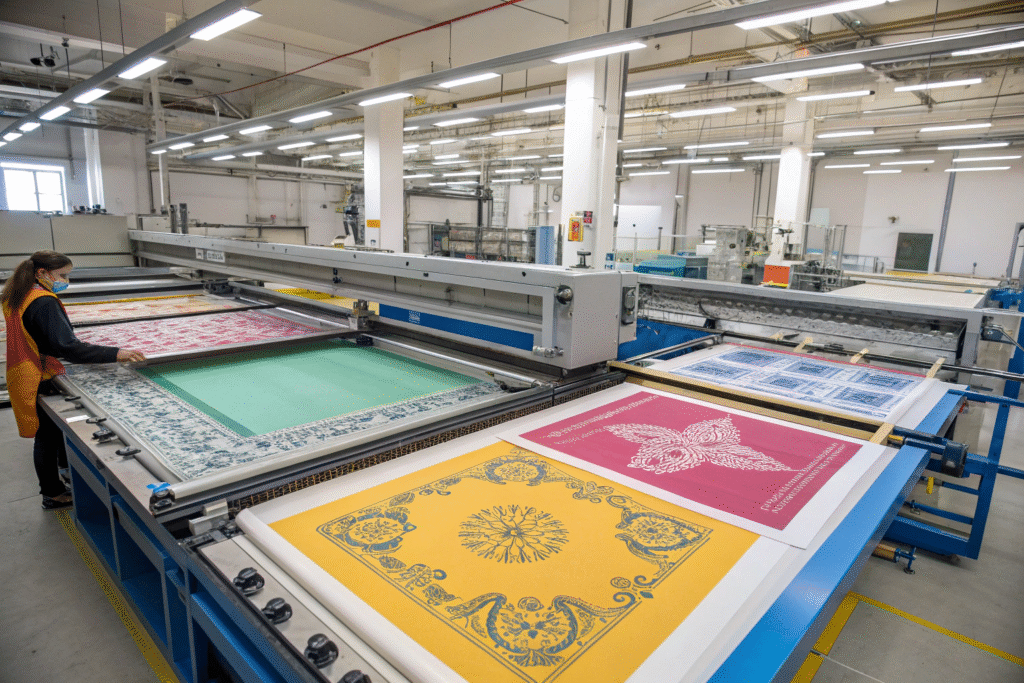
Printed bandanas face constant challenges from washing, sunlight, and daily wear that can cause colors to fade and designs to deteriorate. For suppliers and manufacturers, maintaining vibrant, long-lasting prints is crucial for customer satisfaction and brand reputation. The fading problem affects everyone from fashion retailers to promotional product companies seeking durable custom bandanas.
Suppliers ensure fade resistance in printed bandanas through advanced dye selection, specialized printing techniques, fabric pre-treatment processes, and protective finishing treatments.These methods work together to create bandanas that maintain their color intensity and design clarity through multiple washes and extended sun exposure. The most effective approaches combine chemical solutions with mechanical processes to lock colors into fabrics at a molecular level.
Understanding these fade resistance technologies helps buyers make informed decisions and suppliers develop better products that stand up to real-world use conditions.
What Fabric Pre-Treatment Methods Enhance Color Fastness?
The foundation of fade resistance begins before any ink touches the fabric. Proper pre-treatment prepares the bandana material to receive and retain color more effectively, creating a stable base for long-lasting prints.
Fabric scouring and bleaching represent essential first steps in preparing bandanas for printing. These processes remove natural oils, waxes, and impurities that could interfere with dye absorption. For cotton bandanas—the most common type—this preparation ensures uniform fiber reactivity, allowing dyes to penetrate deeply rather than merely coating the surface. The quality of this initial cleaning directly impacts how well colors will bond with the fabric fibers.
How Does Mercerization Improve Cotton Bandana Durability?
Mercerization is a crucial chemical treatment for cotton bandanas that significantly enhances both color retention and fabric strength. This process involves treating cotton fibers with sodium hydroxide (caustic soda) under tension, which causes the fibers to swell and straighten. The transformation creates several benefits for fade resistance:
- Increased Dye Affinity: The treated fibers develop more surface area for dye molecules to attach
- Enhanced Luster: The fiber smoothing creates better light reflection for brighter colors
- Improved Strength: Treated cotton withstands washing abrasion better than untreated fabric
- Reduced Shrinkage: Stabilized fibers maintain print integrity through multiple washes
Bandanas made from mercerized cotton typically demonstrate 20-30% better color retention after repeated laundering compared to non-mercerized alternatives. This process represents an essential investment for suppliers targeting the premium bandana market.
What Role Do Specialized Primers and Pre-Coatings Play?
Advanced pre-treatment solutions involve applying specialized primers and coatings that create optimal surfaces for printing. These chemical preparations serve multiple functions in enhancing fade resistance:
- Cationic Pre-treatments: Positively charged compounds that attract negatively charged dye molecules
- Polymer Binders: Create a receptive surface layer that holds pigments securely
- UV Absorbers: Built-in protection that prevents sunlight degradation
- pH Adjusters: Optimize fabric chemistry for specific dye types
These pre-treatments are particularly crucial for digital printing methods, where the ink sits more on the fabric surface rather than penetrating deeply. The right pre-treatment can double the wash-fastness of digitally printed bandanas, making them competitive with traditional printing methods for durability.
Which Printing Techniques Deliver the Best Fade Resistance?
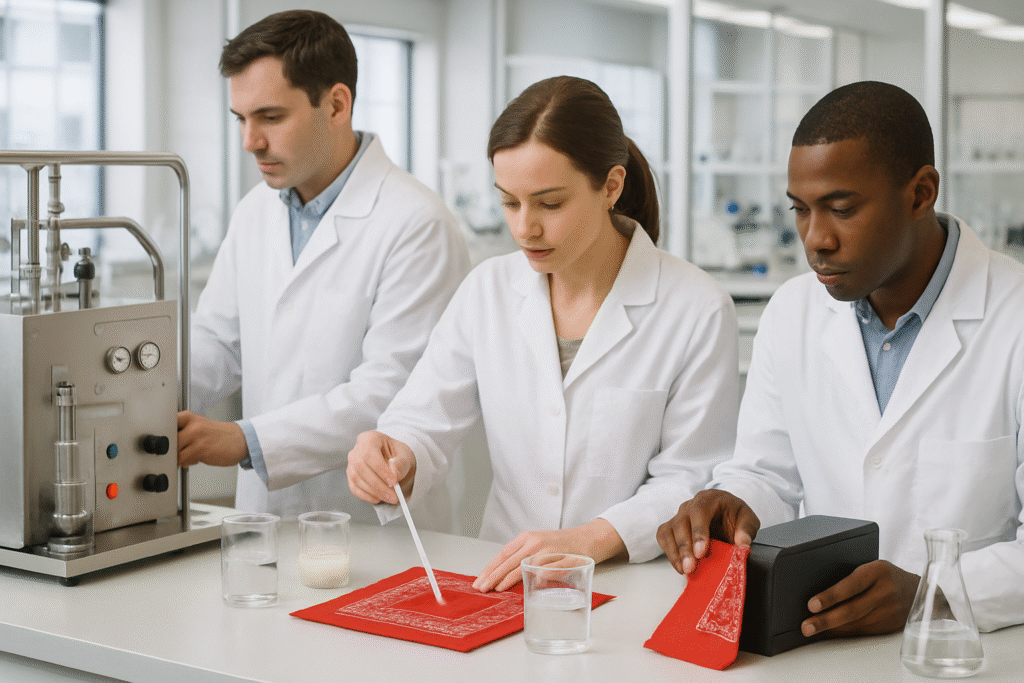
The printing method itself plays a decisive role in determining how well bandana colors withstand fading. Different techniques offer varying balances of color vibrancy, detail resolution, and long-term durability, with some methods inherently better suited for high-fade-resistance applications.
Traditional screen printing remains a popular choice for fade-resistant bandanas, particularly for designs with limited colors. The thick ink layers and deep penetration achievable with screen printing create a robust color barrier that resists washing and sunlight. However, advancements in digital printing have closed the gap significantly, with new technologies offering comparable durability with greater design flexibility.
How Does Pigment Printing Compare to Reactive Dye Printing?
The choice between pigment and reactive dye printing represents a fundamental decision in bandana production, with each method offering distinct fade resistance characteristics:
Pigment Printing Advantages:
- Sits on fabric surface with binder adhesion
- Excellent wash-fastness when properly cured
- Good color consistency across fabric types
- Lower water consumption in production
Reactive Dye Printing Advantages:
- Chemical bonding with cellulose fibers
- Superior color penetration and integration
- Softer hand feel after washing
- Brilliant color vibrancy initially
For maximum fade resistance in cotton bandanas, reactive dyeing generally provides better long-term performance because the dye molecules form covalent bonds with the fabric fibers. However, pigment printing has improved dramatically and now offers competitive fade resistance with the advantage of working on blended fabrics.
What Advanced Curing Processes Lock in Colors?
Proper curing is perhaps the most critical factor in achieving fade resistance, regardless of the printing method used. The curing process transforms printed designs from vulnerable surface applications to permanent, integrated elements of the fabric.
Modern curing technologies include:
- Heat Setting: Infrared ovens that bond pigments to fibers at specific temperatures
- Steam Fixation: Moist heat that activates reactive dyes for fiber bonding
- UV Curing: Instant polymerization of special inks using ultraviolet light
- Thermosol Process: High-temperature curing that drives dyes into synthetic fibers
The precision control of temperature, time, and humidity during curing directly determines color fastness. Under-cured prints wash out quickly, while over-cured prints can become brittle and crack. Sophisticated suppliers use computerized curing systems that maintain exact parameters throughout the process.
What Chemical Technologies Protect Against UV Degradation?
Sunlight represents one of the most significant threats to bandana color retention, with ultraviolet radiation breaking down dye molecules through photochemical reactions. Suppliers employ various chemical strategies to combat UV degradation and extend the vibrant life of printed designs.
UV absorbers and light stabilizers form the first line of defense against sunlight fading. These specialized compounds work by absorbing harmful UV radiation before it can damage dye molecules, then converting this energy into harmless heat. The most effective systems combine multiple stabilizer types that work synergistically to provide comprehensive protection.
How Do HALS Compounds Prevent Color Fading?
Hindered Amine Light Stabilizers (HALS) represent advanced technology in UV protection for printed textiles. Unlike UV absorbers that block radiation, HALS compounds work by neutralizing the free radicals that form when UV light interacts with dyes and fabrics. This preventive approach offers several advantages:
- Long-Term Protection: HALS regenerate rather than deplete over time
- Deep Fabric Penetration: Protect both surface and embedded dyes
- Temperature Stability: Remain effective through washing and drying
- Colorless Application: Don't alter bandana appearance
Bandanas treated with HALS technology can maintain color intensity 3-5 times longer than untreated equivalents when exposed to direct sunlight. This makes them particularly valuable for outdoor and automotive bandanas that face constant UV exposure.
What Role Do Ceramic and Mineral Additives Play?
Inorganic additives provide physical protection against UV degradation through light reflection and scattering. These microscopic particles, typically derived from ceramics or minerals, create a protective barrier that reduces UV penetration into the fabric.
Common protective additives include:
- Zinc Oxide Nanoparticles: Broad-spectrum UV absorption
- Titanium Dioxide: Reflects and scatters UV radiation
- Ceramic Microspheres: Creates light-diffusing surfaces
- Silica Coatings: Adds protective layer without affecting breathability
These inorganic solutions offer permanent protection that doesn't degrade over time, unlike some organic UV absorbers. They're particularly effective when applied as part of a fabric finish or incorporated directly into printing inks for dual-purpose functionality.

How Do Testing Protocols Validate Fade Resistance?
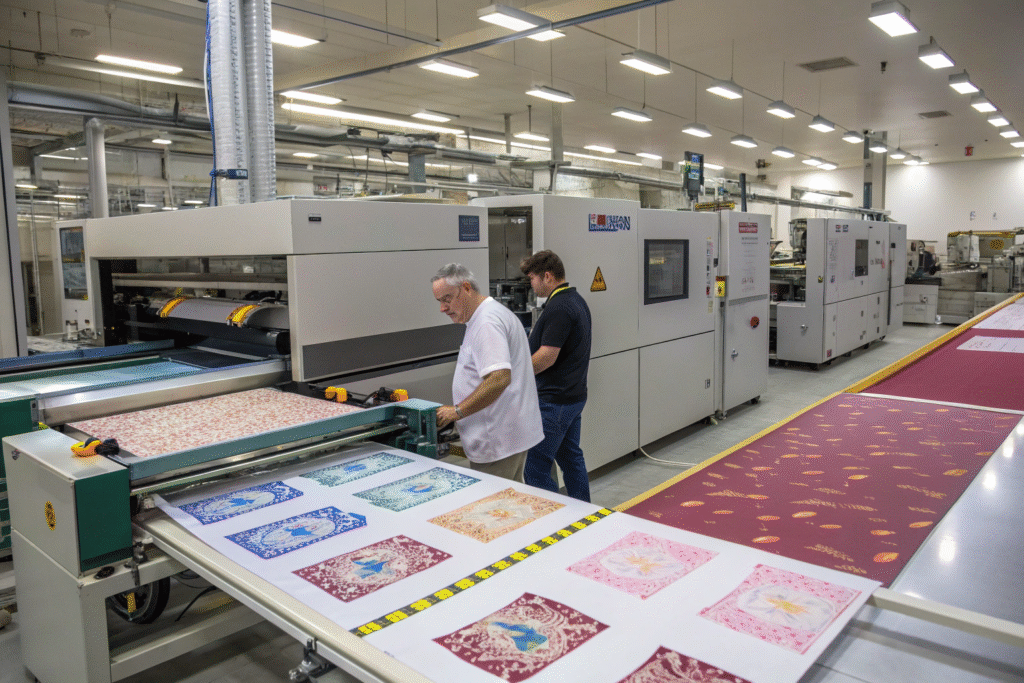
Rigorous testing provides the data that separates marketing claims from genuine performance in fade resistance. Reputable suppliers employ comprehensive testing protocols that simulate years of use in a matter of weeks, ensuring bandanas meet specific durability standards before reaching customers.
Standardized testing follows established industry methods that create reproducible, comparable results. These tests evaluate bandana performance under various stress conditions including washing, light exposure, abrasion, and chemical contact. The most thorough suppliers conduct both accelerated laboratory testing and real-world trials to validate performance claims.
What Laboratory Methods Predict Long-Term Color Performance?
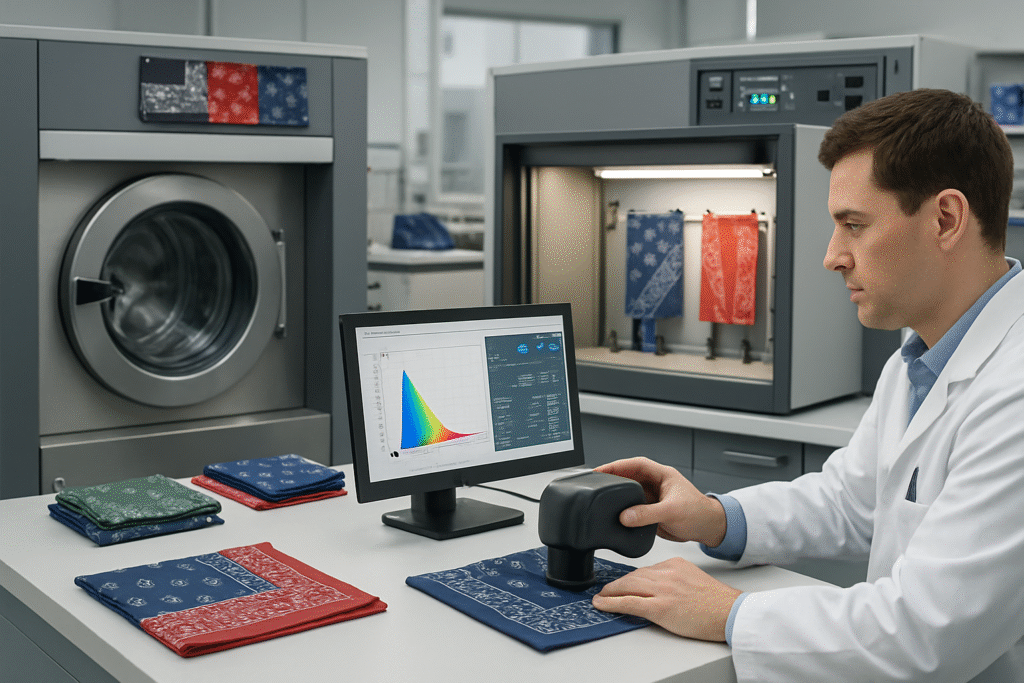
Laboratory testing creates controlled, accelerated conditions that predict how bandana colors will perform over time. Standardized tests include:
| Test Method | Purpose | Standards |
|---|---|---|
| Wash Fastness | Color retention after laundering | AATCC 61, ISO 105-C06 |
| Light Fastness | Resistance to sunlight fading | AATCC 16, ISO 105-B02 |
| Crocking Resistance | Color transfer during rubbing | AATCC 8, ISO 105-X12 |
| Perspiration Fastness | Color stability against sweat | AATCC 15, ISO 105-E04 |
These tests use standardized scales (typically 1-5, with 5 being excellent) to rate color change and transfer. Premium bandanas should achieve ratings of 4-5 for wash fastness and 4+ for light fastness to ensure satisfactory long-term performance.
How Do Real-World Simulations Complement Laboratory Data?
While laboratory tests provide essential baseline data, real-world simulations offer practical validation of fade resistance. These tests expose bandanas to actual use conditions that better represent how customers will use the products:
- Extended Outdoor Exposure: Natural sunlight testing over months
- Multiple Home Launderings: Using consumer detergents and machines
- Abrasion Testing: Simulating pocket carry and friction wear
- Environmental Testing: Varying temperature and humidity conditions
The correlation between accelerated laboratory tests and real-world performance allows suppliers to make accurate durability claims while continuously improving their processes based on practical feedback.
What Manufacturing Innovations Are Improving Fade Resistance?
Continuous innovation in bandana manufacturing brings new solutions to the challenge of color fading. Suppliers are developing advanced materials, processes, and technologies that push the boundaries of what's possible in print durability and color retention.
Nanotechnology represents one of the most promising frontiers in fade resistance. Nano-scale particles and treatments offer unprecedented control over how colors interact with fabrics and environmental factors. These microscopic solutions provide protection at the fundamental level where fading occurs, creating more permanent color solutions.
How Are Micro-encapsulation Technologies Enhancing Durability?
Micro-encapsulation creates tiny protective containers around dye molecules or protective compounds that release under specific conditions. This technology offers several applications for fade resistance:
- Time-Release UV Protection: Capsules that break open with UV exposure
- Abrasion Resistance: Protective shells around surface pigments
- Heat-Activated Bonding: Chemicals that strengthen during ironing or drying
- Moisture-Triggered Sealing: Compounds that react during washing to seal colors
The precision offered by micro-encapsulation allows suppliers to build multiple protective mechanisms into a single bandana, creating layered defense systems against different types of fading threats.
What Role Does Digital Precision Play in Color Consistency?
Advanced digital printing systems contribute to fade resistance through unprecedented control over ink application. Modern printing technologies offer:
- Ink Volume Control: Precise droplet placement prevents over-saturation
- Color Management: Consistent reproduction reduces correction needs
- Automated Monitoring: Real-time detection of printing issues
- Data-Driven Optimization: Machine learning improves processes continuously
This digital precision ensures that each bandana receives the optimal amount of ink for both visual impact and durability. Over-inking can lead to cracking and premature fading, while under-inking results in weak colors that degrade quickly. The balance achieved through digital control significantly enhances long-term color performance.

Conclusion
Fade resistance in printed bandanas results from a comprehensive approach that combines advanced materials, precise manufacturing processes, chemical innovations, and rigorous testing. The most successful suppliers address color retention at every stage—from fabric selection and pre-treatment through printing, curing, and finishing—creating bandanas that maintain their visual appeal through extended use and cleaning.
The ongoing evolution of fade resistance technologies continues to raise industry standards, with new solutions emerging from nanotechnology, digital precision, and advanced chemistry. These innovations ensure that today's bandanas offer significantly better durability than products from just a few years ago, meeting consumer expectations for long-lasting quality and vibrant colors.
At HairAcc, we've integrated multiple fade resistance technologies into our bandana production processes, combining traditional expertise with modern innovations. Our commitment to color fastness ensures that your custom bandanas maintain their promotional impact or fashion appeal through repeated use. To discuss fade-resistant bandana options for your business or explore custom printing solutions, contact our Business Director Elaine at elaine@fumaoclothing.com for expert guidance and samples.