
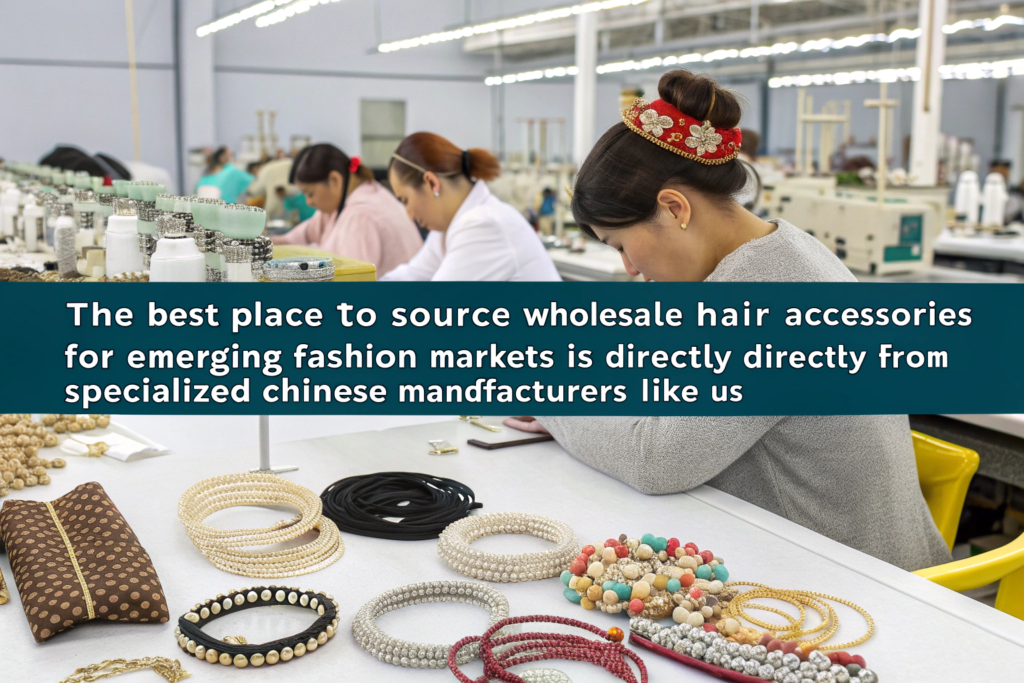
Are you struggling to find reliable wholesale hair accessory suppliers who understand the unique demands of emerging fashion markets? It's a major headache for buyers. You might find suppliers in traditional hubs, but they often offer generic, mass-produced items that don't resonate with the vibrant, trend-driven consumers in places like Eastern Europe, Southeast Asia, or Latin America. You risk investing in inventory that feels dated or culturally irrelevant, leading to slow sales and wasted capital.
The best place to source wholesale hair accessories for emerging fashion markets is directly from specialized Chinese manufacturers like us, who offer a combination of trend-focused design, agile production, and deep expertise in global logistics. Unlike generic sourcing platforms, a dedicated partner provides custom OEM/ODM services, competitive factory-direct pricing, and end-to-end support, including navigating complex shipping and customs clearance to regions like Russia, the EU, and Southeast Asia.
As the owner of a hair accessory company that has been exporting globally for over two decades, I've seen firsthand how emerging markets have become the new frontier for fashion growth. These markets are exciting but have unique challenges, from rapidly shifting trends to complex import regulations. Simply sourcing from a random vendor on a large platform is a recipe for disaster. In this article, I'll walk you through the critical factors for sourcing successfully for these markets, why a direct partnership with a Chinese factory is your best strategy, and how to identify a supplier who can help you navigate challenges like tariffs and logistics to capture these lucrative opportunities.
Why is Direct-from-Factory Sourcing Crucial for Emerging Markets?
You've probably used large sourcing platforms like Alibaba, and they seem convenient. But when you're targeting a specific, nuanced market like Poland or Brazil, you hit a wall. The vendors are often just traders, not factories. They can't offer true customization, their pricing includes a middleman's cut, and they have little to no experience with the specific shipping and customs regulations for your target country. This leads to communication breakdowns, quality control issues, and costly delays at the border.
Sourcing directly from a factory is crucial because it gives you control over the three most critical elements for success in emerging markets: customization, cost, and compliance. A direct partnership allows you to develop unique products tailored to local trends (OEM/ODM), eliminates middleman markups for better margins, and ensures the supplier has the expertise to handle the specific logistical and customs challenges of regions like Russia or Southeast Asia, which traders often lack.
I remember working with a new client targeting the Russian market. He had previously used a trading company found on a major B2B site. The trader promised him a low price on trendy claw clips but couldn't provide the correct EAC (Eurasian Conformity) certification. The entire shipment was held at customs for weeks, incurring massive fees. When he finally came to us, Shanghai Fumao Clothing, we not only produced a higher-quality product but also handled all the necessary documentation seamlessly because we've been shipping to Russia for years. This is the direct-from-factory difference. It's not just about buying a product; it's about securing a supply chain. This level of control is also vital when considering How to Verify a Supplier’s Quality and Production Capacity?.
How does direct sourcing impact pricing and MOQs?
For any buyer, especially those targeting new markets, managing budget and inventory risk is paramount. How does cutting out the middleman truly affect the numbers you care about—price and Minimum Order Quantities (MOQs)?
Direct sourcing significantly lowers your cost per unit. By working with the factory, you avoid the 10-30% commission that trading companies typically add. This allows you to either increase your profit margin or offer a more competitive retail price. Furthermore, while traders often impose rigid, high MOQs, a factory partner is more flexible. We understand the need to test a new market. We can often offer lower MOQs on initial orders or allow you to mix and match styles within a single order, a flexibility you can explore through a factory audit. This reduces your upfront investment and risk.
Can a factory truly help with trend forecasting?
You might think a factory just manufactures, but can they be a partner in design and trend analysis? In fast-moving emerging markets, being behind the trend is a death sentence for a product line.
A specialized factory is an invaluable partner for trend forecasting. Unlike a generalist trader, we live and breathe hair accessories. Our development team constantly analyzes data from social media platforms like TikTok and Instagram, monitors runway shows, and gathers feedback from our global client base. We see what's gaining traction in Milan before it hits Warsaw. We can provide you with data-driven insights and design mock-ups for upcoming trends, helping you develop products that are ahead of the curve. This collaborative design process is a key advantage of a direct factory relationship.
How to Verify a Supplier’s Quality and Production Capacity?
You've found a potential factory supplier online. Their website looks professional, and their prices are good. But how do you know if they can really deliver? The biggest fear for any buyer is placing a large order only to receive a shipment of low-quality products that don't match the samples, or to have the delivery date pushed back for months due to production issues. This is a nightmare that can destroy your reputation and finances.
To verify a supplier's quality and capacity, you must go beyond their marketing materials. Request key certifications like ISO 9001 (for quality management) and BSCI (for social compliance). Ask for a virtual factory tour to see their operations in real-time. Most importantly, order paid samples of not just the product but also their raw materials. A reputable factory will be transparent and welcome this scrutiny as a chance to prove their capabilities.
I always tell potential partners like Ron, "Don't just trust my words, test my factory." A few years ago, a large American buyer was considering us for a major contract. He was concerned about our ability to scale for a massive holiday order. Instead of just sending him a presentation, we scheduled a live video call. I walked him through our entire production floor, from the raw material warehouse to our dedicated packing lines and our in-house QC team. He could see the scale, the organization, and the professionalism for himself. We got the contract. This transparency is non-negotiable. It's the foundation of a strong partnership, just as crucial as understanding What are the key logistics and payment considerations?.

What specific certifications should you ask for?
"We are certified." It's a common claim, but what does it actually mean? Which documents hold real weight and provide genuine assurance of quality and ethical practices?
Focus on internationally recognized certifications. ISO 9001 is the global standard for a quality management system, proving the factory has consistent processes to meet customer requirements. BSCI (Business Social Compliance Initiative) or SA8000 audits are crucial for ensuring ethical labor practices, which is increasingly important for brand reputation in Western markets. For specific regions, like the EU or Russia, ask for proof of compliance with regulations like REACH (for chemicals) or EAC. A supplier who can readily provide these has a mature, professional operation. You can learn more about these standards from organizations like the International Organization for Standardization.
Why is a virtual factory tour better than photos?
Photos can be easily staged or outdated. They might show a clean workshop from five years ago that is now a chaotic mess. How can you get a true, unvarnished look at a supplier's current operations from thousands of miles away?
A live, virtual factory tour is your best tool. It's unscripted and immediate. Ask the manager to walk you through specific areas. Say, "Can you show me your raw material storage?" or "Let's see the packing department right now." This allows you to observe the real working conditions, the level of organization, the age and condition of the machinery, and the morale of the workers. It's much harder to hide disorganization or poor practices on a live video call. This real-time verification is a powerful risk management tool for any serious buyer.
What are the key logistics and payment considerations?
You've found a great factory and approved the product samples. Now comes the part where many deals fall apart: logistics and payment. An attractive unit price means nothing if the shipping costs are exorbitant, the delivery is late, or the payment terms are insecure. You worry about hidden fees, customs nightmares, and the risk of sending a large payment overseas with no guarantee of recourse if something goes wrong.
For logistics, insist on a supplier who offers DDP (Delivered Duty Paid) shipping terms, especially for complex regions like Russia. This means the factory handles all shipping, customs, duties, and taxes, delivering the goods directly to your door for a single, all-inclusive price. For payment, use secure methods like a 30% deposit via T/T (Telegraphic Transfer) and the 70% balance payment against the Bill of Lading (B/L) copy, or use a platform like Alibaba Trade Assurance for added protection.
Navigating customs in emerging markets can be a minefield. At Shanghai Fumao Clothing, we have invested heavily in building a world-class logistics team. We have dedicated partners on the ground in the EU, Russia, and Southeast Asia. By offering DDP terms, we take all the risk and complexity off our clients' shoulders. They get one simple price and a guaranteed delivery date. For payment, the 30/70 split is the industry standard. It provides the factory with the capital to start production while ensuring you don't pay the full amount until the goods have been shipped. This balanced approach builds trust, a key component we also discussed in Why is Direct-from-Factory Sourcing Crucial for Emerging Markets?.
Why is DDP shipping a game-changer for emerging markets?
You've seen various shipping acronyms like FOB, CIF, and DDP. Why is DDP (Delivered Duty Paid) so particularly important when you're shipping to a market you're not familiar with?
DDP is a game-changer because it eliminates uncertainty. With other terms like FOB (Free On Board), the supplier's responsibility ends once the goods are on the ship. You are then responsible for ocean freight, insurance, customs clearance, duties, and local delivery. In an unfamiliar market, estimating these costs is nearly impossible, and any problem at customs is your headache. DDP bundles all these costs and risks into one price. The supplier leverages their expertise and volume discounts to manage the entire process. It turns a complex, risky international shipment into a simple, predictable delivery, as explained by resources like the International Chamber of Commerce (ICC).
What are the safest payment methods for wholesale orders?
Sending a large sum of money to a new overseas partner is nerve-wracking. What methods can you use to protect your investment while still being fair to the supplier who needs capital for production?
The safest approach is a balanced one. A 30% upfront deposit via bank transfer (T/T) is a standard and reasonable request that allows the factory to purchase raw materials. The crucial part is the 70% balance payment. Never pay this before production is finished and the goods are on their way. The best practice is to pay the balance after you receive a copy of the Bill of Lading (B/L), which is proof of shipment. For maximum security, especially with a new supplier, using a third-party escrow service like Alibaba Trade Assurance is an excellent option. It holds your payment until you confirm that you have received the goods as described.
How to Build a Long-Term Partnership for Growth?
Finding a supplier is one thing; building a true partnership is another. You don't want to repeat the stressful sourcing process for every single order. The ideal scenario is to find a reliable partner who understands your brand, anticipates your needs, and grows with you as you expand into new markets. But how do you move from a simple transactional relationship to a strategic alliance?
Building a long-term partnership hinges on communication, transparency, and mutual investment. Treat your supplier like a member of your team. Share your sales data, market feedback, and long-term goals with them. In return, a good partner will offer you priority production slots, better payment terms over time, and proactive new product development. It's a two-way street built on trust and a shared vision for growth.
Some of our most successful clients are those who have worked with us for over a decade. They don't just send us purchase orders; they involve us in their planning. One client in the US shares their quarterly sales data with us, showing which styles are selling best. This allows our development team to proactively design new variations and complementary products for them. In return, we offer them exclusive first looks at our new materials and techniques. This is the kind of symbiotic relationship that allows both parties to thrive. It moves beyond simple sourcing and becomes a powerful competitive advantage.

How can you incentivize a supplier to prioritize your business?
In a busy factory, how do you ensure your orders get the attention they deserve? What can you do to become a preferred customer that a supplier will go the extra mile for?
Consistency is key. Providing a reliable forecast of your future orders, even if it's just an estimate, allows the factory to plan their production schedule and material procurement. Pay your invoices on time, every time. This builds immense trust. And provide clear, constructive feedback. When you treat your supplier with respect and professionalism, they are far more likely to prioritize your business, offer better terms, and rush orders for you when needed. It's about being a good partner, which is a core principle of supply chain management.
What role does technology play in a modern partnership?
In today's fast-paced world, how can technology help bridge the distance and make your partnership with an overseas factory more efficient and collaborative?
Technology is essential. A modern factory partner should be comfortable using a range of tools to facilitate communication and collaboration. This includes using WhatsApp or WeChat for quick, informal updates, conducting regular check-ins via Zoom or Google Meet, and using shared cloud-based platforms like Google Drive or Dropbox for managing design files and order sheets. These tools create a seamless workflow, reduce misunderstandings caused by language barriers, and make it feel like your factory partner is just down the hall, not halfway across the world. This tech-forward approach is a hallmark of a truly global business.
Conclusion
Sourcing wholesale hair accessories for emerging fashion markets is a significant opportunity, but it requires a strategic approach. Ditch the risky, impersonal sourcing platforms and forge a direct partnership with a specialized Chinese manufacturer. By focusing on suppliers who offer deep customization capabilities, transparent quality verification, and expert handling of logistics and payments, you can de-risk the entire process. The key is to move beyond simple transactions and build a long-term, collaborative relationship. This will not only get you better pricing and higher-quality products but will also provide you with a strategic ally dedicated to helping you conquer new markets.
If you are ready to find a reliable partner to help you succeed in emerging fashion markets, our team at HairAcc is here to help. We have the experience, the infrastructure, and the collaborative spirit to turn your vision into a best-selling product line. Contact our Business Director, Elaine, at elaine@fumaoclothing.com to start the conversation, request samples, and get a comprehensive, no-surprise quote for your next collection.