
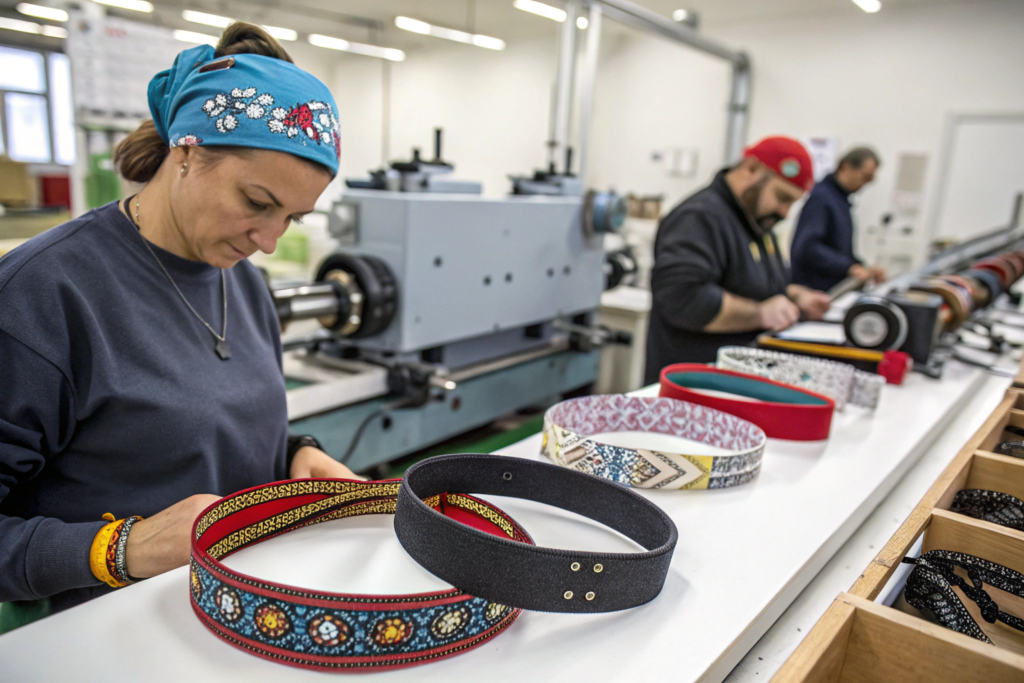
If you're a buyer feeling the pain of adjusting to shifting fashion trends and unreliable suppliers, you're not alone. The search for a consistent, high-quality source of universally adjustable headbands is a common challenge in the fashion accessory business. Many suppliers offer one-size-fits-all solutions, but the reality for a global market is far more complex.
The answer to sourcing truly adjustable headbands lies in partnering with a specialized manufacturer that offers not just products, but adjustability as a core design service. A manufacturer that masters both elastic adaptability and mechanical precision can provide the versatile inventory your diverse clientele demands. By moving beyond standard suppliers to a partner with deep technical expertise, you can solve the universal fit puzzle.
For wholesalers and brands, sourcing adjustable headbands is not merely a procurement task; it's a strategic decision that impacts customer satisfaction, inventory complexity, and brand reputation. This guide will break down the “where” into clear sourcing strategies and actionable partner criteria, helping you build a resilient and trend-responsive supply chain.
What key features define a truly "universally adjustable" headband?
A universally adjustable headband isn't just a marketing term; it's a product built with specific mechanical and material features to ensure a secure, comfortable fit across a vast range of head sizes and hair volumes. For you as a buyer, understanding these features is crucial for evaluating supplier offerings and communicating quality to your end customers.
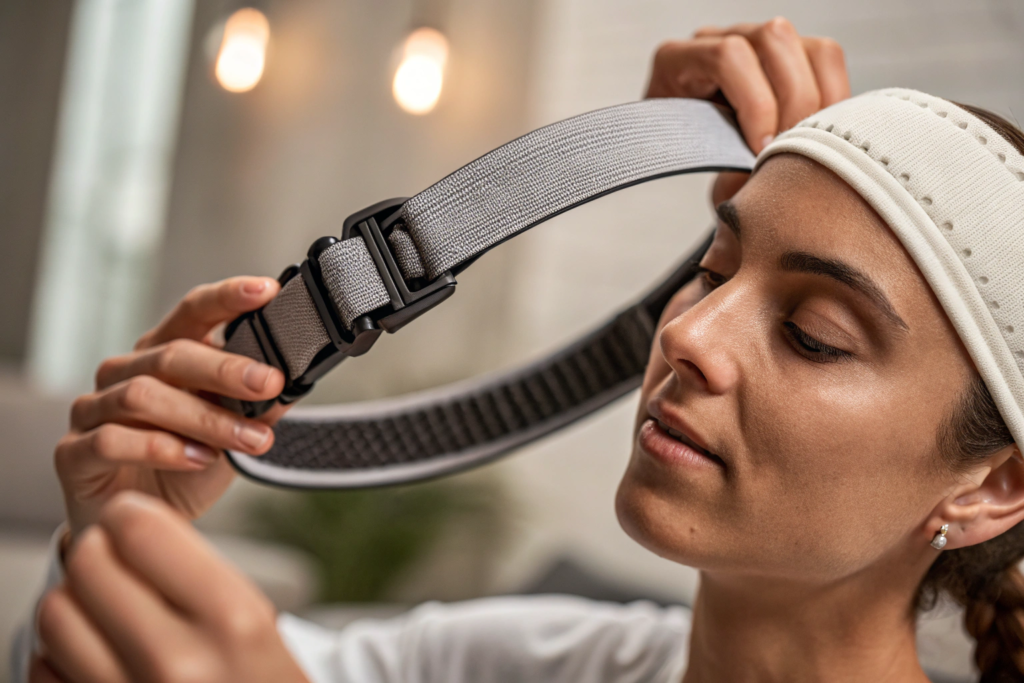
The two primary pillars of universal adjustability are elastic adaptability and mechanical adjustability. Elastic headbands often utilize woven materials that can stretch in multiple directions. For example, a patent describes a headband woven in a diamond or diagonal pattern from elastic yarns, which allows it to stretch uniformly and return to its original shape. This design accommodates different head circumferences comfortably, making it ideal for casual and sporty styles. On the other hand, mechanical adjusters provide precise, incremental sizing. These are often seen in designs featuring a ratchet system or a clasp with a flexible lever arm and cooperating connector that engages with teeth on the band. This method offers a customizable, secure fit that doesn't rely on constant stretch pressure, which is perfect for structured or heavy-duty headbands.
Why are multiple adjustment mechanisms important for different markets?
- For Active & Casual Wear (Sport Headbands, Everyday Scrunchies): Here, elasticity and soft stretch are king. You need materials that move with the wearer, wick moisture, and maintain comfort over long periods. These products often use broad, flat bands or tubular designs with high spandex content for a snug yet forgiving fit.
- For Formal & Decorative Styles (Pearl-Embellished Bands, Wide Headwraps): These styles may incorporate hidden mechanical adjusters or clever design elements. An adjustable headband with a clean, integrated ratchet system hidden inside a casing provides a customized fit without disrupting the elegant exterior aesthetic. This is essential for maintaining a polished look while ensuring the piece stays in place at weddings or formal events.
- For Protective & Performance Gear (Helmet Liners, Sweatbands): Durability and one-handed operation become critical. Patents highlight mechanisms where a flexible lever arm can be easily manipulated to disengage a connector, allowing for quick size adjustment even while wearing the gear. When sourcing these, you must prioritize robust construction and reliable, intuitive fastening.
How can I spot quality in an adjustable headband?
Beyond the mechanism itself, the quality of construction determines longevity and customer satisfaction. Pay close attention to:
- Seam and Stitching: Ends of elastic headbands should be securely joined, often with a flat seam covered by a soft label to prevent itching. For mechanically adjusted bands, the casing enclosing the working parts should be smooth and free of defects.
- Material Durability: Elastic should recover its shape after repeated stretching without becoming baggy. For plastic clasps and ratchets, the material should have a degree of flexibility to prevent snapping under stress.
- Finish and Safety: All edges should be smooth, and any metal parts should be rust-proof. The overall finish should be consistent, indicating good manufacturing process control.
What are the most effective strategies for finding reliable suppliers?
Finding a manufacturer that can reliably produce high-quality adjustable headbands requires moving beyond simple keyword searches. Effective sourcing blends online verification with traditional relationship-building to identify partners who are both capable and credible.
A strategic approach begins with leveraging verified B2B manufacturing platforms like Alibaba and ExportHub. These platforms are useful for identifying active factories with specific capabilities, such as a manufacturer listing "Headband/Headwrap" as a core product and offering OEM services. The key is to use advanced filters to find suppliers with genuine in-house production facilities and a track record of serving brands in your target markets. For instance, looking for suppliers who mention an "inspection factory" and "professional QC team" indicates a structured approach to quality that is essential for complex products like adjustable headbands.

What role do trade shows and industry networks play in verification?
While online platforms provide a starting list, trade shows and industry data are critical for verification. Many reputable manufacturers, including companies like Shanghai Fumao Clothing, actively participate in major exhibitions like the Canton Fair. Attending these events allows you to inspect product samples firsthand, discuss adjustment mechanisms in detail, and gauge the supplier's professionalism. Furthermore, you can use trade data platforms to research a company's export history. For example, a search might reveal a manufacturer's recent shipments of headbands to specific regions, confirming their active role in international trade and understanding of export logistics.
What are the common pitfalls to avoid in supplier searches?
To protect your business, be wary of these red flags:
- Vague Product Details: Suppliers who cannot clearly explain the mechanics of their adjustable headbands or the materials used may lack technical expertise.
- No Sample Policy: A legitimate factory will usually provide samples (often for a fee) to allow for quality inspection before bulk ordering.
- Unverifiable Claims: Claims of huge monthly capacity (e.g., "10 million cards per month") should be backed by evidence of factory size, machinery, and client list. Always ask for photos or videos of the production facility.
How do I evaluate a manufacturer's technical and customization capabilities?
Once you've shortlisted potential suppliers, the next critical step is a deep dive into their technical and development capabilities. For adjustable headbands, this goes far beyond basic sewing. You need to assess their mastery of material science, mechanical components, and the end-to-end development process.
Begin by requesting a detailed breakdown of their in-house versus outsourced production. A strong manufacturer typically controls core processes. For example, a supplier with "a large-scale head accessories factory, a cooperative dyeing factory, two printing factories, two embroidery factories" demonstrates vertical integration. This control is vital for ensuring consistency in the elasticity of fabrics, the precision of printed patterns on stretch materials, and the secure attachment of clasps or adjusters. It also allows for greater flexibility in customizing each component of the headband to your specifications.

What specific questions should I ask about their design and development process?
Your questions should move from general to highly specific to uncover true expertise:
- Material Sourcing: "Can you source and test elastic weaves with multi-directional stretch, similar to a diamond-pattern knit?" "How do you test the recovery and durability of these elastic materials over repeated use?"
- Component Manufacturing: "Do you mold your own plastic adjustment clasps and ratchets, or are they purchased?" If purchased, "Can you customize the mold for our brand-specific design and ensure the plastic has the required flexibility to avoid breakage?"
- Prototyping Speed: "What is your process and timeline for creating a functional prototype of a new adjustable mechanism? Can you provide 3D drawings before sampling?"
- Quality Control Metrics: "Beyond a final inspection, what in-process quality checks (IPQC) do you have for the adjuster assembly? How do you test the clasp's engagement and disengagement over hundreds of cycles?"
How can I assess their experience with my target market?
Review their portfolio for experience relevant to your customers. A manufacturer that supplies major retailers or brands in North America and Europe will be familiar with strict quality, safety, and labeling standards. Ask for concrete examples. For instance, "Can you show me headband styles you've produced for the US market that feature both comfort stretch and a size-adjustment clasp?" Their ability to provide clear examples is a strong indicator of relevant experience and successful past execution. Building a relationship with a partner like Shanghai Fumao Clothing can give you access to this kind of established expertise.
What are the critical logistic and compliance considerations for importers?
Securing a great product is only half the battle; getting it to your warehouse smoothly and compliantly is the other. For adjustable headbands, logistics and compliance involve specific considerations that can affect your total landed cost and operational efficiency.
Firstly, understand the Incoterms offered. A supplier offering a range of terms like FOB, CIF, or DDP provides flexibility. For beginners, CIF (Cost, Insurance, and Freight) can simplify the process, as the supplier handles main shipping and insurance to your port. For more control and potentially lower costs, experienced importers often prefer FOB (Free On Board), where you take responsibility once goods are loaded at the origin port. Crucially, you must verify if the supplier has experience managing "package transportation and customs clearance" to your destination country.

What compliance documents and testing are non-negotiable?
Compliance protects your business from delays, seizures, and liability. Essential requirements include:
- Material Compliance Certificates: For all materials (fabrics, elastics, plastics, dyes), request test reports proving they are free from harmful substances like heavy metals (e.g., lead, cadmium) and comply with regulations such as REACH (EU) or CPSIA (USA). Some manufacturers have third-party labs conduct these chemical tests.
- Mechanical Safety: For headbands with small parts (clasps, decorative rivets), ensure they pass applicable choking hazard tests, especially if you are selling for children.
- Accurate HS Codes: Work with your supplier to classify the headbands under the correct Harmonized System (HS) code. An incorrect code can lead to wrong tariff application and customs delays. The code for headbands is typically under a category like HS 6507 for headgear and parts thereof.
How can I plan for tariffs and ensure shipping reliability?
Tariffs are a major cost factor. Proactively discuss this with your supplier. Some manufacturers, based on their location and product type, may clarify that their goods are "not affected by US tariffs," which is a significant advantage. Always confirm the country of origin on all documentation. For shipping reliability, ask the supplier about their standard lead times (e.g., "average lead time: 45 days") and which shipping lines they typically use. In your contract, include clauses that address potential delays and define responsibility for securing cargo space, especially during peak shipping seasons. A supplier with a robust system for handling these details can be a major asset, much like the integrated services offered by experienced manufacturers in this field.
Conclusion
Sourcing universally adjustable headbands successfully hinges on a strategic partnership with a technically proficient manufacturer. It requires looking beyond the product to evaluate their mastery of elastic and mechanical engineering, their commitment to quality control, and their ability to navigate the complexities of international logistics and compliance. By focusing on suppliers with integrated production, a clear development process, and proven export experience, you can build a supply chain that delivers not just products, but reliability and market-ready innovation.
If you are looking for a partner with this depth of capability, consider Shanghai Fumao Clothing. We combine large-scale manufacturing with specialized cooperative factories for every process, from dyeing to precision embroidery, ensuring full control over the quality of every adjustable headband component. Our professional QC team and experience in seamless package transportation and customs clearance are designed to make your sourcing process efficient and reliable. To discuss developing your own line of adjustable headbands, please contact our Business Director, Elaine, at elaine@fumaoclothing.com.