
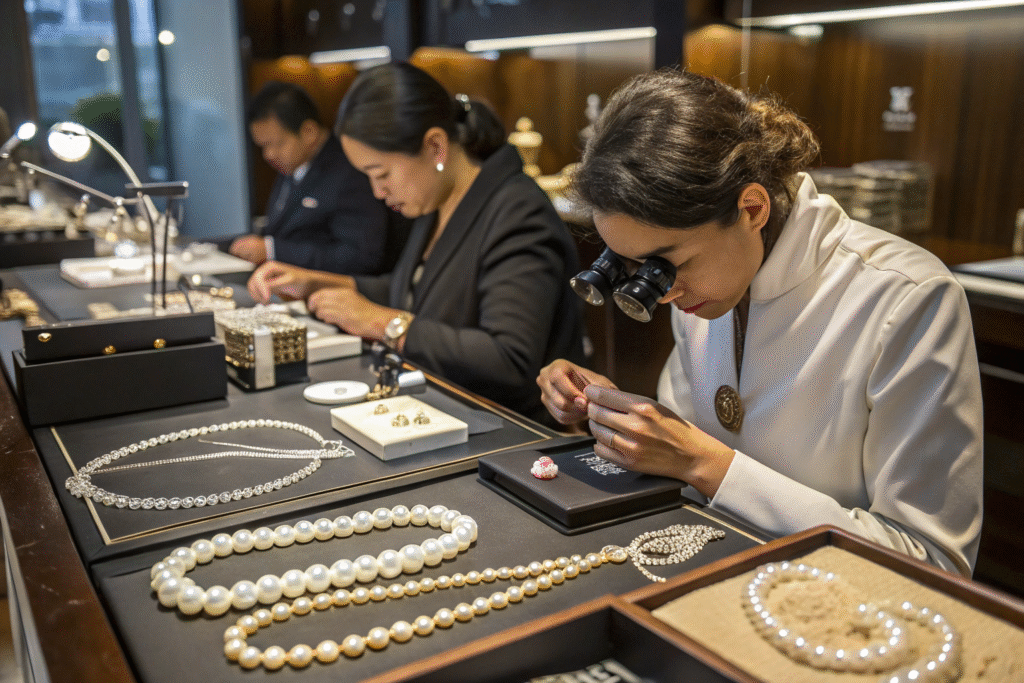
As the owner of HairAcc with extensive experience in luxury hair accessory manufacturing, I understand the unique challenges of sourcing authenticated pearl hairpins with low minimum order quantities. The combination of genuine materials, proper certification, and flexible ordering terms requires strategic sourcing approaches.
The most reliable sources for low-MOQ pearl hairpins with gemstone authentication include specialized pearl workshops, certified gemstone suppliers with hair accessory divisions, luxury component manufacturers, and ethical sourcing platforms that provide both material verification and flexible order quantities.These suppliers understand the specific requirements for authenticating natural pearls and gemstones while accommodating smaller batch production.
The market for authenticated luxury hair accessories continues to grow as consumers seek verified quality and ethical sourcing. Based on our experience developing pearl hairpin collections with proper gemological documentation, here's a comprehensive guide to finding suppliers who can deliver both quality authentication and low MOQ flexibility.
Which Specialized Suppliers Offer Authenticated Pearl Components?
Finding suppliers who specialize in authenticated pearl components requires targeting specific segments of the jewelry supply chain that understand both material verification and hair accessory manufacturing requirements.
Certified pearl dealers, gemological laboratories with manufacturing partnerships, ethical sourcing platforms, and specialized hair accessory manufacturers with gemstone authentication capabilities provide the most reliable access to verified pearl components with low MOQ options.These suppliers maintain proper certification chains while understanding small-batch production needs.
How Do Certified Pearl Suppliers Support Low-MOQ Orders?
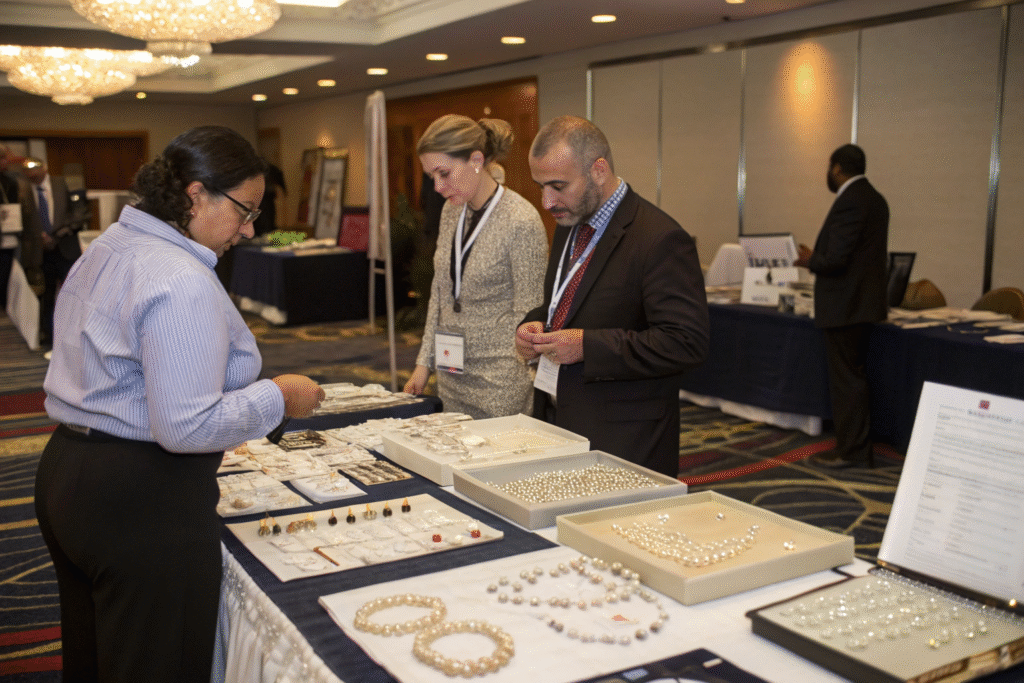
Reputable pearl suppliers offering low MOQs typically specialize in specific pearl varieties where they can maintain small inventory of graded materials. Suppliers focusing on freshwater pearls often offer MOQs as low as 50-100 strands, with each strand yielding multiple hairpins. These suppliers provide proper documentation including origin certificates, quality grading reports, and authenticity verification. Many work with smaller designers and understand the need for flexible ordering while maintaining material quality. The key is finding suppliers who specialize in the specific pearl type and size needed for your hairpin designs.
What Authentication Documentation Should Suppliers Provide?
Reliable suppliers should provide comprehensive gemological documentation including laboratory certificates for pearls and any accompanying gemstones. This typically includes verification of natural versus cultured origin, nacre quality assessment, size and shape grading, color consistency documentation, and surface quality evaluation. For hairpins featuring additional gemstones, suppliers should provide separate authentication for each material component. Reputable suppliers maintain relationships with recognized gemological laboratories and can provide traceability from source to finished component.
What Manufacturing Options Support Low-MOQ Production?
Manufacturing pearl hairpins with authentication requires specialized production approaches that maintain quality verification while accommodating smaller order quantities.
Low-MOQ manufacturing options include artisan workshops, specialized jewelry manufacturers with hair accessory experience, component assembly specialists, and hybrid production models that combine pre-authenticated components with custom fabrication.These approaches balance quality verification with production flexibility.
How Do Artisan Workshops Accommodate Small Batches?
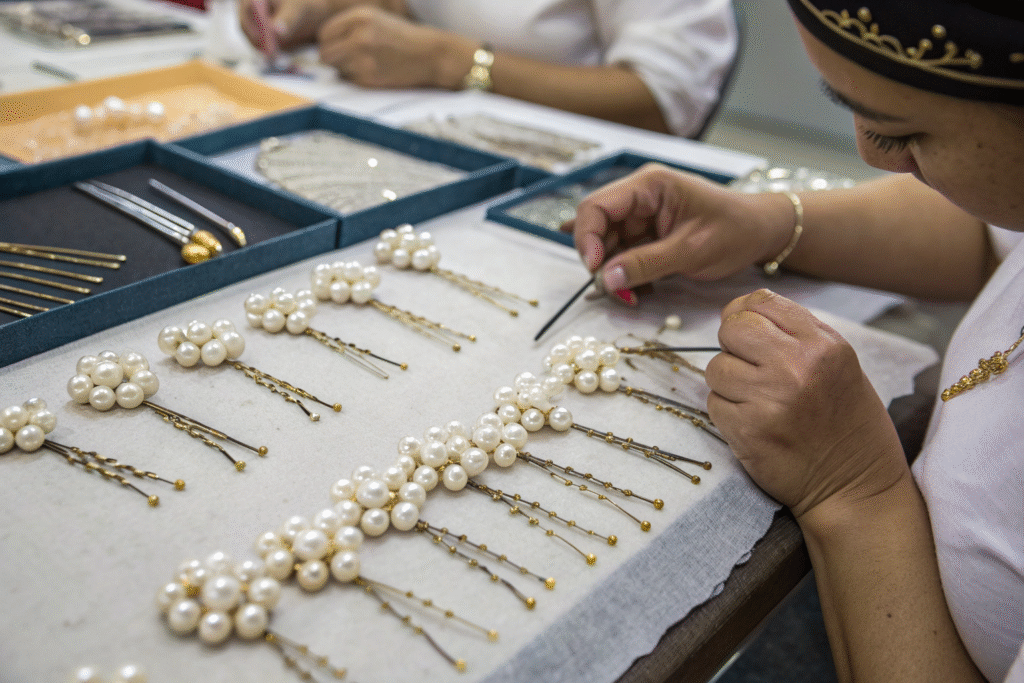
Artisan workshops specializing in pearl and gemstone work often offer the most flexible MOQ terms, typically accepting orders as low as 25-50 pieces. These workshops maintain relationships with certified material suppliers and can provide handcrafted quality with proper authentication documentation. The advantages include custom design flexibility, attention to detail, and the ability to work with precious materials in small quantities. However, production timelines may be longer than larger manufacturers, and per-unit costs are typically higher due to the manual labor involved in quality authentication and hand assembly.
What Hybrid Production Models Balance MOQ and Authentication?
Hybrid manufacturing combines pre-authenticated components with customized production elements. Manufacturers maintain inventory of certified pearl components and gemstone elements that can be incorporated into various hairpin designs. This approach allows MOQs as low as 50 units while ensuring material authenticity through pre-verified components. The system works particularly well for designs using standardized pearl sizes and shapes with custom metalwork or design elements. Manufacturers using this approach typically provide both component authentication and finished product verification.
How to Verify Gemstone and Pearl Authentication?
Proper authentication verification is crucial for pearl hairpins claiming gemstone quality. Understanding the verification process helps identify reliable suppliers and ensure product claims are substantiated.
Comprehensive authentication verification includes laboratory certification review, material traceability documentation, supplier credibility assessment, and independent verification options that collectively ensure gemstone and pearl authenticity.These processes protect both manufacturers and consumers from misrepresentation.
What Laboratory Certifications Provide Reliable Authentication?
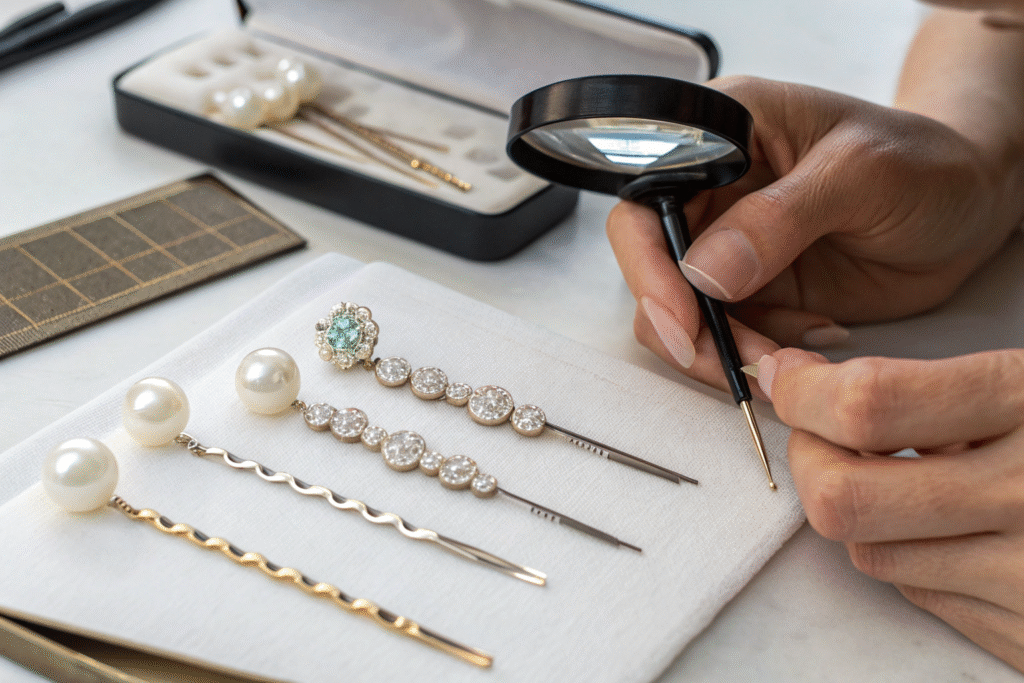
Recognized gemological laboratories provide the most reliable authentication for pearls and gemstones. Certificates from GIA (Gemological Institute of America), AGS (American Gem Society), and IGI (International Gemological Institute) offer standardized grading and authentication that's recognized globally. These certificates should specify whether pearls are natural or cultured, identify treatments if any, and provide quality grading based on established criteria. For hairpin manufacturers, working with suppliers who provide these recognized certifications ensures material claims can be verified and communicated to end consumers.
How Can Material Traceability Be Verified?
Reliable suppliers maintain comprehensive traceability documentation that follows materials from source to finished component. This includes origin certificates for pearls, mining documentation for gemstones, and processing records that verify ethical sourcing and proper handling. For pearl hairpins, this means documentation of pearl farming practices, harvesting records, and processing methods. Suppliers should be able to provide this documentation upon request and maintain consistent record-keeping practices. Traceability is particularly important for consumers concerned about ethical sourcing and environmental impact.
What Are the Realistic MOQ and Pricing Expectations?
Understanding realistic MOQ and pricing structures helps brands plan their sourcing strategies for authenticated pearl hairpins. Different authentication levels and quality grades significantly impact both minimum orders and costs.
Realistic MOQ expectations range from 25-100 pieces for fully authenticated pearl hairpins, with per-unit pricing 30-100% higher than non-authenticated equivalents due to certification costs, material verification, and specialized craftsmanship.These costs reflect the additional value of proper authentication and quality assurance.

How Does Authentication Impact MOQ Requirements?
The authentication process itself creates natural MOQ thresholds due to certification economics. Laboratory certification costs are typically fixed regardless of quantity, making smaller batches proportionally more expensive to authenticate. However, specialized suppliers have developed strategies to manage these costs, including batch certification of material components before manufacturing, group certification programs, and relationships with laboratories that offer scaled pricing. The most flexible suppliers can accommodate MOQs as low as 25 pieces while maintaining proper authentication through these cost-management approaches.
What Pricing Factors Should Brands Anticipate?
Multiple factors influence pricing for authenticated pearl hairpins. Pearl quality grades significantly impact material costs, with higher luster, cleaner surface, and better shape commanding premium prices. Authentication costs include laboratory fees, documentation preparation, and verification processes. Craftsmanship costs reflect the specialized skills required for working with precious materials. Additionally, design complexity, metal quality, and any accompanying gemstones contribute to final pricing. Transparent suppliers should provide detailed cost breakdowns and explain how different quality and authentication levels impact final pricing.
Conclusion
Finding low-MOQ pearl hairpins with proper gemstone authentication requires targeting specialized suppliers who understand both material verification and flexible production. The most reliable partners combine gemological expertise with hair accessory manufacturing experience, offering proper documentation, transparent sourcing, and realistic order quantities. While authenticated pieces command premium pricing, the value of verified quality and proper documentation justifies the investment for brands targeting discerning consumers who value authenticity and ethical sourcing.
If you're seeking manufacturing partners for authenticated pearl hairpins with low MOQ requirements, we invite you to contact HairAcc to discuss your specific needs. With our experience in luxury hair accessory manufacturing and gemstone authentication, we can help you develop pearl hairpin collections that combine verified quality with production flexibility. Reach out to our Business Director Elaine at elaine@fumaoclothing.com to explore how we can create authenticated pearl hairpins for your collection.