
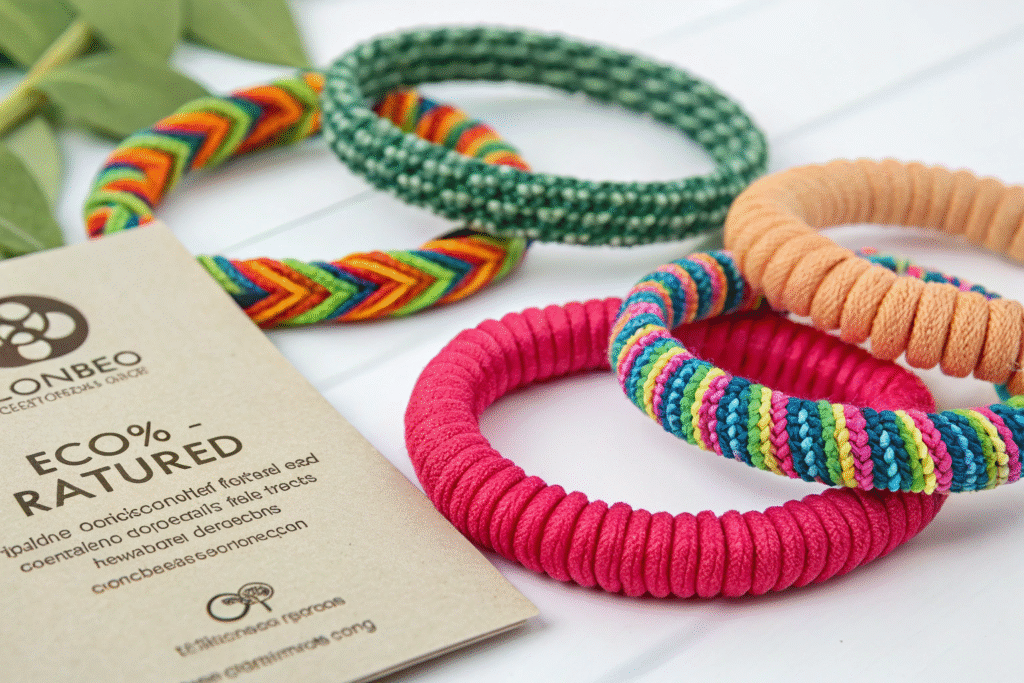
As sustainability becomes increasingly important in the fashion industry, eco-friendly hair ties have emerged as a popular alternative to conventional plastic-based hair accessories. At HairAcc, we've seen growing demand from environmentally conscious retailers and consumers seeking hair accessories that align with their values.
Eco-friendly hair ties are primarily made from natural biodegradable materials like organic cotton, natural rubber, bamboo fiber, and hemp, as well as innovative recycled materials including recycled PET and ECONYL® regenerated nylon. These materials offer reduced environmental impact through biodegradability, recyclability, and sustainable production processes while maintaining functionality and style. Explore our full range of eco-conscious hair ties and sustainable accessories at shanghaifumaoclothing https://www.aceaccessory.com.
Understanding these materials helps buyers make informed sourcing decisions that meet both market demands and sustainability goals. Let's explore the specific materials, their benefits, and how to verify their eco-friendly credentials.
What natural materials are used in eco-friendly hair ties?
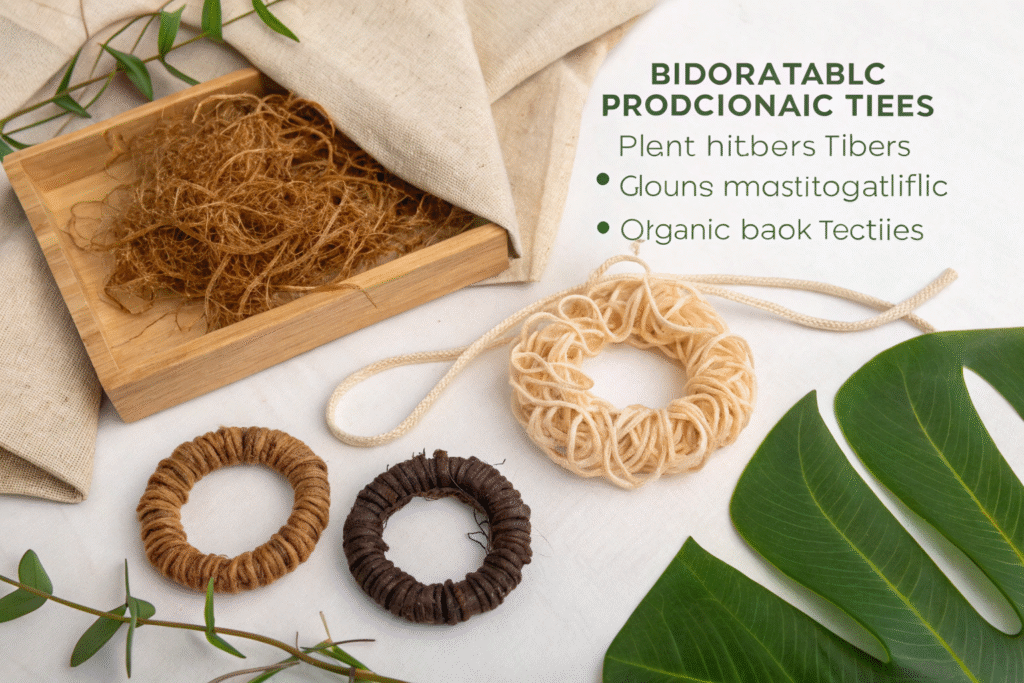
Natural materials form the foundation of truly biodegradable hair ties, offering complete breakdown at the end of their lifecycle without leaving microplastics in the environment. These plant-based materials have gained significant popularity among eco-conscious consumers.
Organic cotton hair ties are grown without synthetic pesticides and processed without harmful chemicals, making them completely biodegradable. Bamboo viscose hair ties utilize fast-growing bamboo that requires minimal water and no pesticides, though the processing method affects sustainability. Natural rubber hair ties are derived from rubber tree sap and provide excellent elasticity without synthetic materials. Hemp hair ties come from one of the most sustainable crops available, requiring no pesticides and improving soil health. Linen hair ties, made from flax plants, offer durability and natural antibacterial properties.
How do biodegradable materials compare in performance?
While all natural materials offer environmental benefits, their performance characteristics vary significantly, affecting consumer satisfaction and repeat purchase rates. Understanding these differences helps in selecting the right material for your target market.
Organic cotton provides softness and gentleness on hair but may lose elasticity faster than synthetic blends. Natural rubber offers superior stretch and recovery but may cause reactions for those with latex allergies. Bamboo viscose delivers exceptional softness and slight antibacterial properties but requires careful processing to maintain sustainability credentials. Hemp and linen provide excellent durability and become softer with use but offer less stretch than other materials. Our performance testing shows that material blends often optimize both sustainability and functionality.
What recycled materials are transforming hair tie production?
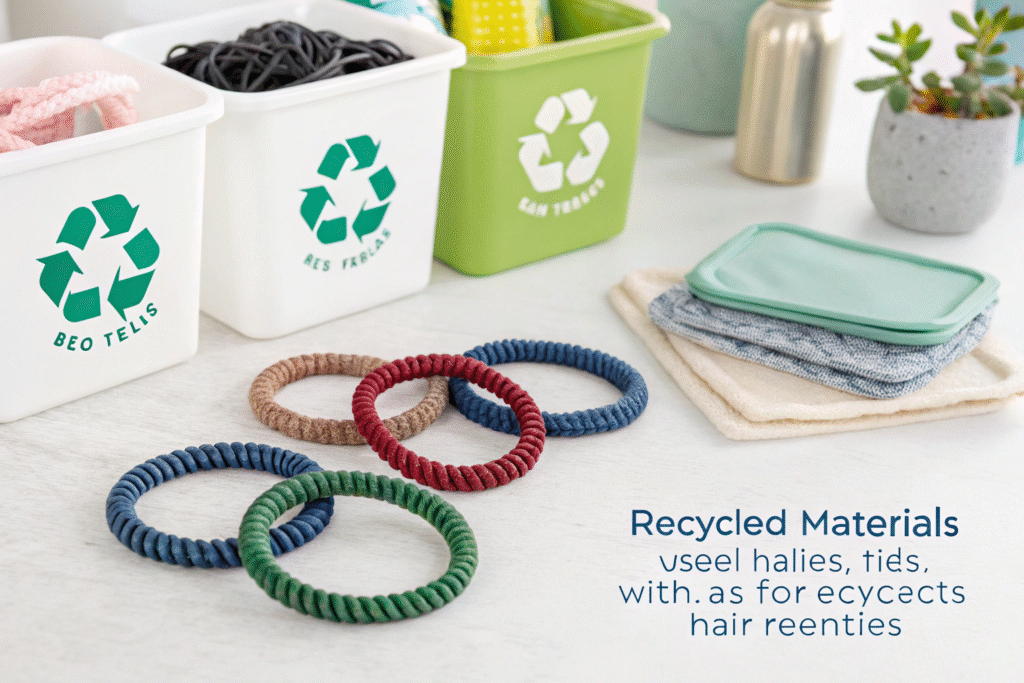
Recycled materials represent another major category of eco-friendly hair ties, addressing waste reduction while maintaining the performance characteristics consumers expect from conventional hair ties. These innovations particularly appeal to consumers focused on circular economy principles.
Recycled PET hair ties are made from post-consumer plastic bottles, transforming waste into functional accessories with durability similar to conventional elastics. ECONYL® regenerated nylon utilizes discarded fishing nets and other nylon waste to create high-quality hair ties with excellent elasticity and strength. Recycled rubber hair ties repurpose rubber from various sources, reducing the environmental impact of new rubber production. Some manufacturers now use recycled cotton from textile waste, though this often requires blending with other materials to maintain elasticity.
How is the recycling process verified for these materials?
Verifying recycling claims requires understanding certification systems and supply chain transparency, ensuring that environmental benefits are genuine rather than merely marketing claims. Several certification systems help validate these claims.
Global Recycled Standard (GRS) certification verifies recycled content percentages and tracks materials through the supply chain. Oeko-Tex Standard 100 certification ensures that recycled materials are free from harmful substances, important for products touching skin and hair. Recycled Claim Standard (RCS) provides simpler verification of recycled content percentages. Manufacturers should provide documentation tracing materials back to their source, with our factory maintaining detailed chain of custody records for all recycled materials we use.
What innovative eco-friendly materials are emerging?
The eco-friendly hair accessory market continues to evolve with new material innovations that push the boundaries of sustainability while maintaining or improving product performance. These emerging materials represent the next wave of sustainable hair accessories.
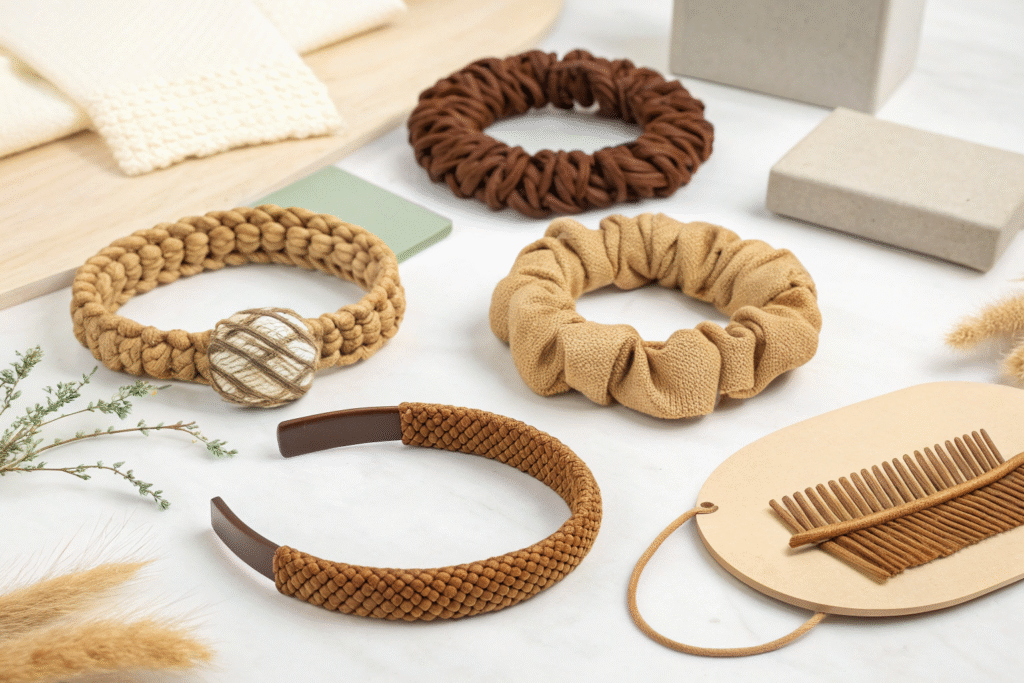
Seaweed-based fibers offer natural minerals and vitamins while being completely biodegradable and sourced from sustainable aquaculture. Orange fiber created from citrus industry waste provides a silk-like feel with antioxidant benefits. Pinatex made from pineapple leaf fibers creates durable, textured hair ties utilizing agricultural waste. Mushroom leather alternatives offer a vegan option with visual appeal similar to leather trims. Milk protein fiber utilizes casein from milk waste to create soft, biodegradable hair ties with natural sheen.
How do these innovative materials perform in production?
While innovative materials offer exciting sustainability stories, their production feasibility and commercial viability vary significantly, affecting their availability and pricing in the market. Understanding these practical considerations is essential for sourcing decisions.
Seaweed fibers require specialized processing but integrate well with existing textile manufacturing equipment. Orange fiber production remains limited in scale, making it better suited for premium or limited-edition collections. Pinatex works well for decorative elements and accents rather than the elastic component itself. Mushroom leather alternatives are improving in durability but may not yet match conventional materials for long-term wear. Milk protein fiber offers excellent softness but requires careful handling during manufacturing processes to maintain its properties.
How can buyers verify eco-friendly claims?
With growing consumer interest in sustainable products, verifying environmental claims has become increasingly important to avoid greenwashing and ensure genuine sustainability. Several verification approaches help buyers make informed decisions.
Third-party certifications from recognized organizations provide independent verification of specific environmental attributes like organic content, recycled materials, or biodegradability. Material composition transparency with detailed percentage breakdowns allows buyers to assess the true environmental profile of products. Supply chain transparency showing the origin of materials and manufacturing locations helps verify sustainability claims. Life cycle assessment data, when available, provides comprehensive environmental impact information from raw material extraction to end-of-life disposal.
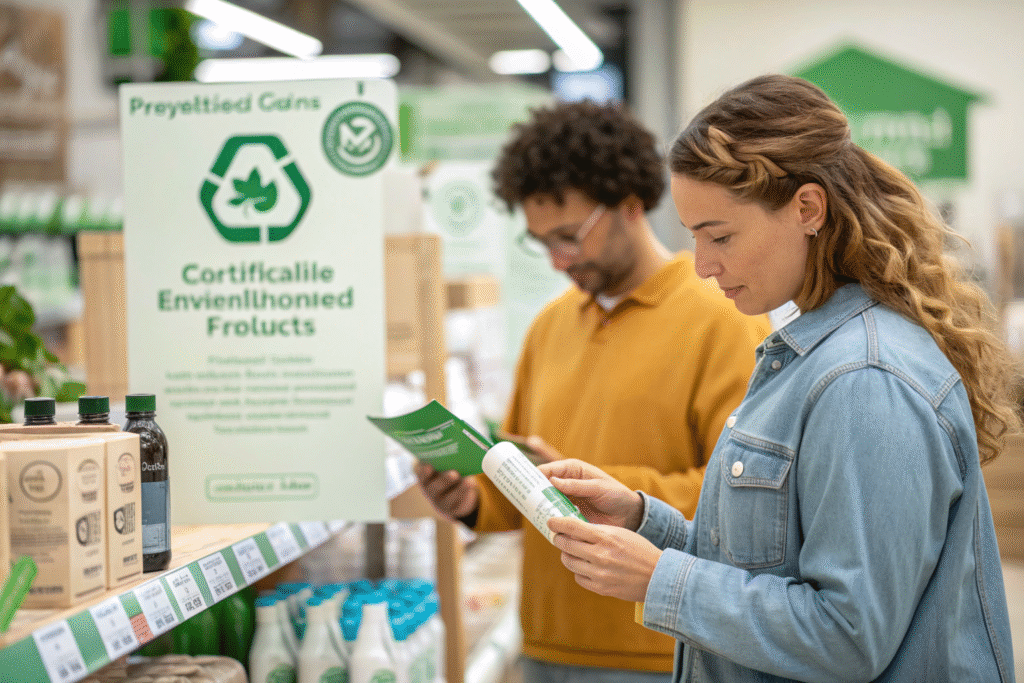
What certifications are most meaningful for hair accessories?
Understanding which certifications carry weight in the hair accessories market helps buyers prioritize their sourcing criteria and communicate product benefits effectively to end consumers. Some certifications have more rigorous standards than others.
GOTS (Global Organic Textile Standard) certification covers both organic fiber content and environmentally responsible processing for textiles like cotton. GRS (Global Recycled Standard) specifically verifies recycled content percentages and chain of custody. Oeko-Tex Standard 100 ensures products are free from harmful substances, important for items in direct contact with skin. Biodegradability certifications from organizations like TÜV Austria verify claims about products breaking down safely in specific environments. Our factory maintains multiple certifications to provide buyers with verified sustainability credentials.
Conclusion
Eco-friendly hair ties utilize a diverse range of materials including natural biodegradable options like organic cotton, bamboo, and natural rubber, as well as innovative recycled materials like PET and ECONYL® regenerated nylon. These materials offer genuine environmental benefits while meeting performance expectations, though each has distinct characteristics affecting durability, elasticity, and consumer appeal.
Verifying sustainability claims through certifications, material transparency, and supply chain information ensures that eco-friendly hair ties deliver on their environmental promises. As material innovations continue to emerge, the range of sustainable options will expand, offering buyers increasingly sophisticated choices for their environmentally conscious customers. A commitment shanghaifumaoclothing upholds as a core principle of our sustainable accessory lineup.
If you're looking to source eco-friendly hair ties, HairAcc offers a comprehensive range of sustainable options with verified materials and certifications. Contact our Business Director, Elaine, at elaine@fumaoclothing.com to discuss your specific sustainability requirements and explore our eco-friendly hair tie collections.