
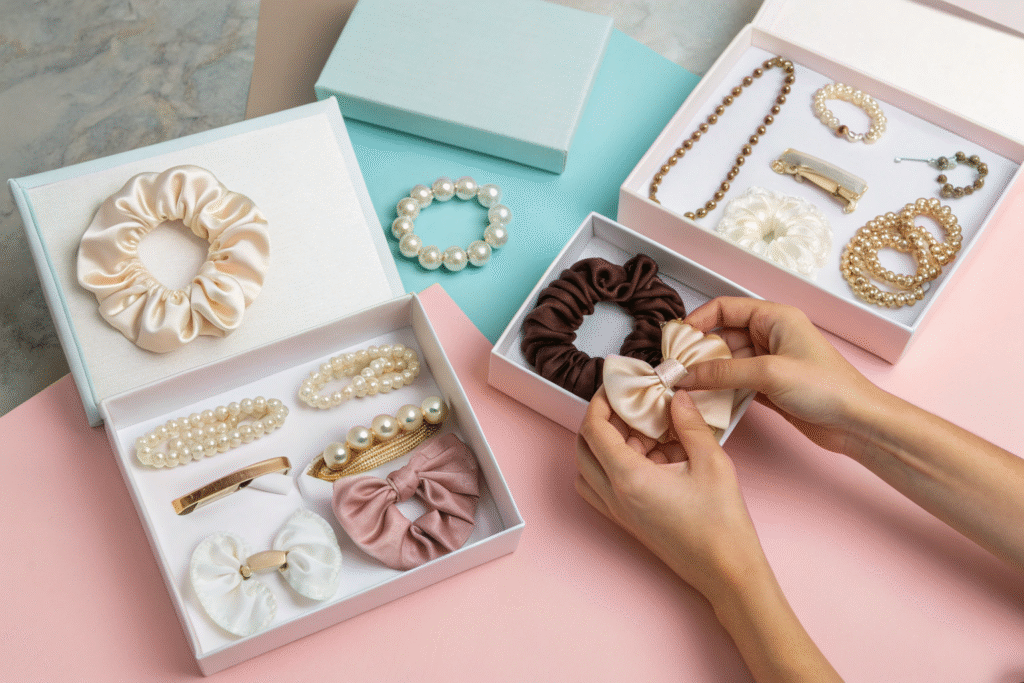
In the global fashion accessories industry, subscription boxes have become a vital strategy for both brand differentiation and consumer engagement. For entrepreneurs or buyers seeking to enter this segment, one of the most pressing concerns lies in understanding minimum order quantity (MOQ) structures. MOQs dictate not only the initial investment threshold but also the pace at which a subscription business can scale. From an academic and industry perspective, MOQs represent a critical intersection of supply chain economics, manufacturing efficiency, and consumer behavior.
The MOQ for custom hair accessory subscription boxes typically ranges from as few as 10 units per style to more than 1,000 units for customized packaging solutions, depending on the supplier, level of customization, and production technology. Grasping these dynamics is essential to align sourcing strategies with market entry goals, risk management, and profitability models.
In this article, I apply both theoretical and practical insights to analyze MOQs for hair accessory subscription boxes. Drawing on my academic expertise in textile manufacturing and international trade, as well as professional experience in sourcing and factory operations, I will explain accessory-level MOQs, packaging-specific MOQs, negotiation approaches, and the broader implications for cost and scalability.
What Is the Typical MOQ for Hair Accessories?
Within the context of apparel and fashion accessories, the MOQ is not simply an arbitrary number; it reflects cost structures, batch production efficiency, and material utilization. In the domain of hair accessories, MOQ thresholds are influenced by factors such as dye-lot minimums, machine setup costs, and the supplier’s inventory management model.
Empirical data shows that MOQs for hair accessories often range between 50–100 pieces per color or style, though certain suppliers now provide pilot runs of 10 pieces to support new market entrants. This level of flexibility allows buyers to experiment with assortments and trend responsiveness without committing to unsustainable stock levels.
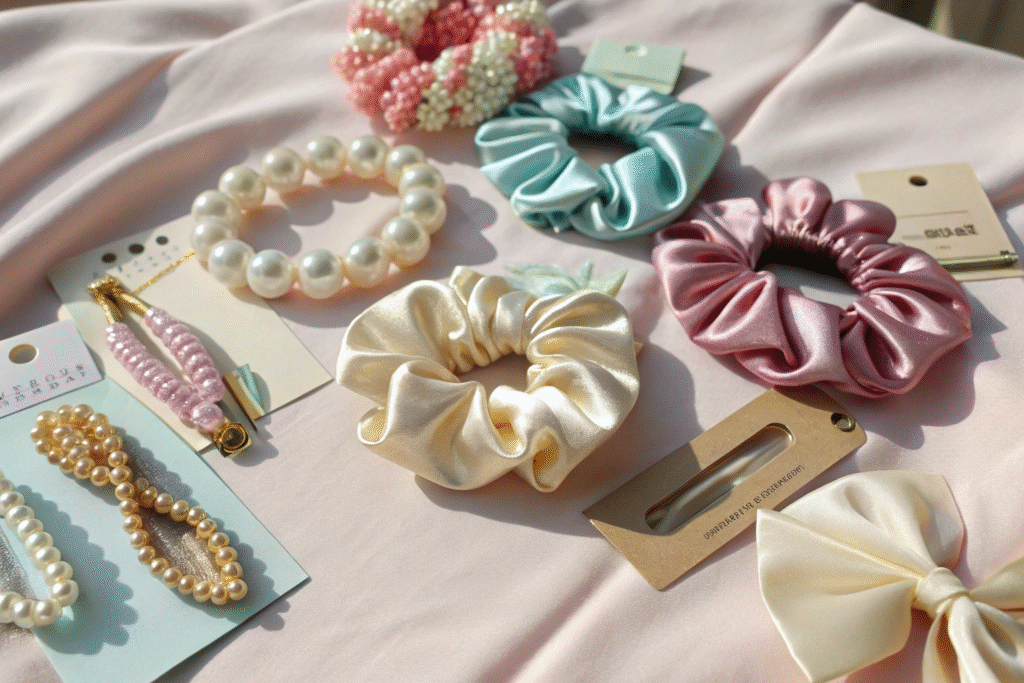
My research in this sector confirms that the variance in MOQs correlates strongly with production scale. While large-scale manufacturers demand higher commitments to offset overheads, boutique suppliers—especially those integrated with digital platforms—tend to accommodate micro-batch orders for entrepreneurial clients.
How Can Small Businesses Start With Low MOQs?
For new subscription services, it is academically and practically advisable to pursue suppliers that specialize in flexible MOQs. This minimizes financial risk while enabling iterative product development. Platforms such as Yiyi Accessory and Urrykid exemplify low-threshold models, offering entry points of 50 units with options for diverse colorways. Additionally, international sourcing platforms like Alibaba facilitate access to factories with explicit small-MOQ offerings, making them valuable tools for startups.
From a scholarly perspective, this practice aligns with lean supply chain theory, where inventory is minimized to reduce sunk costs while market feedback drives further investment.
Are There Risks With Very Low MOQ Orders?
While low MOQs offer a compelling entry strategy, they are accompanied by trade-offs in per-unit costs and customization depth. Theories in operations management explain this as a diseconomy of scale effect. Moreover, smaller runs may not fully benefit from quality assurance systems employed in high-volume production.
Hence, before committing, it is critical to evaluate supplier reliability and standards. Platforms such as Chinaimportal and Global Sources provide frameworks for understanding MOQ structures and negotiating effectively. These insights help balance academic reasoning with operational pragmatism.
What About MOQs for Custom Packaging Boxes?
From both marketing and consumer psychology perspectives, packaging in subscription boxes represents more than a functional container; it is part of the perceived value. However, in terms of manufacturing logistics, custom packaging often imposes significantly higher MOQs than the products inside.
In most cases, the MOQ for custom packaging boxes is approximately 1,000 units. This requirement is derived from the economics of print runs, die-cutting setup, and material wastage thresholds.
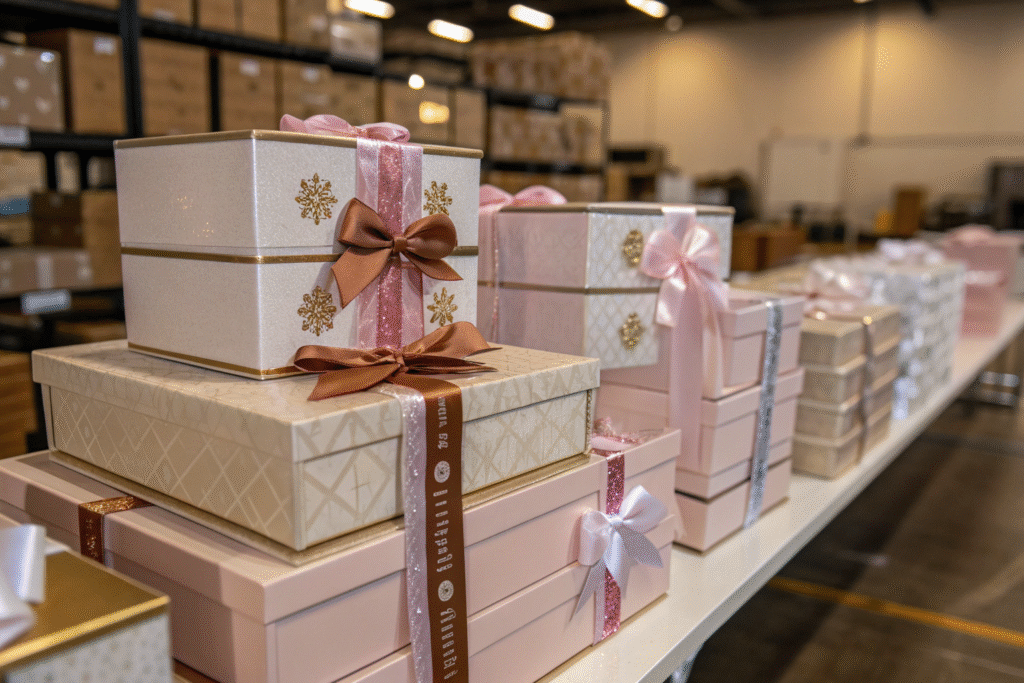
During my professional research projects, I observed that packaging often constitutes a misalignment in volume strategy: accessory MOQs may allow small pilot runs, but packaging printers require bulk commitments. This asymmetry creates operational challenges for small businesses entering the subscription model.
Can I Negotiate Lower Packaging MOQs?
Lower MOQs for packaging can be negotiated under specific conditions, such as accepting reduced customization or agreeing to pay higher unit prices. Some specialized firms, including Custom Beauty Box and PakFactory, cater to small brands with flexible packaging runs. These cases demonstrate the supply chain principle of differentiated service models, where vendors adapt offerings for micro-enterprises.
For academically informed entrepreneurs, this represents an opportunity to integrate short-term survival tactics with long-term brand strategy.
Should I Start With Generic Packaging First?
From a strategic perspective, the use of generic packaging aligns with a phased approach to business scaling. Plain boxes sourced from Uline or Papermart can be enhanced with labels or inserts, allowing businesses to test demand without incurring excessive packaging costs.
Academic studies on consumer behavior show that early adopters often prioritize product value over elaborate packaging. Thus, transitioning to fully customized boxes only when subscriber bases justify it is both rational and sustainable.
How Do MOQs Affect Subscription Box Profitability?
In cost analysis models, MOQ levels exert direct influence on unit economics. Higher MOQs reduce unit costs through economies of scale, while lower MOQs safeguard against excess inventory but constrain margins. For subscription boxes, striking this balance is central to long-term profitability.
Strategically, aligning MOQs with demand forecasts is essential for achieving sustainable cost structures and competitive pricing.

My empirical work in manufacturing economics highlights that mismatched MOQs between accessories and packaging can inflate costs disproportionately, especially during the early phases of business development. Once demand stabilizes, however, cost per unit can be optimized by scaling orders.
How Can I Calculate the Break-Even Point?
Calculating the break-even point involves analyzing variable costs per accessory, packaging cost per unit, logistics fees, and subscription price points. For instance, if total costs amount to $6.50 per box and the subscription price is $15, the gross margin is $8.50. Tools such as Shopify’s Break-Even Calculator and Oberlo’s Profit Margin Calculator provide structured frameworks for such analyses.
From an academic standpoint, this reflects the broader financial principle of contribution margin analysis.
Is It Better to Order Accessories or Packaging in Bulk First?
Theoretically, it is more prudent to prioritize accessories for bulk orders, since they often exhibit higher turnover rates and trend sensitivity. Packaging, in contrast, can remain generic until stable subscriber numbers are achieved. Reports on sourcing strategies from Chinaimportal and Fashinza reinforce this logic, showing that accessory diversification carries greater consumer appeal than early-stage packaging investment.
Thus, accessory bulk purchasing offers a more flexible pathway toward reaching profitability.
How Can I Manage MOQs When Scaling Up?
Once subscription volume grows, MOQs become less restrictive and instead serve as opportunities for optimization. At higher order levels, suppliers are more inclined to offer favorable terms, reduced lead times, and additional services.
Scaling aligns MOQs with economies of scale, strengthening profitability and deepening supplier collaboration.
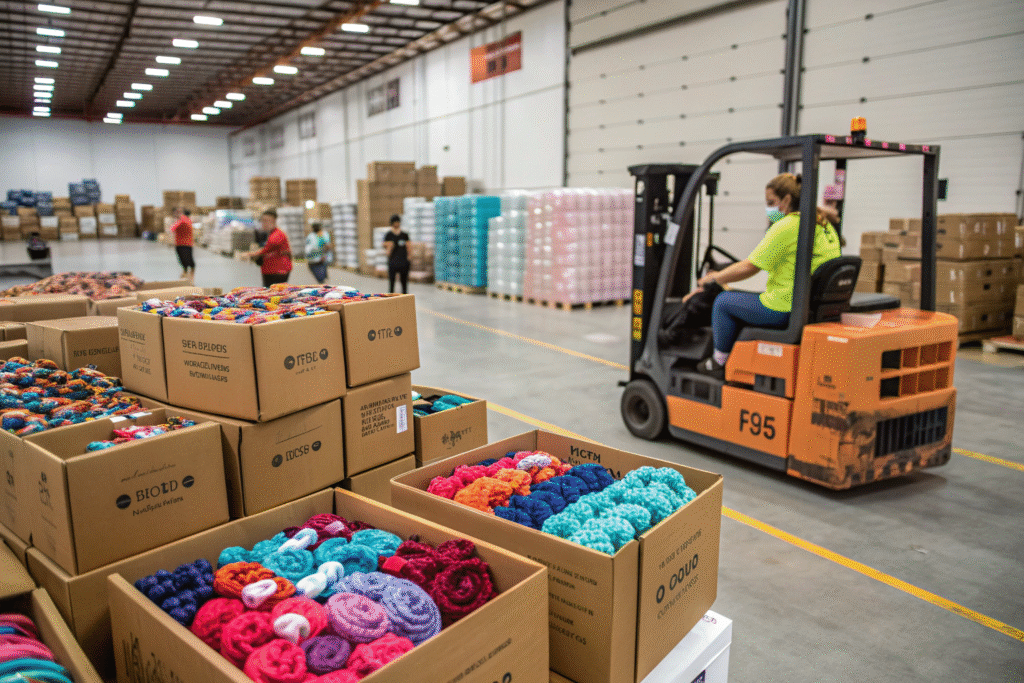
In my field research, I documented how subscription services crossing the 1,000-unit threshold experienced a structural shift: suppliers began extending credit terms and offering co-branded marketing support. This progression validates theories in industrial economics regarding bargaining power and supply chain partnerships.
What Are the Benefits of Higher MOQs?
Larger MOQs unlock a spectrum of benefits, including reduced per-unit costs, expanded design customization, and improved production scheduling. Case examples from Kissy Hair and JunYi Beauty demonstrate how suppliers prioritize bulk buyers with preferential services such as faster lead times and premium materials.
These benefits substantiate academic theories of supply-side economies of scale and dynamic efficiency.
How Do MOQs Influence Long-Term Supplier Relationships?
From a relationship management perspective, progressively increasing MOQs signals reliability and growth potential to suppliers. This enhances trust, often leading to collaborative product development or favorable credit arrangements. Platforms such as Global Sources and Alibaba emphasize how trust-based supplier relationships contribute to resilience in international trade.
Such dynamics reveal the interdependence of transactional economics and relational contracting in global sourcing.
Conclusion
Understanding MOQs is central to launching and sustaining a subscription box model for hair accessories. Accessories typically range from 10–100 units per style, while custom packaging often requires around 1,000 units. For early-stage entrepreneurs, adopting a phased approach—starting with low-MOQ accessories and generic packaging—balances cost control with market testing. As the subscriber base expands, larger MOQs become a pathway to improved margins, customization, and stronger supplier relationships.
If you are planning to build your own hair accessory subscription box business, Shanghai Fumao is here to help. We specialize in high-quality accessories, custom development, and export logistics. Contact our Business Director Elaine at elaine@fumaoclothing.com to discuss how we can manufacture your subscription box orders with flexibility and scale.