
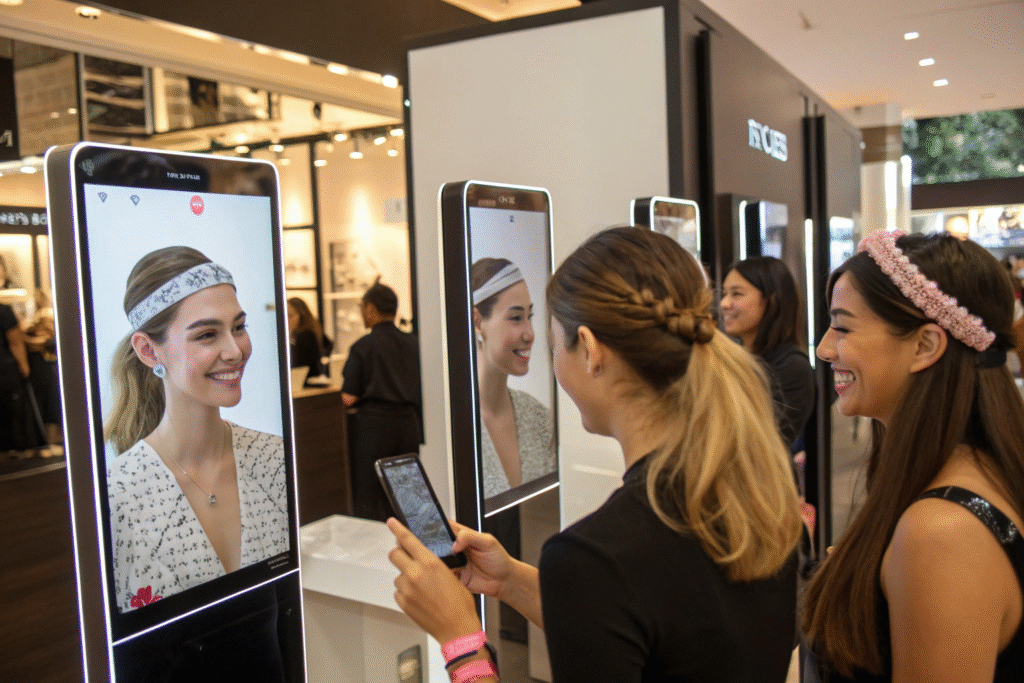
As the owner of HairAcc with extensive experience in both hair accessory manufacturing and digital innovation, I understand the transformative potential of virtual try-on technology. This technology bridges the gap between online shopping and physical experience, creating exciting opportunities for hair accessory brands to enhance customer engagement and reduce returns.
The most suitable hair accessories for virtual try-on integration include headbands, hair clips, hair chains, decorative combs, and statement hair pins that feature clear silhouettes, distinctive colors, and recognizable shapes that AR technology can accurately detect and render.These categories work particularly well because they create visible transformations while being technically feasible for current virtual try-on capabilities.
Virtual try-on technology has evolved significantly, with advancements in augmented reality (AR) and artificial intelligence (AI) making it increasingly accessible for hair accessory brands. Based on our experience developing products specifically for digital integration, here's a comprehensive guide to selecting and optimizing hair accessories for virtual try-on implementation.
Which Hair Accessory Categories Work Best with AR Technology?
Not all hair accessories perform equally well in virtual try-on environments. Understanding which categories deliver the most accurate and satisfying user experiences helps brands prioritize their digital integration efforts.
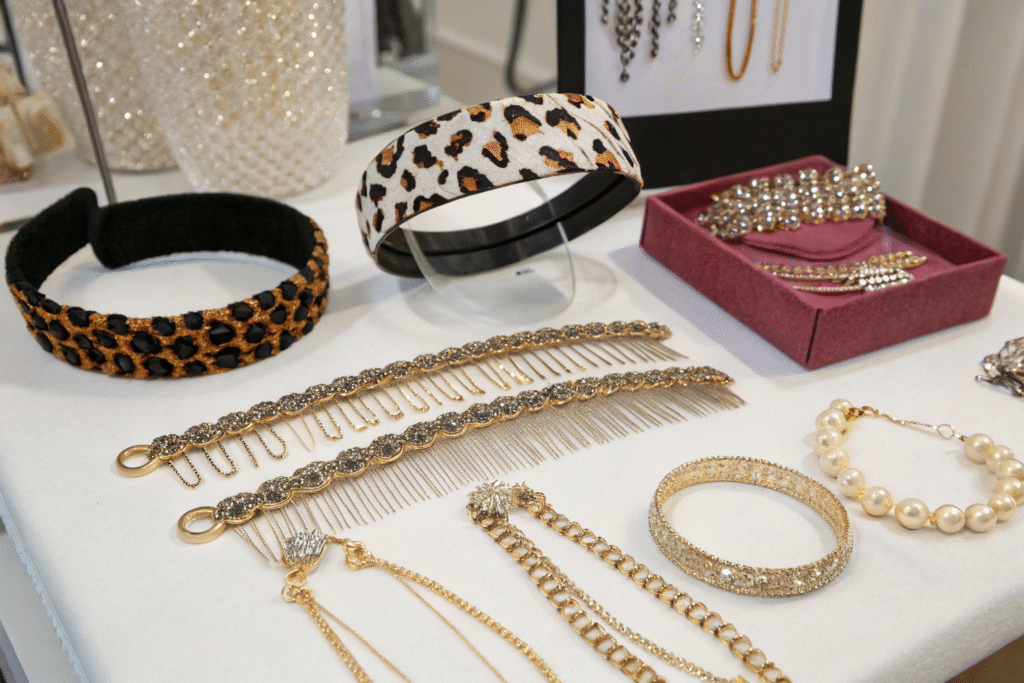
Headbands, statement hair clips, decorative hair combs, and hair chains consistently deliver the best virtual try-on results due to their defined shapes, consistent positioning, and clear visual impact that AR systems can reliably detect and render.These categories create noticeable transformations that customers can easily evaluate, making them ideal for initial virtual try-on implementation before expanding to more complex accessories.
Why Do Headbands Excel in Virtual Try-On Applications?
Headbands represent the most reliable category for virtual try-on integration due to their consistent positioning and clear silhouette. The technology can easily map the headband shape around the head, creating realistic placement regardless of hair style or color. Wide headbands and decorative headwraps work particularly well because they cover significant surface area, making digital rendering more accurate and visually impactful. Their placement above the hairline ensures consistent detection, and their variety of materials—from fabric to plastic—can be realistically simulated in different lighting conditions. This reliability makes headbands an excellent starting point for brands new to virtual try-on technology.
What Makes Statement Hair Clips Ideal for AR Integration?
Large hair clips and barrettes with distinctive shapes provide excellent virtual try-on experiences because they create focal points that AR systems can easily track. Their defined edges and consistent depth make digital placement more accurate than smaller, more subtle accessories. Statement clips with geometric designs or unique patterns register well with detection algorithms, and their substantial size means customers can clearly see how they look from multiple angles. The technology can realistically simulate how these clips interact with different hair textures and volumes, providing valuable visual information for purchase decisions.
What Technical Considerations Impact Virtual Try-On Success?
Successful virtual try-on implementation requires understanding both the technical capabilities and limitations of current AR technology. Certain product characteristics significantly impact the accuracy and realism of digital rendering.
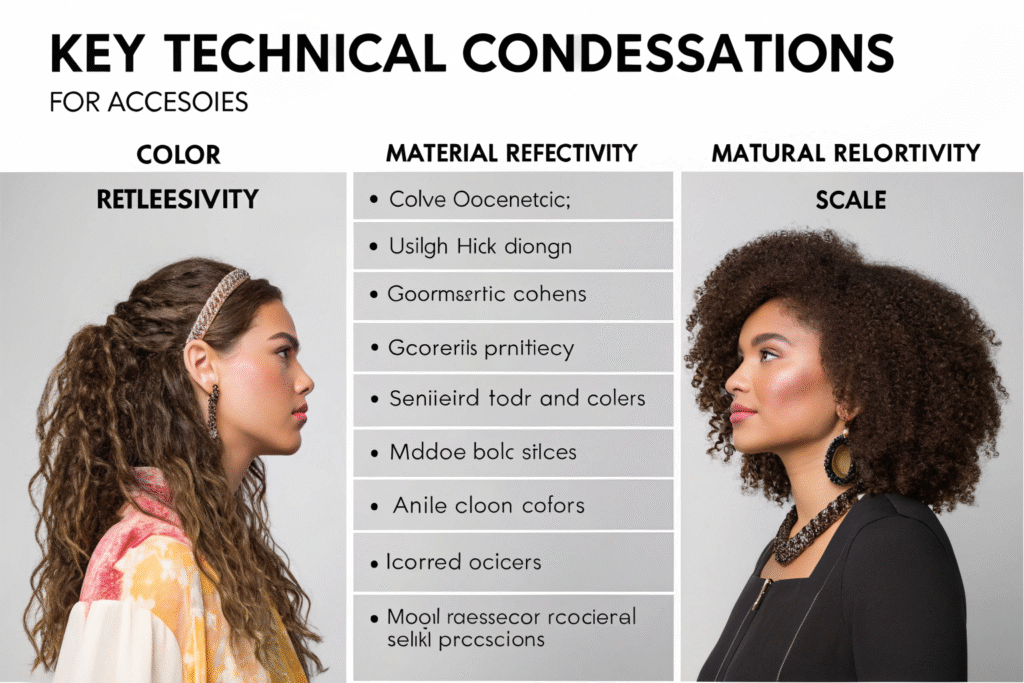
Key technical considerations include color contrast, material reflectivity, size and scale, geometric complexity, and how the accessory interacts with different hair types and styles.Products that perform well technically typically feature matte finishes, medium to large sizes, distinctive colors that contrast with hair, and shapes that don't require precise strand-level placement.
How Does Color and Material Affect AR Performance?
Color contrast and material properties dramatically influence virtual try-on accuracy. Accessories in solid, vibrant colors that contrast with common hair colors (black, brown, blonde) detect more reliably than translucent or neutral-toned items. Matte finishes generally perform better than highly reflective materials because they create fewer lighting complications in the AR rendering process. Metallic accessories require more sophisticated rendering to simulate light reflection accurately, while fabric-textured items can be realistically rendered with current technology. Brands should consider developing specific color variations optimized for virtual try-on while maintaining their overall collection aesthetic.
What Size and Scale Considerations Matter Most?
Size significantly impacts virtual try-on effectiveness. Accessories that are too small may not register consistently across different devices and lighting conditions, while very large items might not render realistically with all hair volumes. The ideal size range for reliable detection is between 2-6 inches in the largest dimension, providing sufficient surface area for tracking without overwhelming the hairstyle. Scale consistency is also crucial—3D modeling accuracy depends on precise measurements, so manufacturers must provide detailed specifications and consistent sizing across production runs to ensure digital versions match physical products.
How to Design Hair Accessories for Optimal Digital Integration?
Proactive design strategies can significantly enhance virtual try-on performance while maintaining aesthetic appeal. Designing with digital integration in mind creates better customer experiences and reduces technical challenges during implementation.
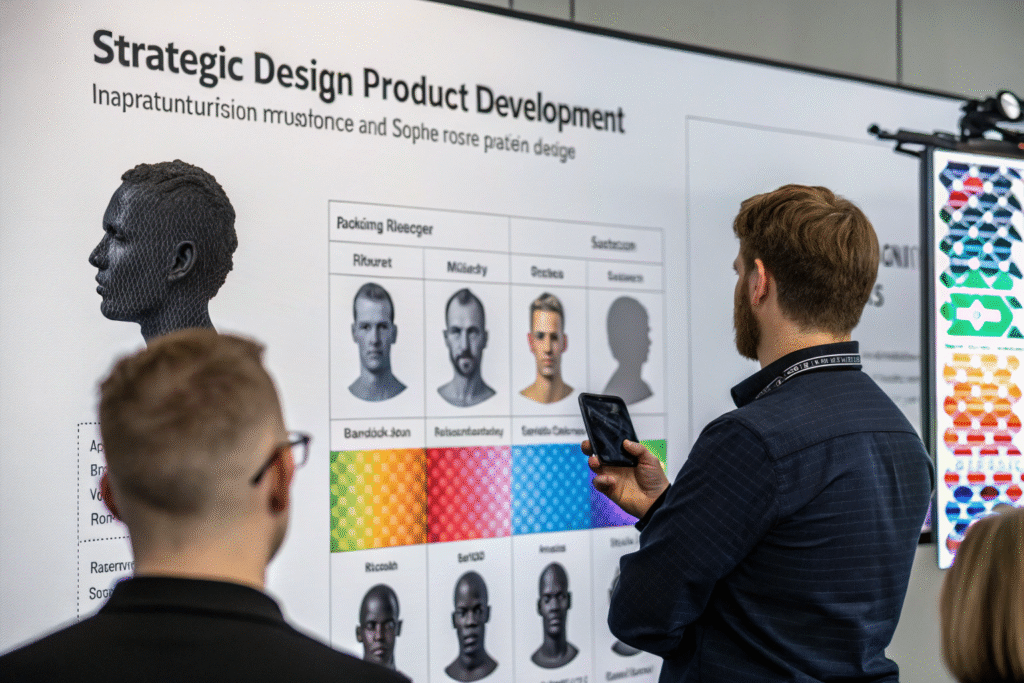
Strategic design approaches include creating distinctive silhouettes, optimizing color palettes for AR detection, simplifying complex elements that don't render well, and maintaining consistent proportions that scale accurately across different hairstyles and head shapes.These considerations help ensure products look appealing both physically and digitally while performing reliably in virtual try-on environments.
What Silhouette Characteristics Improve Detection Accuracy?
Clear, distinctive silhouettes dramatically improve virtual try-on reliability. Designs with defined edges and minimal intricate cutouts register more consistently than those with delicate, complex patterns. Larger surface areas provide more tracking points for AR positioning systems, making placement more accurate across different hair types and styles. Designs that don't rely on precise strand-level integration—meaning they sit on top of or around hair rather than weaving through it—generally perform better because they're less dependent on individual hair characteristics. This makes structured accessories like wide headbands and substantial clips more reliable than fine hair pins or delicate chains.
How Can Color Selection Enhance Digital Performance?
Strategic color selection significantly improves virtual try-on experiences. High-contrast colors that stand out against common hair colors increase detection reliability. Solid colors perform better than gradients or patterns because they create consistent tracking points. When developing products specifically for virtual try-on, consider creating AR-optimized color variants that maintain brand identity while ensuring technical performance. Testing color options across different hair colors and skin tones during the design phase helps identify the most versatile choices that will work well for diverse customer bases.
What Marketing Benefits Does Virtual Try-On Provide?
Beyond the technical implementation, understanding the marketing advantages helps brands justify investment in virtual try-on technology and leverage it effectively in their sales strategies.
Virtual try-on technology delivers significant marketing benefits including increased conversion rates, reduced return rates, enhanced social sharing potential, valuable customer data collection, and stronger brand positioning as innovative and customer-focused.These advantages create compelling business cases for integrating this technology across appropriate product categories.
How Does Virtual Try-On Impact Conversion and Return Rates?
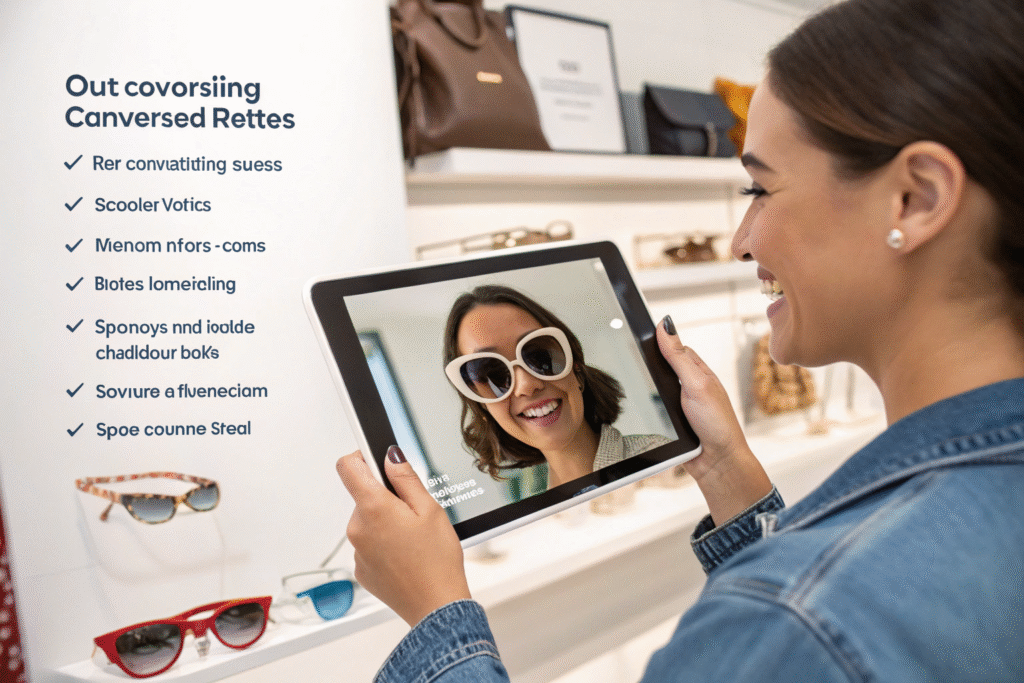
Virtual try-on technology directly addresses key e-commerce challenges by helping customers make more confident purchase decisions. Brands implementing virtual try-on typically see conversion rate increases of 15-30% for compatible products because customers can visualize how accessories will look with their specific features. More importantly, return rates often decrease by 20-40% since customers have realistic expectations about how products will appear and fit. This reduction in returns significantly impacts profitability, often justifying the technology investment through cost savings alone, in addition to increased sales.
What Social Sharing Opportunities Does AR Create?
Virtual try-on experiences naturally encourage social sharing, creating organic marketing opportunities. When customers enjoy positive virtual try-on experiences, they frequently share their digital makeovers on social media, effectively providing user-generated content that promotes both the products and the brand's innovative technology. This social proof is particularly valuable for reaching new audiences who may discover the brand through friends' shared experiences. Brands can enhance this effect by incorporating easy sharing features, creating branded filters, and running social media campaigns that encourage users to share their virtual try-on results.
Conclusion
Virtual try-on technology represents a significant opportunity for hair accessory brands to enhance customer experiences, reduce returns, and drive sales. By focusing on categories that perform well technically—particularly headbands, statement clips, and hair chains—and optimizing designs for digital integration, brands can successfully implement this innovative technology. The marketing benefits extend beyond immediate sales increases to include valuable social sharing, brand positioning advantages, and deeper customer insights.
If you're interested in developing hair accessories optimized for virtual try-on integration, we invite you to contact HairAcc to discuss your specific requirements. With our experience in both product development and digital innovation, we can help you create collections that perform excellently in virtual environments while maintaining aesthetic appeal and quality. Reach out to our Business Director Elaine at elaine@fumaoclothing.com to explore how we can integrate virtual try-on capabilities into your hair accessory offerings.