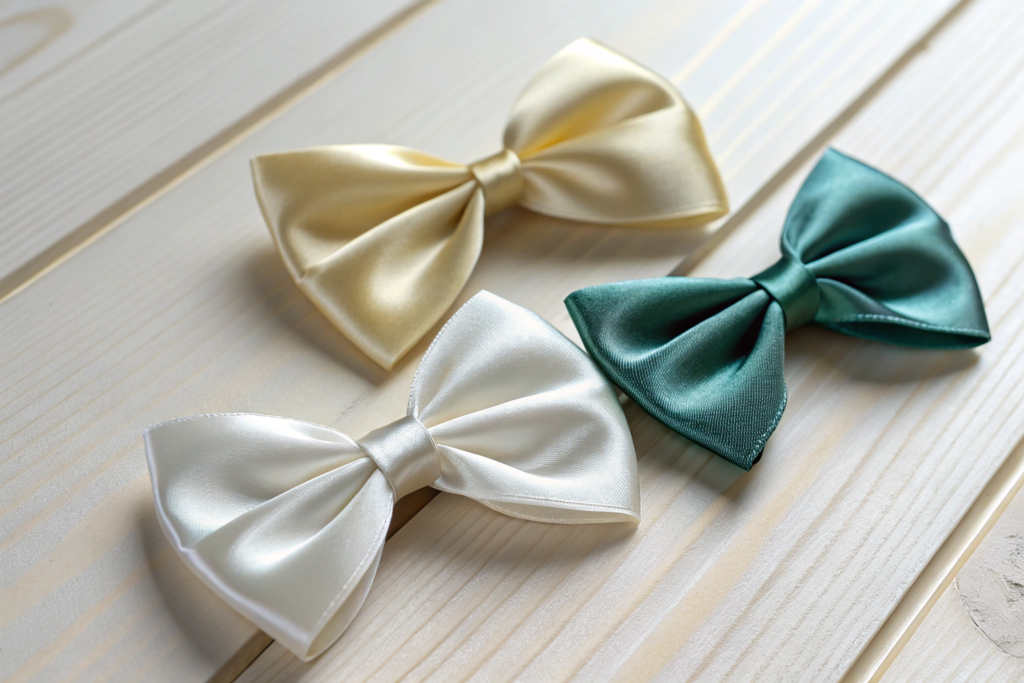
Is there anything more frustrating than seeing your beautifully crafted bow clips start to fray at the edges after just a little wear? You source lovely ribbons and create stunning designs, but if the material can't hold up, you're left with unhappy customers and a product that looks cheap. This single issue can undermine your brand's reputation for quality and lead to costly returns, making you hesitant to invest in new bow clip inventory.
The best fabrics for bow clips that resist fraying are high-density grosgrain ribbon, double-faced satin, and high-quality velvet. Grosgrain's ribbed structure provides inherent strength, while premium satin and velvet made with a tight weave and properly sealed edges are also highly durable. The key is a combination of dense material and effective edge-finishing techniques.
As the owner of a factory that produces millions of hair accessories annually, I can tell you that fraying is a battle we fight and win every day. It's a top concern for our wholesale buyers, from large US retailers to European fashion brands. A bow clip's beauty is only as lasting as its edges. That's why we've perfected our material selection and production techniques to create bows that stay pristine. In this article, I'll share my insider knowledge on which fabrics perform best, how to identify them, and the production secrets that keep edges clean, so you can source your next collection with total confidence.
Why is Grosgrain the Industry Standard?
You see grosgrain ribbon everywhere in the bow clip market, from schoolgirl bows to more sophisticated designs. But why is it so dominant? You might be tempted to choose shinier or softer fabrics, but you notice that many competitors stick with this ribbed material. Understanding why grosgrain is the go-to choice can help you make smarter inventory decisions and avoid the pitfalls of less durable options.
Grosgrain is the industry standard for bow clips because its tightly woven, ribbed structure provides exceptional stiffness and durability, which helps bows hold their shape and naturally resists fraying. Its matte finish is versatile, and its edges can be easily and effectively heat-sealed for a permanent, clean finish.
I remember working with a new entrepreneur who wanted to launch a line of children's bow clips. She was drawn to delicate, shimmery organza. I cautioned her that while beautiful, organza frays very easily and is too soft to hold a crisp bow shape without significant reinforcement. I sent her a sample pack comparing an organza bow to one made from our high-density polyester grosgrain. The difference was immediate. The grosgrain bow was perky, structured, and felt substantial. She realized that for a product meant for active kids, durability was non-negotiable. She switched to grosgrain, and her line has been a bestseller ever since.
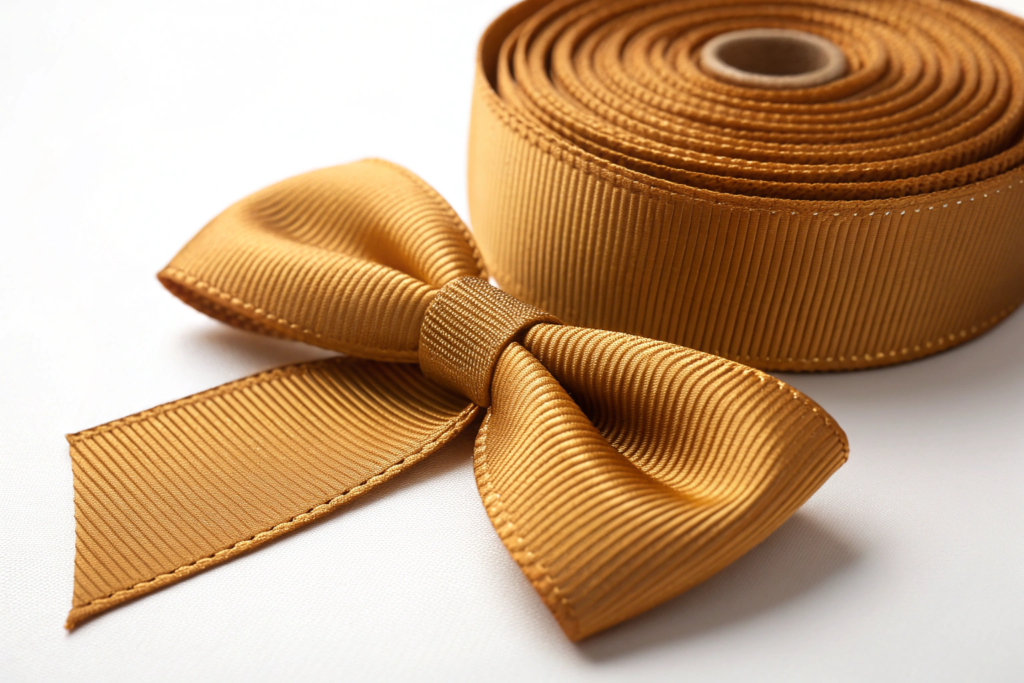
What makes a high-quality grosgrain ribbon?
Not all grosgrain is created equal. The difference between a premium ribbon and a cheap one is significant. When sourcing, look for:
- High Density: A quality grosgrain will feel thick and sturdy. It should have a high thread count, which gives it its stiffness and fray-resistant properties. Cheap versions feel flimsy and have a looser weave that is more prone to unraveling.
- Material: 100% polyester grosgrain is the most common and reliable choice. It has excellent colorfastness, is durable, and, most importantly, its thermoplastic nature allows for perfect heat sealing.
- Consistent Weave: Inspect the ribbon for a uniform ribbed pattern. Any inconsistencies or loose threads are a red flag for poor quality control.
You can often find high-quality ribbon suppliers for industrial use on platforms like Thomasnet, which lists various American manufacturers and distributors.
How does grosgrain's structure prevent fraying?
The unique structure of grosgrain is its secret weapon. The ribbon is a "weft-faced" plain weave, meaning the weft (crosswise) threads are heavier than the warp (lengthwise) threads. This creates the distinct transverse ribs. This ribbed structure locks the threads in place more securely than a simple flat weave. When the ribbon is cut, the threads are less likely to pull loose. This inherent structural integrity is the first line of defense against fraying, even before any edge sealing is applied.
Can Satin and Velvet Be Fray-Resistant?
Your customers love the luxurious look of satin and the rich texture of velvet, but you're hesitant to stock them, fearing they will fray and fall apart. You want to offer these premium options, especially for holiday collections and formal wear, but the risk of quality complaints holds you back. How can you get that high-end look without sacrificing durability?
Satin and velvet can be highly fray-resistant if you choose the right type and ensure they are properly finished. Double-faced satin with a dense weave and high-quality velvet with a strong backing fabric are excellent choices. The key is that the edges must be professionally sealed, typically with heat or a specialized bonding agent.
At Shanghai Fumao Clothing, our holiday collections are always filled with velvet and satin bows. A few years ago, a major European buyer, Ron, placed a large order for red velvet bows. His main concern was fraying, as his previous supplier's velvet bows looked "messy" after a short time on the retail floor. We showed him our process: we use a high-grade velvet ribbon with a cotton-blend backing, and each piece is cut with an ultrasonic cutter. This tool cuts and seals the edge simultaneously. He was so impressed with the clean finish that he doubled his order. It proved that with the right technique, luxury fabrics can be just as durable as workhorse materials like grosgrain.
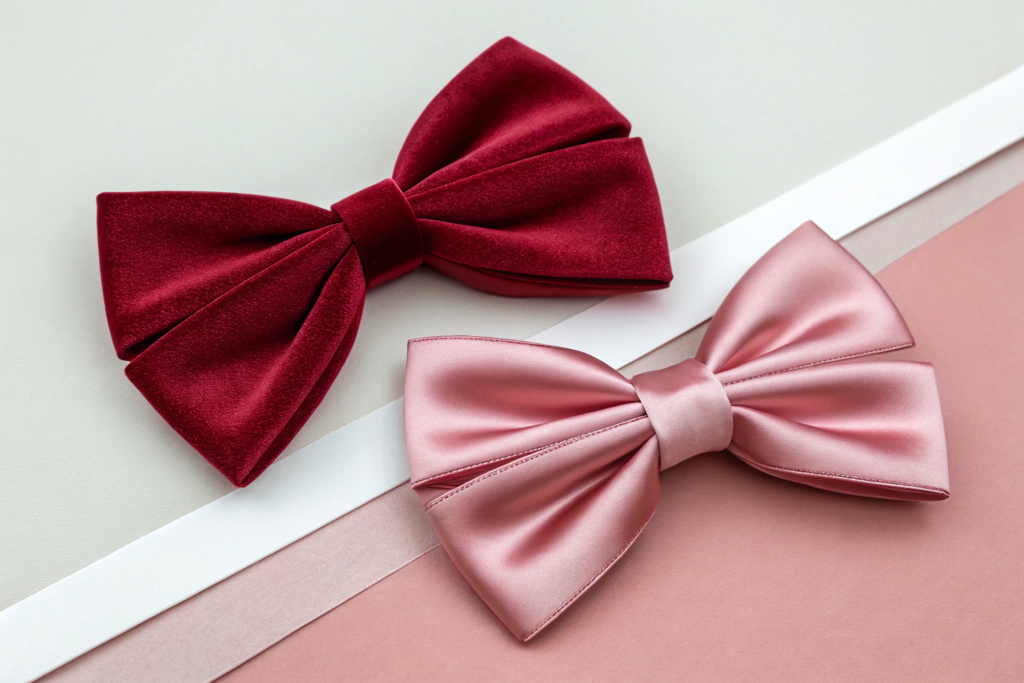
What type of satin should you choose?
The term "satin" refers to a specific weave, not a material. For durable bows, you want double-faced satin ribbon made from 100% polyester.
- Double-Faced: This means the ribbon is glossy and smooth on both sides. It's typically thicker and more tightly woven than single-faced satin, making it more robust.
- Polyester: Just like with grosgrain, polyester is crucial because it can be heat-sealed. Satin ribbons made from natural fibers like silk will burn rather than melt, making them much harder to finish cleanly.
You can explore different types of satin ribbon and their applications on educational textile sites like The Business of Fashion.
What should you look for in velvet ribbon?
Velvet's construction is a pile weave, which can be prone to shedding and fraying. To avoid this, look for:
- Strong Backing: The quality of the backing fabric is critical. A sturdy, tightly woven cotton or polyester backing will hold the pile (the soft, fuzzy part) securely in place.
- Dense Pile: High-quality velvet will have a thick, dense pile that doesn't easily pull out.
- Wired vs. Unwired: For bow making, unwired velvet is usually sufficient if it's high quality. Wired velvet can help create very large, structured bows but adds complexity and cost.
When sourcing, always ask for a sample and run your finger along the cut edge. If you see significant shedding or loose threads, it's a sign of low-quality construction.
How Are Bow Edges Professionally Sealed?
You've selected the perfect, high-density fabric for your bows. But cutting the ribbon is only half the battle. How do you ensure that the cut edges will remain pristine through packaging, shipping, and customer use? An unsealed or poorly sealed edge is a ticking time bomb for fraying, and it's the detail that separates a professional product from an amateur one.
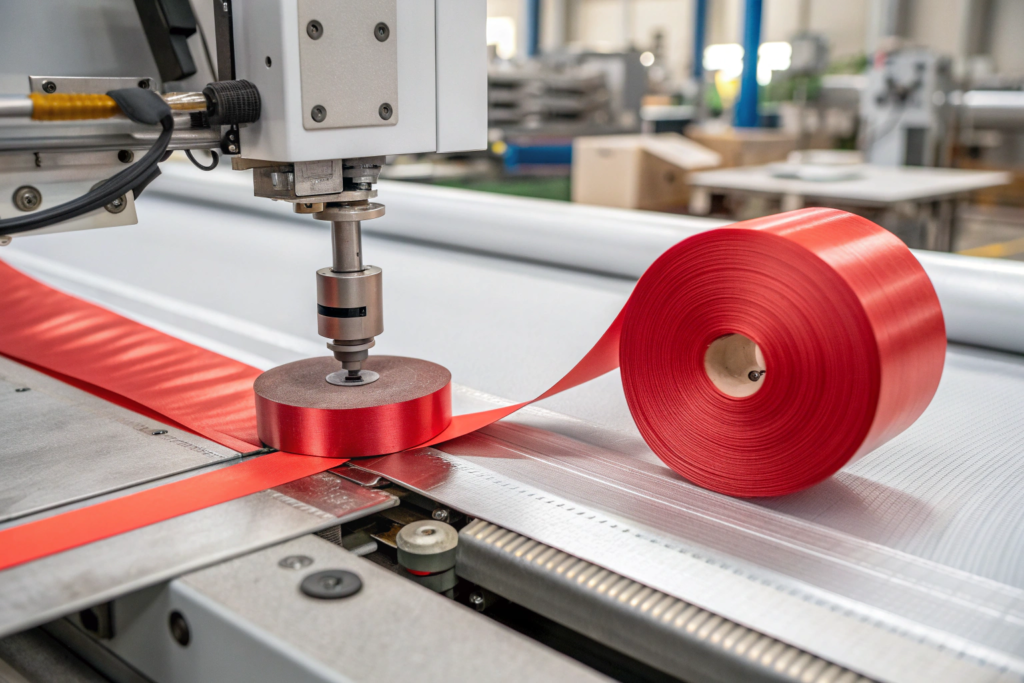
Bow edges are professionally sealed using thermal or ultrasonic methods. Heat sealing, done with a hot knife or wood-burning tool, melts the synthetic fibers of the ribbon to create a clean, hard edge. Ultrasonic cutting uses high-frequency vibrations to cut and seal the edge simultaneously, resulting in a softer, more flexible seal.
In our factory, every single bow we produce goes through an edge-sealing process. For our large-scale production of grosgrain and satin bows, we use custom-built, semi-automated ultrasonic cutters. This technology is fast, precise, and incredibly consistent. It's a significant investment, but it's one of the cornerstones of our quality promise. When a client asks how we can guarantee our bows won't fray, I often send them a video of this machine in action. Seeing the technology firsthand provides immediate assurance that they are dealing with a serious, professional operation.
What is heat sealing?
Heat sealing is the most common method for preventing fraying in synthetic ribbons like polyester grosgrain and satin.
- How it works: A heated tool, like a hot knife or a specialized ribbon cutter, is used to slice through the ribbon. The intense heat melts the polyester fibers at the very edge. As they cool, the melted fibers fuse together, creating a solid, plastic-like barrier that cannot unravel.
- Pros: It's a very effective and permanent solution. The tools are relatively inexpensive, making it accessible even for smaller-scale production.
- Cons: If the tool is too hot, it can leave a dark, burnt mark. If it's not hot enough, the seal won't be complete. The resulting edge can sometimes be slightly stiff or scratchy. You can find tutorials and tools for this process on craft supply websites like Michaels.
What is ultrasonic cutting?
Ultrasonic cutting is a more advanced, industrial method for finishing edges.
- How it works: The machine uses high-frequency sound waves to vibrate a cutting blade. This intense vibration generates localized heat through friction, which cuts and seals the fabric at the same time.
- Pros: It's extremely fast and precise. The seal is typically softer and more flexible than a traditional heat seal, which is ideal for a product worn in the hair. It produces a perfectly clean edge every time.
- Cons: The machinery is very expensive, making it suitable only for large-scale manufacturing operations like ours at Shanghai Fumao Clothing.
When you're vetting a supplier, ask them what method they use. A manufacturer who has invested in ultrasonic technology is likely very serious about quality control.
How to Spot Quality and Durability in a Sample?
You've received a sample bow clip from a potential new supplier. It looks great at first glance, but how can you predict its long-term durability? You need a reliable way to assess its quality beyond just its initial appearance. Making the wrong choice could lead to a bulk order of subpar products, wasting time and money.
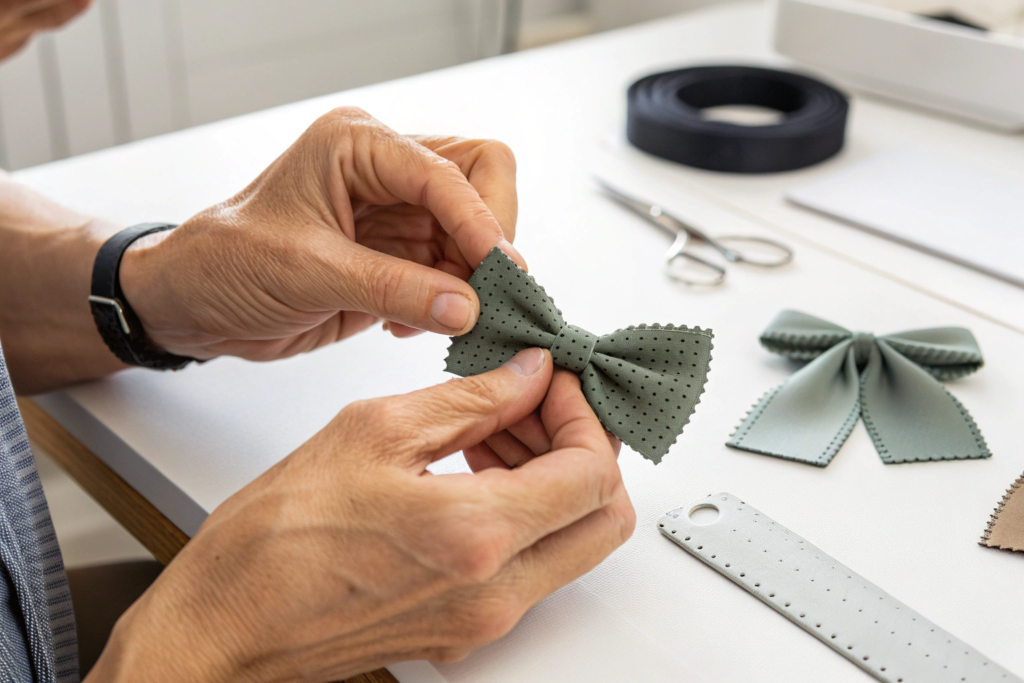
To spot quality in a sample bow clip, perform a "fray test" by vigorously rubbing the ribbon's edge. Examine the seal for consistency and check the bow's construction for tight knots and secure attachment to the clip. A high-quality bow will feel sturdy, hold its shape, and show no signs of fraying or unraveling under stress.
This is the "moment of truth" for every sample we send out. I always encourage our potential clients to be tough on our samples. Pull at the bow, rub the edges, work the clip mechanism. Our products are designed to withstand the rigors of daily wear by an active child, so they should certainly withstand a thorough inspection. A supplier who is confident in their product will never be afraid of this kind of scrutiny. It's a simple, practical test that cuts through marketing claims and gets to the heart of the product's true quality.
What is the "Fray Test"?
This is a simple but effective test you can do yourself.
- Take the sample bow and locate a cut edge of the ribbon.
- With your thumb and forefinger, rub the edge back and forth vigorously for 10-15 seconds.
- Inspect the edge closely. A poorly sealed or unsealed edge will immediately start to show loose threads and signs of unraveling. A professionally sealed edge, like one from a heat-sealed or ultrasonically cut ribbon, will remain perfectly intact.
What other quality indicators should you look for?
Beyond the fray test, check these other key areas:
- Bow Construction: Is the center knot tight and secure? A loose knot is a sign of sloppy assembly. The loops of the bow should be symmetrical and full, indicating the use of a stiff, quality ribbon like good grosgrain.
- Clip Attachment: How is the bow attached to the metal clip? It should be secured with a strong adhesive, and often, a small piece of ribbon is wrapped around the clip and bow center for added security. Pull gently on the bow to ensure it doesn't easily detach from the clip.
- Hardware Quality: Open and close the alligator clip or barrette several times. It should have a smooth, strong spring action. Check for any signs of rust or sharp edges on the metal hardware itself. You can find examples of quality hair clip hardware from suppliers on platforms like Alibaba, but always vet the supplier carefully.
By performing this hands-on evaluation, you can make a much more informed decision and partner with a supplier who truly meets your quality standards.
Conclusion
In the world of hair accessories, the small details make all the difference. A bow clip that doesn't fray is a testament to quality craftsmanship and smart material choices. By prioritizing high-density grosgrain, double-faced satin, and well-made velvet, you are already halfway to a superior product. The other half of the equation lies in professional edge sealing—a crucial manufacturing step that separates the best from the rest. When you source your next collection, don't be afraid to ask tough questions about materials and finishing techniques, and always put your samples to the test.
Building a reputation for quality is the surest path to customer loyalty and long-term success. At our company, we've built our entire business on this principle. We are committed to creating beautiful, durable hair accessories that you can be proud to sell. If you're ready to partner with a manufacturer who obsesses over these details, I invite you to reach out. Please contact our Business Director, Elaine, at elaine@fumaoclothing.com to discuss your needs and request samples that you can put to the test yourself.