
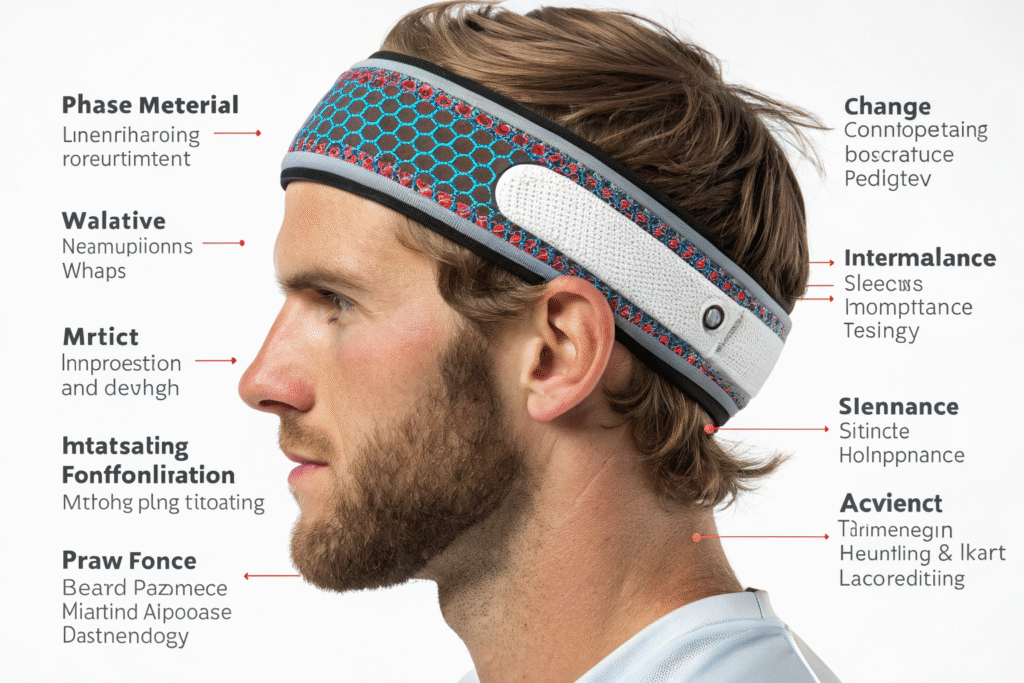
In today's activewear market, sweatbands have evolved far beyond simple fabric strips that absorb moisture. The integration of smart temperature-regulating technologies represents one of the most significant advancements in sports accessories, transforming ordinary sweatbands into sophisticated performance-enhancing tools. These innovations are particularly crucial for athletes, fitness enthusiasts, and outdoor workers who face challenging thermal conditions during physical activities.
Smart temperature-regulating technologies in sweatbands include phase change materials (PCM), moisture-wicking fabrics with thermal properties, advanced ventilation systems, and integrated cooling mechanisms that actively respond to body temperature changes.These technologies work synergistically to maintain optimal forehead temperature, enhance athletic performance, and improve comfort during physical activities. The most effective systems combine passive cooling principles with active temperature management to create adaptive thermal regulation that responds to the wearer's activity level and environmental conditions.
The growing demand for these advanced sweatbands reflects a broader trend toward smart sportswear that actively enhances performance rather than merely providing basic functionality. As consumers become more educated about thermal management benefits, manufacturers are responding with increasingly sophisticated solutions.
How Do Phase Change Materials (PCM) Work in Temperature Regulation?
Phase change materials represent one of the most innovative approaches to thermal regulation in activewear. These substances store and release thermal energy during phase transitions, typically between solid and liquid states, providing consistent temperature management regardless of environmental conditions.
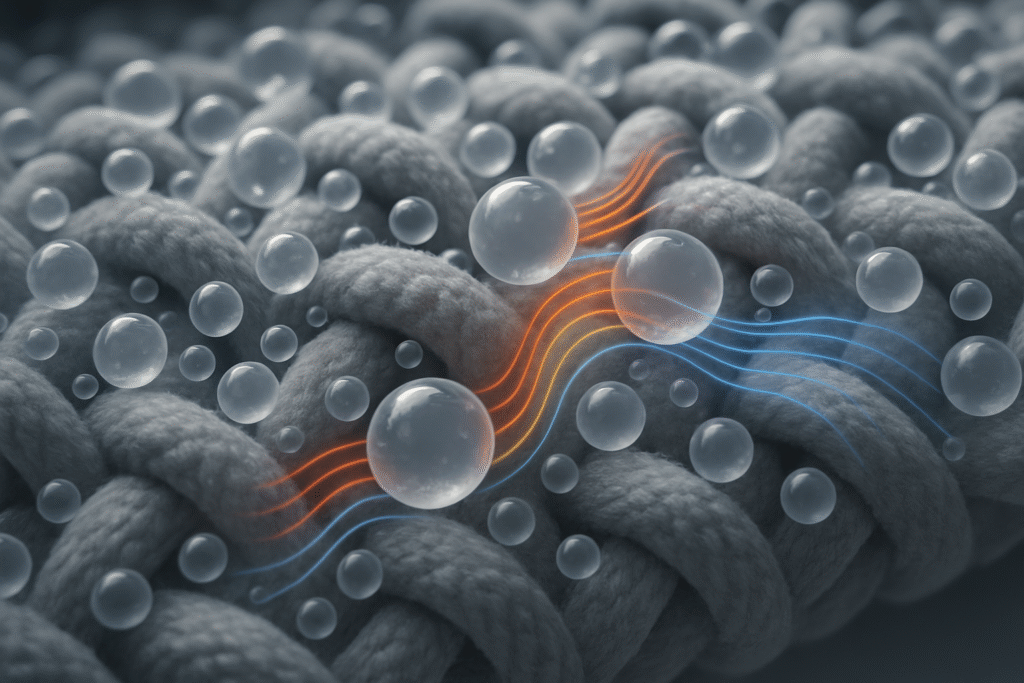
PCM technology in sweatbands involves microencapsulated phase change materials embedded within the fabric structure. These microscopic capsules contain substances that melt at specific temperatures, absorbing excess heat from the skin surface. When the body temperature decreases, the materials solidify and release stored heat back to the body, creating a buffering effect that maintains a consistent thermal environment.
What Types of PCM Are Most Effective for Sweatband Applications?
The selection of phase change materials depends on the specific temperature range required for optimal performance. For sweatband applications, materials with phase change temperatures between 28°C and 32°C (82°F-90°F) prove most effective, as this range corresponds to typical forehead temperatures during physical activity.
Common PCM types include:
- Paraffin Waxes: Offer high latent heat storage and consistent performance across multiple cycles
- Salt Hydrates: Provide excellent thermal conductivity and higher energy storage density
- Bio-Based PCMs: Derived from natural sources like vegetable oils, appealing to eco-conscious consumers
- Polymer-Based PCMs: Integrated directly into synthetic fibers for seamless distribution
The effectiveness of these materials depends not only on their thermal properties but also on their integration method within the fabric structure and their durability through multiple wash cycles.
How Does Microencapsulation Enhance PCM Performance and Longevity?
Microencapsulation technology represents a crucial advancement in PCM applications for wearable textiles. This process involves surrounding microscopic droplets of phase change materials with protective polymer shells, creating capsules typically measuring 1-50 micrometers in diameter. These tiny capsules are then embedded within fibers or coated onto fabric surfaces.
The microencapsulation process provides multiple benefits:
- Prevents Leakage: Contains PCM during liquid phase, maintaining fabric integrity
- Increases Surface Area: Enhances heat transfer efficiency through distributed micro-droplets
- Protects PCM: Shields sensitive materials from environmental degradation
- Enables Customization: Allows precise distribution patterns for targeted cooling
This technology ensures that PCM-enhanced sweatbands maintain their thermal regulation properties through extended use and multiple cleaning cycles, providing long-term value to consumers.
What Advanced Fabric Technologies Enable Smart Thermal Regulation?
Beyond phase change materials, numerous fabric technologies contribute to intelligent temperature management in modern sweatbands. These innovations work through various mechanisms including enhanced moisture transport, strategic insulation, and responsive fiber structures.
Moisture-wicking technologies form the foundation of temperature regulation by efficiently moving sweat away from the skin. However, advanced systems go beyond simple moisture transport to incorporate thermal properties that actively respond to changing conditions. These fabrics often feature engineered cross-sections, specialized fiber blends, and strategic construction methods that optimize both moisture management and thermal comfort.
How Do Hydrophilic and Hydrophobic Fiber Combinations Work?
Advanced sweatbands utilize strategic combinations of hydrophilic (water-attracting) and hydrophobic (water-repelling) fibers to create directional moisture movement. This technology, often called "gradient drying," pulls moisture away from the skin through capillary action and distributes it across a larger surface area for rapid evaporation.
Common implementations include:
- Dual-Knit Construction: Hydrophobic outer layers with hydrophilic inner surfaces
- Core-Spun Yarns: Hydrophobic cores wrapped with hydrophilic sheaths
- Zone-Specific Blending: Varying fiber ratios in different sweatband areas
- Micro-channel Fibers: Engineered grooves that enhance capillary action
The evaporation process itself provides significant cooling through latent heat absorption, making efficient moisture management directly contribute to temperature reduction.
What Role Do Geometric Fabric Structures Play in Thermal Management?
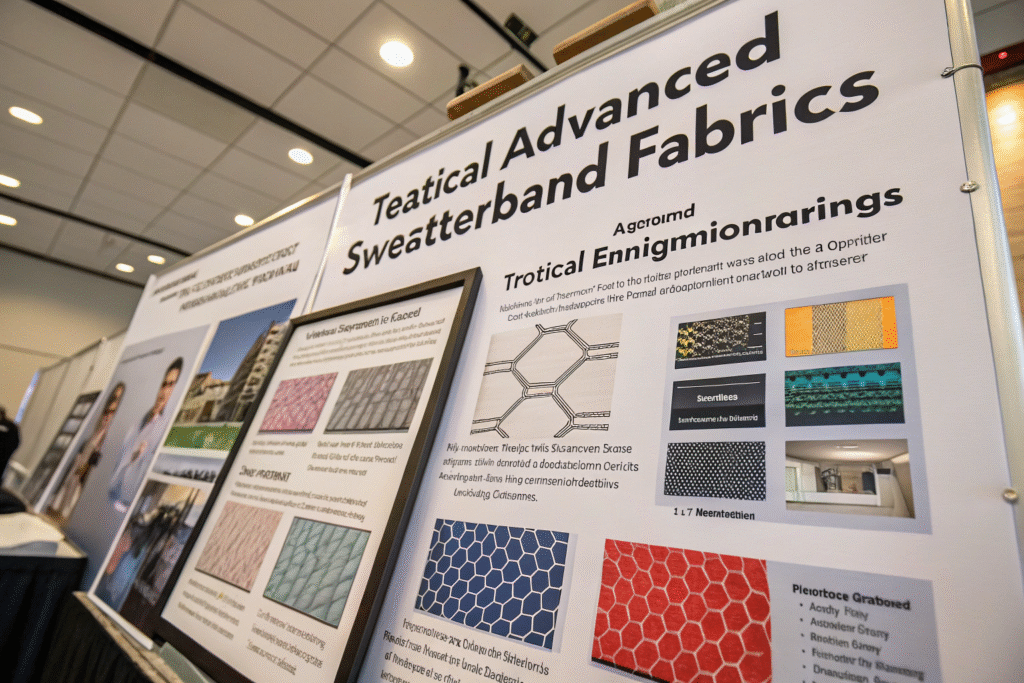
The physical structure of sweatband fabrics significantly impacts their thermal regulation capabilities. Advanced manufacturing techniques enable precise control over fabric geometry, creating three-dimensional structures that enhance air circulation and heat dissipation.
Key structural elements include:
- Air Mesh Construction: Open-knit patterns that trap insulating air layers
- Ribbed Channels: Vertical structures that direct moisture and heat upward
- Variable Density Knitting: Denser areas for absorption, looser areas for ventilation
- Raised Surface Textures: Increased surface area for enhanced evaporation
These geometric considerations work in conjunction with material properties to create comprehensive thermal management systems that adapt to both the wearer's activity level and environmental conditions.
What Active Cooling Technologies Are Integrated into Modern Sweatbands?
While passive technologies rely on material properties and physical principles, active cooling systems incorporate mechanisms that require external activation or power sources. These technologies represent the cutting edge of thermal management in sportswear accessories.
Active cooling systems in sweatbands typically involve evaporative enhancement, thermoelectric elements, or integrated cooling chambers. Though more complex to manufacture, these systems provide immediate and powerful cooling effects that can be precisely controlled based on user needs and activity intensity.
How Do Evaporative Cooling Enhancement Systems Work?
Enhanced evaporative cooling systems accelerate the natural cooling effect of sweat evaporation through strategic design elements and material technologies. These systems typically incorporate areas with high air exposure, moisture-retention zones, and directional wicking that optimizes the evaporation process.
Advanced implementations include:
- Micro-porous Membranes: Allow vapor transmission while blocking liquid water
- Cooling Gel Pockets: Contain water-absorbing polymers that release moisture gradually
- Ventilation Channels: Strategic openings that increase air flow across damp areas
- Multi-layer Evaporation: Sequential fabric layers that extend evaporation time
Some premium sweatbands incorporate activatable cooling elements that users can moisten before use, providing immediate evaporative cooling that lasts throughout their activity session.
What Are the Emerging Trends in Integrated Electronic Cooling?
The integration of miniature electronic components represents the frontier of active cooling technology in sweatbands. Though currently found primarily in high-end products, these technologies are becoming increasingly accessible and refined.
Current electronic cooling implementations include:
- Micro-fan Systems: Tiny battery-powered fans that enhance air circulation
- Peltier Elements: Solid-state heat pumps that create active temperature differences
- Vapor Compression: Miniature versions of traditional refrigeration systems
- Shape Memory Alloys: Materials that change structure in response to temperature
While electronic systems add complexity and cost, they offer precise temperature control that can be adjusted in real-time based on activity level and personal preference. Most electronic cooling sweatbands incorporate rechargeable battery systems and intuitive controls for practical daily use.
How Do Manufacturers Test and Validate Thermal Performance?
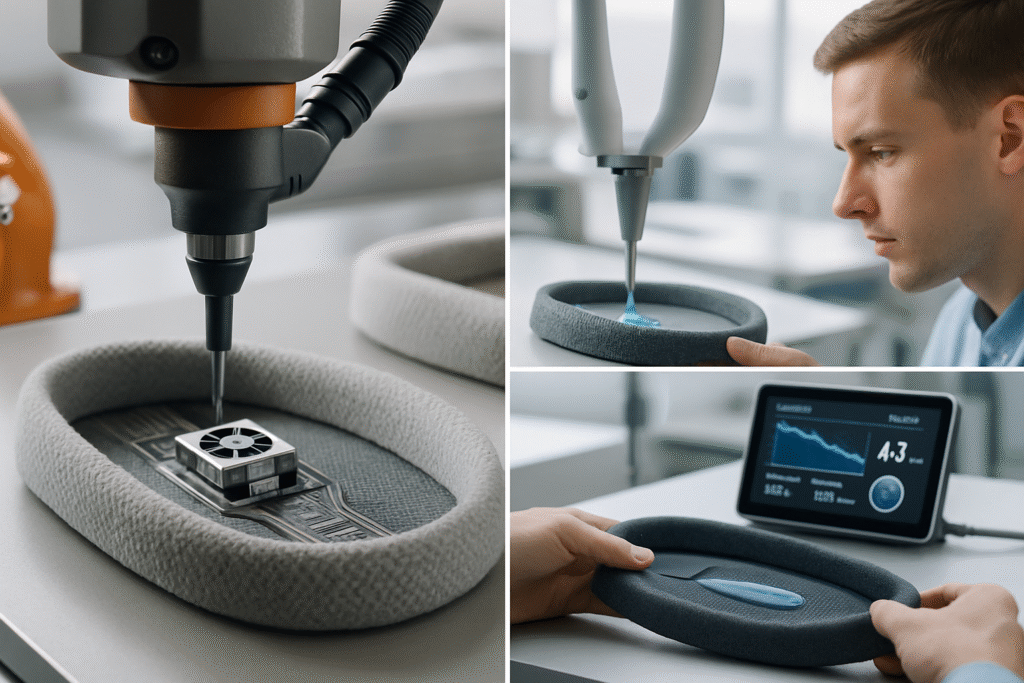
The development of effective temperature-regulating sweatbands requires rigorous testing methodologies that accurately measure thermal performance under realistic conditions. Manufacturers employ both laboratory testing and real-world validation to ensure their products deliver promised benefits.
Standardized testing protocols help establish performance benchmarks and enable meaningful comparisons between different technologies. These tests evaluate various aspects of thermal regulation including heat absorption, moisture management, drying time, and consistent performance across multiple use cycles.
What Laboratory Methods Measure Temperature Regulation Effectiveness?
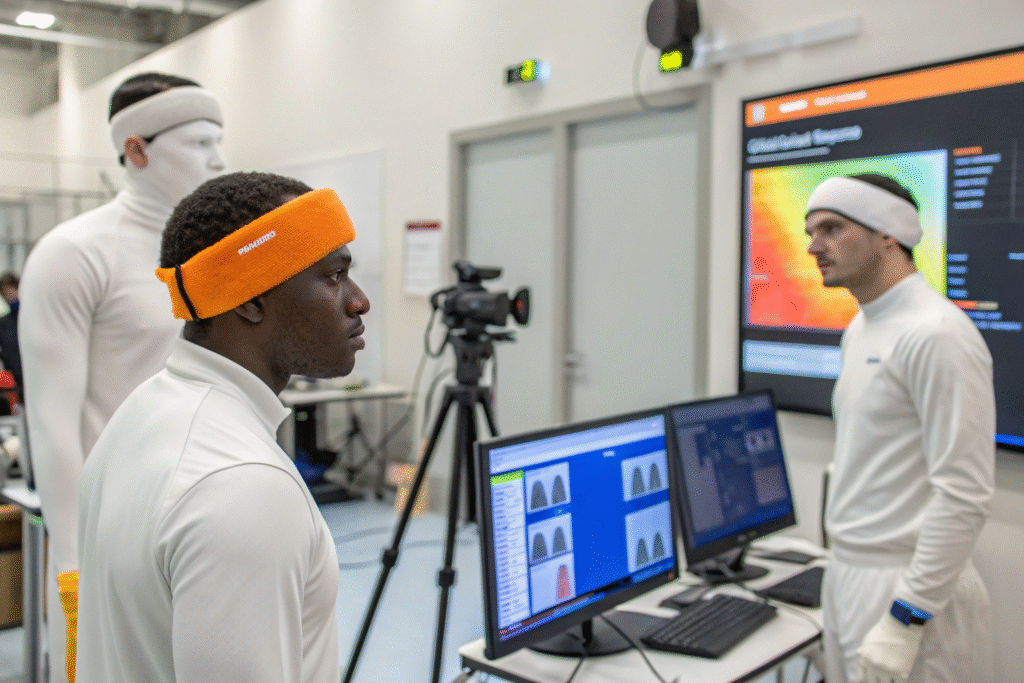
Laboratory testing provides controlled conditions and precise measurements that help manufacturers optimize their designs and validate performance claims. Standard testing approaches include:
| Test Method | Measurement Focus | Industry Standards |
|---|---|---|
| Thermal Manikin Testing | Heat loss quantification | ISO 15831, ASTM F1291 |
| Sweating Hot Plate | Evaporative resistance | ISO 11092, ASTM F1868 |
| Infrared Thermography | Surface temperature mapping | ASTM E1862 |
| Dynamic Moisture Permeation | Real-time moisture management | AATCC 195 |
These standardized tests provide reproducible data that helps manufacturers refine their designs and communicate performance capabilities to consumers accurately.
How Do Real-World Performance Trials Complement Laboratory Data?
While laboratory testing provides essential baseline data, real-world performance trials offer crucial insights into how temperature-regulating technologies perform under actual use conditions. These trials typically involve:
- Athlete Testing Groups: Professional and amateur athletes across various sports
- Environmental Chambers: Controlled temperature and humidity conditions
- Long-Term Durability Studies: Performance assessment after multiple washes and uses
- Comparative Wear Trials: Direct comparison with conventional sweatbands
The combination of laboratory precision and real-world validation ensures that smart temperature-regulating sweatbands deliver consistent, reliable performance that meets consumer expectations across diverse usage scenarios.
What Market Trends Are Driving Adoption of Smart Sweatbands?
The growing consumer interest in smart temperature-regulating sweatbands reflects broader trends in the sports technology and wearable markets. Several factors contribute to increasing adoption rates and market expansion for these advanced accessories.
Health and wellness awareness, combined with rising expectations for sports equipment performance, drives consumers toward products that offer measurable benefits beyond basic functionality. Additionally, the proliferation of wearable technology has accustomed consumers to electronics integration in their athletic gear, making smart sweatbands a natural evolution rather than a radical innovation.
How Are Consumer Expectations Shaping Product Development?
Today's active consumers demonstrate sophisticated understanding of sports technology and increasingly demand products that deliver proven performance benefits. Key consumer expectations influencing smart sweatband development include:
- Measurable Benefits: Quantifiable improvements in comfort and performance
- Multi-functionality: Integration with other technologies like heart rate monitoring
- Sustainability: Environmentally conscious materials and manufacturing processes
- Style Integration: Aesthetic designs that complement athletic apparel
- Easy Maintenance: Practical cleaning and care requirements
Manufacturers who successfully address these expectations while delivering genuine thermal regulation benefits are positioned to capture significant market share in the growing smart sportswear segment.
What Industry Applications Extend Beyond Consumer Sports?
While initially developed for athletic use, smart temperature-regulating sweatbands are finding applications across various industries where thermal comfort impacts performance and safety:
Healthcare Applications
- Post-surgical cooling for headache and migraine relief
- Temperature management for workers in protective equipment
- Therapeutic applications for fever management
Industrial and Safety Uses
- Heat stress prevention for construction and manufacturing workers
- Enhanced comfort for military and first responder personnel
- Outdoor workforce protection in extreme climates
Specialized Sports
- Motorsports where helmet use generates significant heat
- Winter sports with variable temperature conditions
- Extreme endurance events with prolonged exposure
These diverse applications demonstrate the broad potential of smart temperature-regulating technologies beyond traditional sports accessories.
Conclusion
Smart temperature-regulating technologies represent a significant advancement in sweatband design, transforming basic accessories into sophisticated thermal management systems. Through phase change materials, advanced fabric technologies, active cooling systems, and rigorous performance validation, modern sweatbands offer genuine benefits for athletes, workers, and anyone seeking enhanced comfort during physical activity.
The continued evolution of these technologies points toward increasingly integrated systems that combine thermal regulation with other smart features like biometric monitoring and connectivity. As manufacturing processes improve and costs decrease, these advanced sweatbands are likely to transition from premium products to mainstream accessories available to consumers across various price segments.
At HairAcc, we're at the forefront of integrating smart temperature-regulating technologies into our performance headwear collections. Our technical expertise in advanced materials and manufacturing processes enables us to develop sweatbands that genuinely enhance comfort and performance. To explore smart sweatband options for your brand or discuss custom development projects, contact our Business Director Elaine at elaine@fumaoclothing.com to discover how we can help you incorporate these innovative technologies into your product lineup.