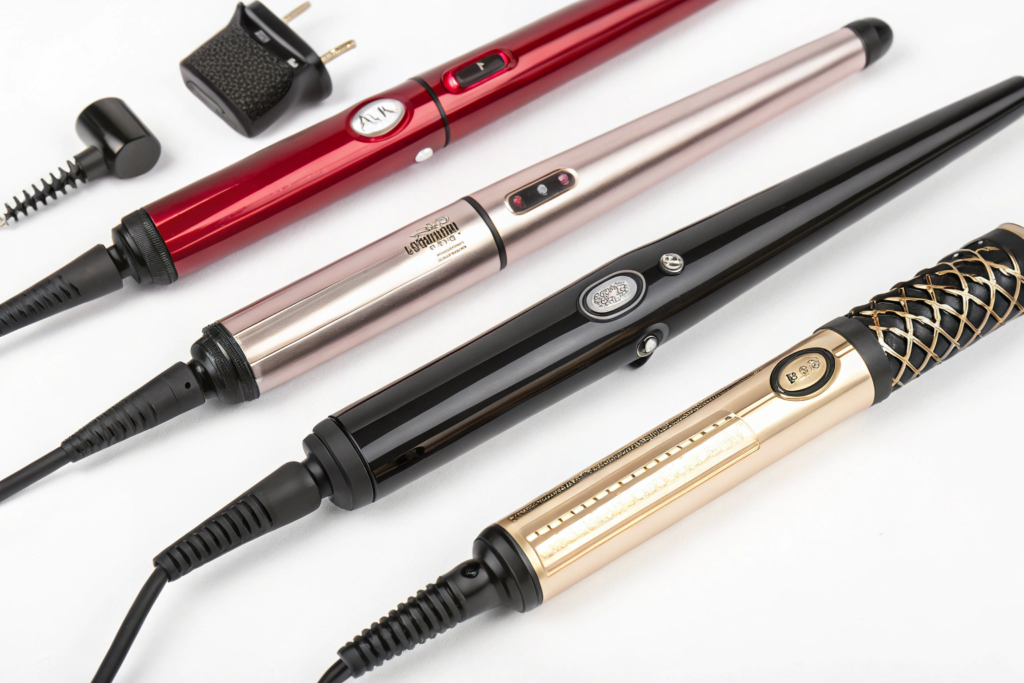
For hair accessory manufacturers, incorporating high-tech ceramic coatings into products like hair sticks is a strategic move that can differentiate your brand in a competitive market. If you’re sourcing or developing these products, understanding the advanced materials used in professional hairstyling tools is key. These specialized coatings are designed to protect the hair and enhance styling performance when used with heat.
Heat-resistant ceramic coatings for hair styling tools are specialized, inorganic finishes applied to the surfaces that come into contact with hair. They are engineered to endure high temperatures, distribute heat evenly, reduce friction, and often impart additional benefits like emitting negative ions to minimize hair damage. These coatings are fundamentally different from standard paints or plastics, as they form a hard, durable, ceramic-like layer when cured.
Understanding these coatings' composition, benefits, and application is crucial for developing a superior product. Let's explore the technical foundation, key performance benefits, and practical considerations for applying this technology to hair sticks.
What Are the Core Components of These Coatings?
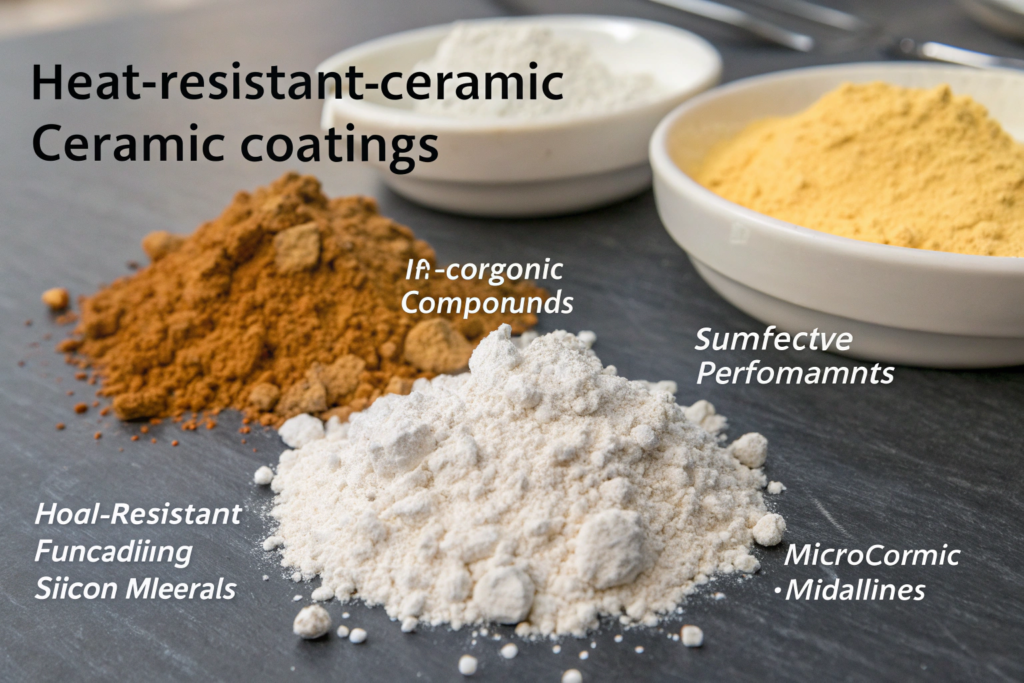
At a chemical level, heat-resistant ceramic coatings are primarily based on inorganic silicon compounds. Their performance is often enhanced by adding specific functional minerals. A common and effective formulation combines a ceramic base with ionic minerals like tourmaline.
What is the Ceramic Base Made Of?
The ceramic component forms the structural backbone of the coating. It is typically composed of various metal oxides that, when cured, create a hard, stable, and heat-resistant surface. Key ingredients often include:
- Silicon Dioxide (SiO₂): A primary component providing structural integrity and high-temperature stability.
- Aluminum Oxide (Al₂O₃): Adds to the hardness and durability of the coating.
- Titanium Dioxide (TiO₂): Often included for its properties in heat management and as a whitening agent.
This ceramic matrix is designed to be highly infrared emissive, which is crucial for ensuring hair heats evenly without localized hot spots that can cause damage.
What Are the Common Functional Additives?
To go beyond basic heat protection, manufacturers incorporate specific minerals into the ceramic base:
- Tourmaline: This is a semi-precious mineral that, when crushed into fine particles and added to the coating, is known for emitting negative ions and far-infrared radiation. This combination helps to seal the hair cuticle, reduce frizz, and enhance shine.
- Ionic Minerals: Similar to tourmaline, other mineral blends high in silica (SiO₂) and elements like potassium oxide (K₂O) are used to generate negative ions, which help break down water molecules on the hair for faster, gentler styling.
- Additional Compounds: Some advanced formulations may include other ceramic particles to improve heat retention and recovery speed, enhancing overall styling efficiency.
What Performance Benefits Do They Offer?
These advanced coatings are not merely decorative; they provide tangible benefits that protect both the hair and the product itself, leading to a superior user experience.
How Do They Protect and Improve Hair Health?
The primary benefits for the end-user's hair are multifaceted:
- Even Heat Distribution: The high infrared emissivity of the ceramic coating ensures heat is radiated uniformly. This prevents scorching and allows for effective styling at potentially lower temperatures.
- Reduced Friction and Damage: These coatings can achieve a very low coefficient of friction (more slippery surface), resulting in less tugging, snagging, and breakage as the hair stick or tool glides through the hair.
- Ionic Action: Coatings containing tourmaline or other ionic minerals continuously emit negative ions during use. These ions help to neutralize static, smooth the hair cuticle, lock in moisture, and impart a noticeable shine.
How Do They Enhance Product Durability?
For you as a manufacturer, these coatings also significantly improve the product's longevity and quality:
- Exceptional Hardness and Wear Resistance: High-quality ceramic nanocoatings boast extreme hardness and can withstand extensive use, far exceeding traditional materials.
- High-Temperature Resilience: These coatings are specifically engineered to withstand the repeated thermal cycling of styling tools, withstanding temperatures of 200°C to over 400°C without degrading.
- Strong Adhesion: Modern formulations are designed to bond tenaciously to metal substrates (like the aluminum often used in hair tools), solving the common problem of coating peeling or flaking over time.
How Are These Coatings Applied in Manufacturing?
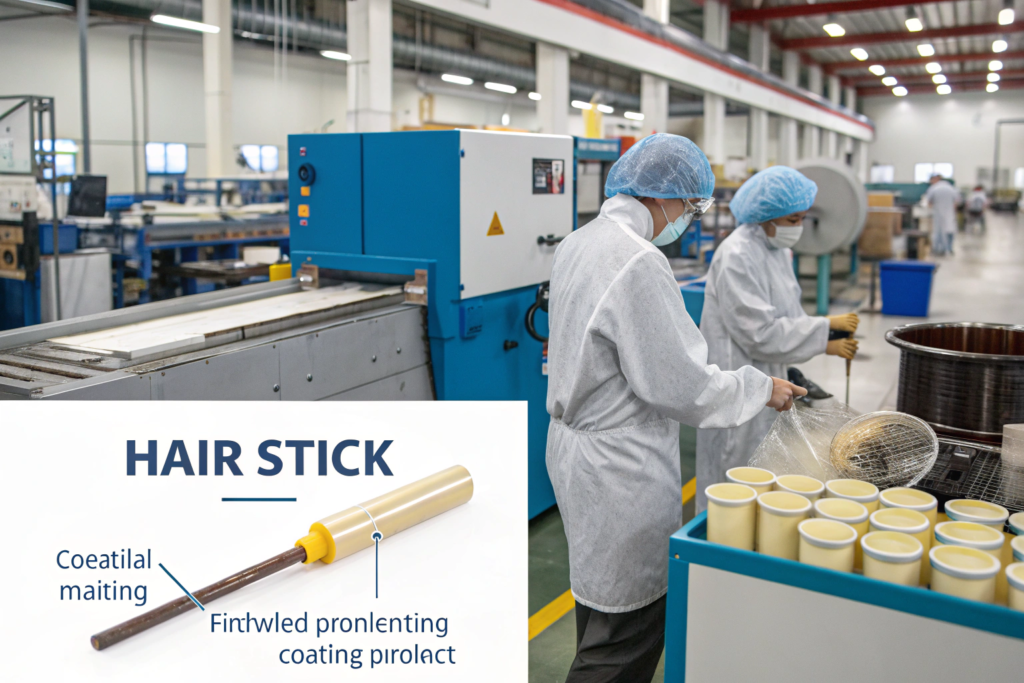
The transition from raw chemical components to a finished, coated hair stick involves precise manufacturing processes. Understanding this can help in communicating with coating suppliers and factory partners.
What is the Typical Application Process?
The application is a specialized industrial process, not a simple dip or paint job:
- Surface Preparation: The metal hair stick must be meticulously cleaned and often pre-treated to ensure optimal coating adhesion.
- Coating Application: The ceramic-mineral slurry is applied using professional methods such as spray coating. For consistent results, the workpiece (hair stick) may be pre-heated to prevent runs and sags.
- Curing/Sintering: The applied coating is then cured at high temperatures (around 200°C to 400°C). This sinters the particles, fusing them into a hard, continuous, and durable ceramic layer on the surface.
What Should You Consider for Product Development?
If you're looking to develop hair sticks with this technology, here are key practical points:
- Supplier Collaboration: You will likely work with a specialized chemical or coating manufacturer. They can provide the coating material in various colors (transparent, black, or custom hues) and guide the application process.
- Performance Specifications: Clearly define your needs: required temperature resistance, desired hardness, target friction coefficient (for smooth gliding), and any special additives like tourmaline for ionic benefits.
- Cost vs. Benefit: While more expensive than standard coatings, the enhanced performance allows for premium product positioning, justifying a higher price point in the market.
What Does This Mean for Your Product Line?
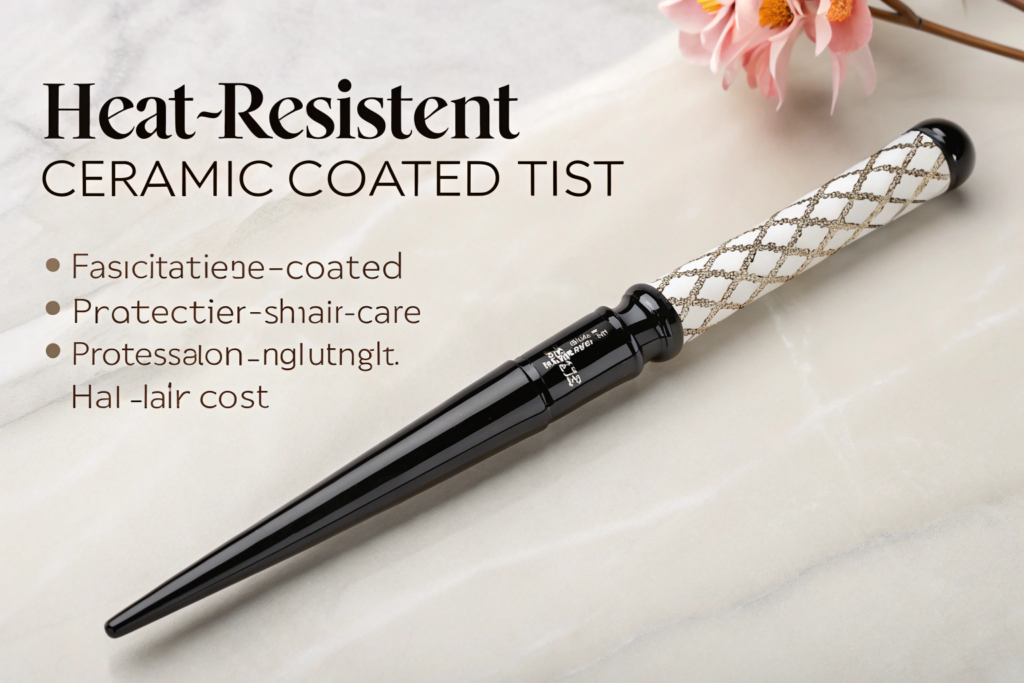
Incorporating heat-resistant ceramic coatings is a move toward the professional-grade and "hair care" segments of the accessory market. It allows a functional product like a hair stick to be marketed not just as a fastener, but as a protective styling tool.
How Can This Technology Differentiate Your Brand?
By utilizing these coatings, you can make credible claims about:
- Hair Health: Market your hair sticks as a gentler alternative for heat styling, reducing breakage and boosting shine.
- Professional Performance: Align your brand with the technology used in high-end salon tools.
- Superior Quality and Durability: Highlight the product's long-lasting finish and resistance to wear, which is a strong selling point for both retailers and end consumers.
What Are the Next Steps?
To proceed, you should:
- Identify and Contact Coating Suppliers: Seek out companies specializing in high-performance ceramic coatings for the beauty or appliance industry.
- Request Samples and Specifications: Evaluate coating samples on your intended substrate and review technical data sheets for hardness, temperature limits, and composition.
- Partner with a Knowledgeable Manufacturer: Ensure your production partner has experience with the precise application and high-temperature curing processes required for these advanced materials.
Conclusion
Heat-resistant ceramic coatings for hair sticks represent a significant technological upgrade from traditional finishes. They are complex inorganic systems—often enhanced with tourmaline or other ionic minerals—that provide unmatched heat management, hair protection, and product durability. For a manufacturer, adopting this technology is an investment in creating a premium, differentiated product that speaks directly to consumers' desires for effective and caring hair styling tools.
Developing such a product requires collaboration with specialized chemical suppliers and manufacturers experienced in high-temperature ceramic application processes. If your company, Shanghai Fumao Clothing, is looking to explore this advanced category and integrate professional-grade ceramic coatings into your hair accessory lines, we can leverage our manufacturing network and expertise. To discuss how to translate this technology into a successful product range, please contact our Business Director, Elaine, at elaine@fumaoclothing.com for a consultation.