
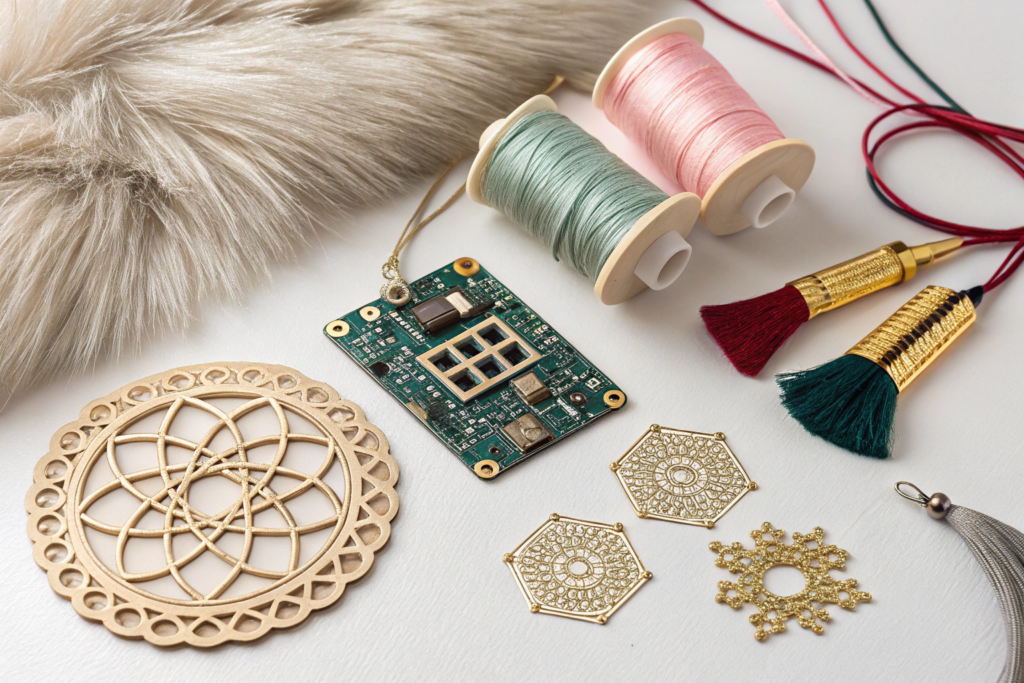
If you're aiming to elevate your headwear collection beyond conventional florals and basic rhinestones, sourcing truly unique decorative elements is the key to design differentiation and market success. In a crowded accessory market, distinctive ornamentation can transform a simple hat or clip into a conversation piece and a brand-defining signature.
Truly unique headwear decorative elements are found by actively exploring unconventional source materials, embracing advanced material technologies, drawing from rich cultural and historical artisanship, and mastering the art of inventive assembly. This multidimensional approach moves beyond traditional wholesale catalogs and taps into the creative processes driving high-fashion and avant-garde design.
As a manufacturer at Shanghai Fumao Clothing, we collaborate with designers to translate these innovative concepts into producible realities. Let's explore a strategic framework for discovering and implementing standout decorative elements.
How Can You Source Unconventional and Upcycled Materials?
One of the most direct paths to uniqueness is looking beyond traditional craft supplies to repurpose objects not originally intended for adornment. This trend, highlighted by designers and celebrities, embraces a "wearable found object" aesthetic.
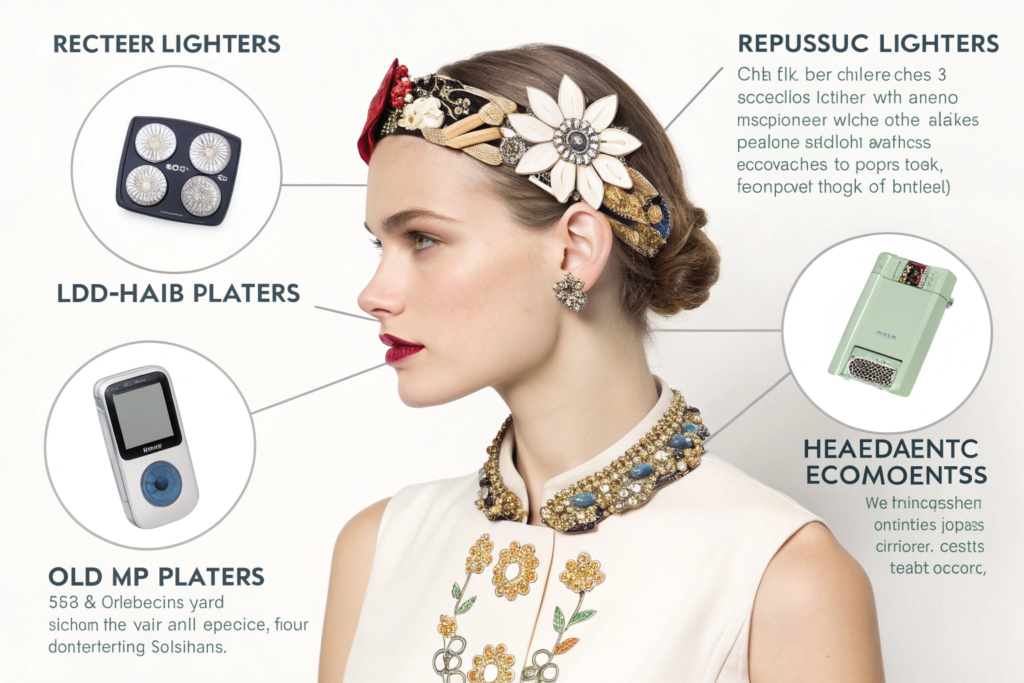
Recent fashion movements have seen items like repurposed lighters, old MP3 players, and electronic components transformed into striking hair clips and headpiece accents. The appeal lies in their narrative—a piece of tech or everyday item gets a second life as fashion. This approach extends to industrial materials like colorful plastic cable ties, which have been woven into hair for a futuristic, cyberpunk look. Even domestic tools like hair curlers or chopsticks are being re-contextualized as intentional, sculptural hair ornaments. Sourcing for this requires a shift in perspective: visit electronics surplus stores, industrial suppliers, or even thrift shops with a designer's eye for shape, color, and texture.
What is the Business Advantage of This "Upcycled" Approach?
Beyond sheer uniqueness, utilizing upcycled or unconventional materials resonates with growing consumer values around sustainability and anti-overconsumption. It tells a story of creativity and resourcefulness that can form a powerful part of your brand identity. Furthermore, these elements are often low-cost to acquire, allowing for higher design value without a corresponding spike in material cost. Marketing these pieces involves highlighting their origin story, which is perfect for social media content and building an eco-conscious brand image.
How Do You Ensure Quality and Wearability with Non-Traditional Materials?
The challenge is ensuring durability and safe wear. Partnering with a manufacturer experienced in material science is crucial. They can advise on proper cleaning, sealing, and attachment methods. For example, sharp edges on circuit boards must be filed and sealed, electronic components should be rendered inert (batteries removed), and all elements must be securely fastened to withstand movement. This is where prototyping and rigorous testing become non-negotiable steps in the development process.
What Role Do Advanced Materials and Interactive Tech Play?
For a forward-looking brand, integrating smart materials and simple technology can create "living" decorations that defy static expectations. This is the frontier of headwear design, blending fashion with interactive experience.
Consider the innovative work of designers like Hope Sitbon from Central Saint Martins, who embedded miniature motorized mechanisms into a fur hat, causing its ear flaps to move gently like "mini wings". This transforms the hat from an accessory into a dynamic sculpture. Beyond mechanics, explore thermochromic pigments (which change color with temperature), photoluminescent materials (which glow in the dark), or shape-memory alloys that change form. These materials create pieces that interact with the wearer's environment or body, offering a deeply personal and memorable experience.

Is Integrating Technology Feasible for Commercial Production?
While high-concept, one-off pieces showcase potential, commercial viability hinges on simplification and reliability. Start with low-tech interactivity: magnetic detachable elements that allow wearers to customize looks, or interchangeable ornament slots within a design. For more advanced integrations, it's about finding the right manufacturing partner who can source reliable micro-components and engineer discreet, lightweight, and safe housings for them within the headwear's structure. The goal is wonder, not complexity.
How Can You Market High-Tech Decorative Elements?
The marketing focus should be on the emotional and experiential benefit, not the technical specifications. Highlight the magic and playfulness—the hat that "comes to life," the clip that "glows with your touch." This positions your brand as innovative and experiential, appealing to early adopters and fashion-forward consumers looking for more than just aesthetics.
Where Can You Find Inspiration in Cultural and Historical Artisanship?
A vast repository of unique decorative ideas lies in the deep well of global cultural traditions and historical costume. These sources offer time-tested motifs, symbolic meanings, and intricate craftsmanship techniques that feel fresh when reinterpreted.
Academic and museum collections are invaluable resources. For instance, a historical Bai ethnic minority boy's scholar hat from China features astonishing details: embroidery with symbolic animals, metal leaf reinforcements, silk tassels in multiple colors, and pompoms on coiled wires. Similarly, a Korean Ayam (headgear) showcases elegant braided trims with intricate knots shaped like chrysanthemums and chicks, adorned with longevity characters. Historical studies, like one on 16th-century Volhynian burghers' hats, reveal the use of specific furs like marten and symbolic color choices like red. These elements are blueprints for uniqueness.

How to Ethically and Appropriately Use Cultural Motifs?
The key is inspiration, not appropriation. Work from the principle of homage and reinterpretation rather than direct copying. Use the historical technique or motif as a starting point, then fuse it with contemporary materials, scales, or colors. For example, adapt the coiled-wire pompom technique using modern metallic threads, or reinterpret symbolic animal embroidery in a minimalist graphic style. Always acknowledge inspiration respectfully in your brand storytelling if the source is specific and documented.
Where to Access These Historical Resources?
Utilize digital museum collections (like the Horniman Museum or Seoul Museum of Craft Art), academic journals on textile history, and reference books on global headwear. These sources provide high-quality images and detailed descriptions of construction and decoration that are far richer than generic web image searches.
How Does Creative Assembly and Mixed Media Create Novelty?
Often, uniqueness emerges not from a single magical component, but from the surprising and skillful combination of diverse, even disparate, materials. This mixed-media approach is a hallmark of artisanal and avant-garde fashion.
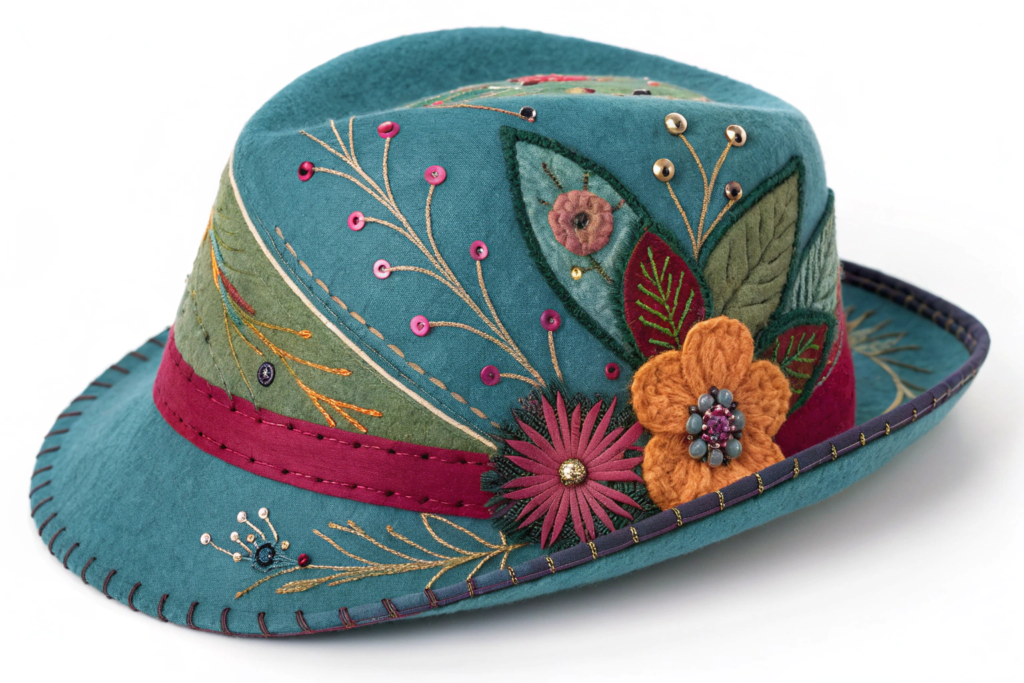
Examine the work of contemporary felt artists, where hats become canvases for combining merino wool with sari silk ribbons, viscose, and decorative embroidery threads. The uniqueness comes from the tactile and visual contrast of materials. Think in terms of textural juxtapositions: hard vs. soft (metal spikes on fluffy faux fur), shiny vs. matte (acrylic rhinestones against rough linen), organic vs. industrial (dried flowers sealed within clear resin geometric forms). The assembly itself can be a decorative statement, such as using visible, colorful stitching as a deliberate design element.
What Sourcing Strategy Supports a Mixed-Media Approach?
Build relationships with a wide network of specialist suppliers. Don't just look for "hat decorations." Source from:
- Textile suppliers for unique ribbons, cords, and specialty fabrics.
- Beeding and jewelry component vendors for unusual findings.
- Model-making or hobby shops for small-scale structural elements.
- Floral supply shops for preserved botanicals.
Curate a personal library of physical samples. The ability to physically touch and combine materials is irreplaceable for sparking creative ideas that cannot be found on a screen.
How Does This Relate to Your Manufacturing Partnership?
A mixed-media design requires a manufacturer with broad expertise and flexible production lines. They must be adept at multiple attachment techniques (sewing, gluing, clamping, welding) and have the quality control to ensure a piece combining, say, ceramic, metal, and fabric is durable. Presenting your manufacturer with a well-curated "mood board" of material samples and your assembly vision is the first step to a successful technical collaboration.
Conclusion
Finding unique headwear decorative elements is an active, research-driven process that blends the roles of trend hunter, material scientist, cultural historian, and creative director. The path moves from exploring upcycled industrial cast-offs and interactive smart materials to mining the rich depths of historical adornment and mastering the art of bold material combination.
For designers and brands, this pursuit is what separates commodity accessories from collectible art pieces. It builds a distinctive design language, fosters deeper consumer engagement through story and experience, and ultimately carves out a defensible position in the competitive fashion landscape.
Partner with a manufacturer that possesses the technical versatility, material sourcing network, and collaborative spirit to bring complex decorative visions to life. Contact us to discuss how we can support your most ambitious designs, from prototyping mixed-media concepts to engineering reliable tech integrations. Reach out to our Business Director, Elaine, at elaine@fumaoclothing.com to begin a creative technical consultation. Let Shanghai Fumao Clothing be the catalyst that turns your unique decorative ideas into wearable reality.