

Every buyer and retailer has faced this nightmare. You place a bulk order for what looks like beautiful, stylish hair clips or headbands, only to receive a shipment where the pearls are falling off, the rhinestones are dull, and the metal clasps are already tarnished. The disappointment is immense, not to mention the financial loss and damage to your brand’s reputation. Inferior decorations are a primary culprit behind low-quality hair accessories that fail to satisfy customers and harm your business.
The key to avoiding low-quality hair accessories lies in a proactive, multi-layered approach that focuses on supplier vetting, material specifications, and rigorous, on-site quality control protocols throughout production. Simply hoping for the best or relying on factory promises is not enough. You need a systematic strategy, from selecting the right manufacturing partner to defining clear quality benchmarks and inspecting the goods yourself or through trusted agents before shipment.
Let's break down this critical challenge. Avoiding subpar products isn't just about rejecting a bad batch; it's about building a supply chain that consistently delivers excellence. For wholesalers and brands targeting markets like the US and Europe, where consumer expectations are high, this is non-negotiable. Here is your actionable guide to ensuring the decorations on your hair accessories meet the highest standards.
What are the most common defects in hair accessory decorations?
You see a beautiful bow clip online, but the reality is a frayed ribbon and a glued-on gem that snaps off in days. These common defects are predictable and, therefore, preventable. Knowing exactly what to look for is the first line of defense in your quality assurance process.
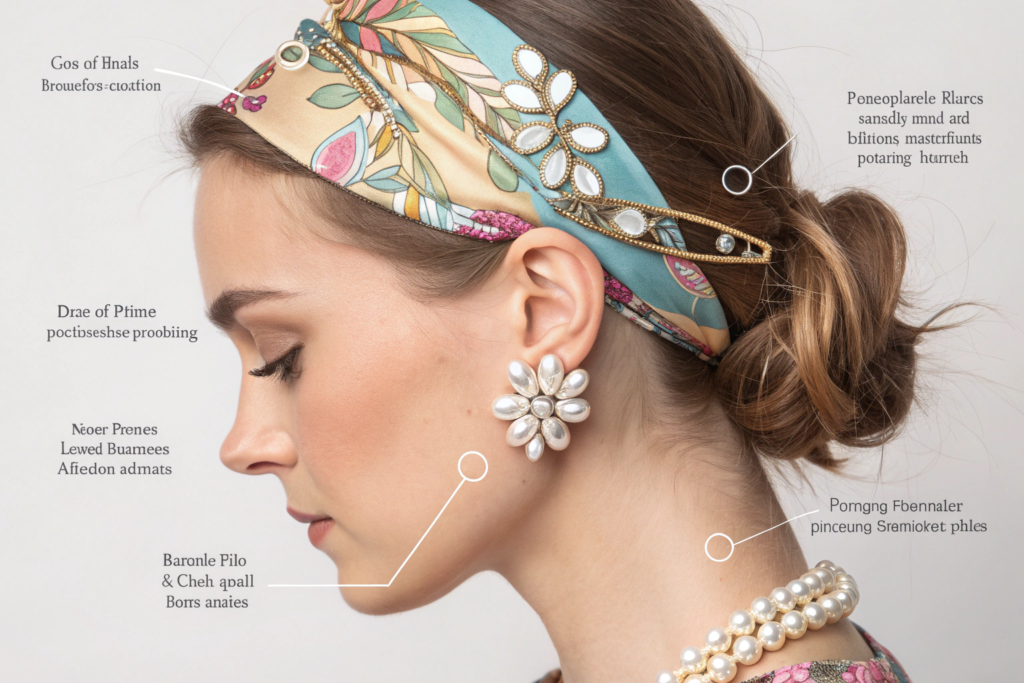
The most frequent issues stem from poor material choice and rushed assembly. Think of loose or missing rhinestones and pearls, caused by weak adhesive or improper setting. Faded or peeling colors on printed or painted designs are another major red flag, indicating the use of non-colorfast inks or low-grade paints. For metal parts like clips and chains, plating that chips or tarnishes quickly reveals a lack of proper electroplating thickness or the use of base metals prone to oxidation. Fabric decorations, like bows on hair clips or patterns on scarf headbands, often suffer from uneven cutting, fraying edges, and sloppy stitching.
Why do glued decorations fail so often?
The failure of glued decorations is almost always a tale of two sins: the wrong glue and the wrong application. Many factories cut costs by using generic, fast-drying industrial adhesives not formulated for the specific materials in hair accessories. A glue that bonds plastic may not hold a resin pearl to a metal base, especially when exposed to hair oils, humidity, or temperature changes. Furthermore, the application process is critical. Insufficient glue, uneven distribution, or failure to properly clean and prepare the bonding surface (a step known as "priming") will guarantee failure. At Shanghai Fumao Clothing, we specify and source adhesives based on the material pairings in each design and have standardized application procedures in our assembly lines to ensure a durable bond that lasts.
How can you test the durability of plating and coatings?
Passive observation isn't enough; you need simple, replicable tests. For metal plating on items like claw clips or bobby pins, a standard test is the "salt spray test" (which simulates accelerated corrosion), but you can do a rudimentary check with a sweat and moisture simulation. Dampen a cloth with a mild saline solution (to mimic sweat) and rub the plated area firmly several times. Check the cloth for discoloration, which indicates plating rub-off. For painted or coated surfaces, a simple adhesion tape test is effective. Apply a piece of strong adhesive tape firmly to the decorated area and rip it off quickly. If any paint or coating transfers to the tape, its adhesion is poor. Insisting that your supplier provides test reports for key performance standards can give you scientific assurance before production even begins.
How to choose a reliable hair accessories manufacturer?
Your choice of manufacturer is the single most important decision in avoiding low-quality products. A reliable partner becomes an extension of your quality control team, while a poor one will fight you on every standard you try to enforce.
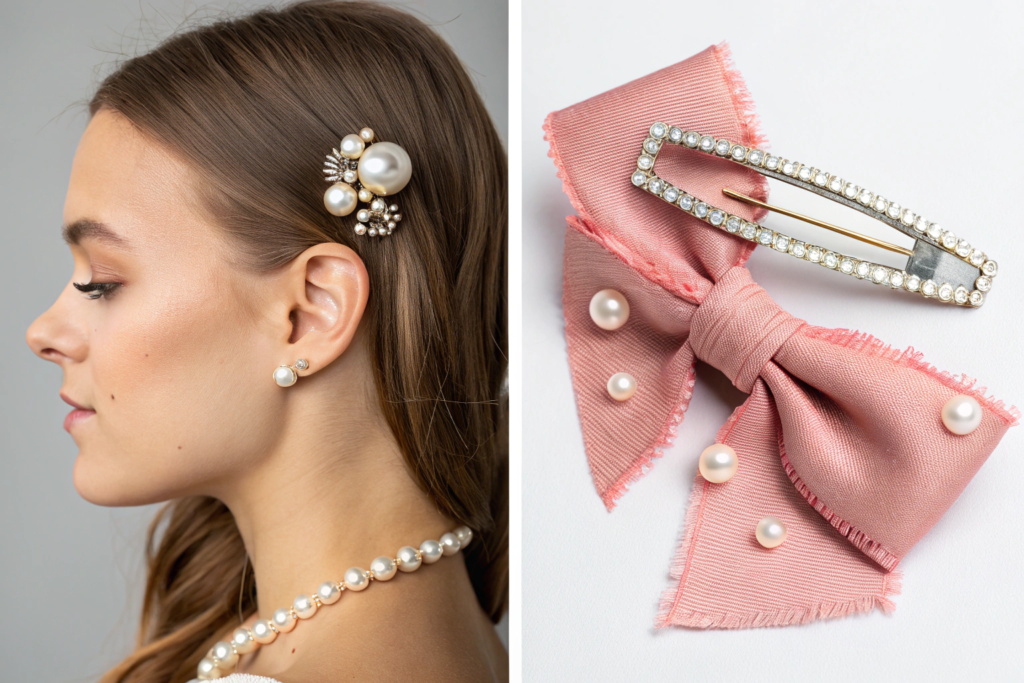
A reliable manufacturer is transparent, communicative, and has systems in place. Don't just judge by a shiny website or a slick Alibaba storefront. Dig deeper. Look for a supplier with a proven track record of serving clients in your target markets (like the US and EU), as they will be familiar with the required quality and safety standards. They should willingly provide details about their quality management systems, factory audits, and the equipment they use for decoration application, such as precision gluing machines or heat-setting for prints. Crucially, they must offer and be proficient in the custom design & OEM services you need, as this shows control over their production process rather than just reselling generic stock.
What questions should you ask a potential supplier?
Move beyond price and MOQ. Ask direct, technical questions about decorations. "What is your process for ensuring rhinestones are securely set?" "Can you provide a breakdown of the materials used in this metal alloy and plating?" "What is your pass/fail rate for color consistency in printed scarves?" Ask for their QC checklist and who is responsible for inspection at each stage. Inquire about their in-house capabilities versus outsourced processes; a factory that controls key stages like decoration assembly, embroidery, and printing internally typically has better quality consistency than one that farms everything out. Finally, always ask for and contact references from current clients in similar markets. A trustworthy supplier like Shanghai Fumao Clothing will have no issue connecting you with a satisfied long-term partner.
Why are in-house capabilities crucial for quality control?
When a factory outsources decoration application, they lose direct oversight. Delays, miscommunication, and corner-cutting at the subcontractor can ruin your order. A manufacturer with integrated facilities—such as their own printing factories and embroidery factories—maintains control over the entire workflow. For example, if a print on a silk scarf is blurry, the problem can be diagnosed and corrected on the spot by the same management team. This vertical integration, similar to our setup at HairAcc, minimizes variables. It allows for real-time adjustments, ensures consistent material quality from start to finish, and streamlines communication, making it far easier to uphold stringent decoration quality standards compared to managing a chain of separate vendors. This control is a major advantage when dealing with complex items like hair chains or lace veils.
What should be included in a quality control checklist?
A vague "check for quality" instruction is useless. Your QC checklist must be a detailed, unambiguous document that leaves no room for interpretation. It is the contract between you and the supplier on what constitutes an acceptable product.
An effective checklist is specific to the product and its decorations. It should cover dimensions, materials, workmanship, function, and packaging. For decorations, every detail must be listed: the correct number, size, color, and placement of rhinestones/pearls; the integrity and colorfastness of prints and dyes on headwraps & scarves; the security and alignment of glued or sewn-on elements; the smoothness and durability of plating on metal parts. It must define acceptable tolerance levels (e.g., "color shade must match Pantone swatch XYZ within a ΔE of 2.0") and include clear "Accept," "Minor Defect," and "Major Defect" criteria, often using the internationally recognized AQL (Acceptable Quality Level) sampling standards.
How to implement AQL sampling for decoration inspection?
The AQL standard provides a statistical method to determine how many units to inspect from a batch and how many defects are allowable. For general inspection of hair accessories, AQL 2.5 for major defects and AQL 4.0 for minor defects are common. Here’s a simplified table for a batch of 2,000 units:
| Batch Size | Sample Size | Major Defects (AQL 2.5) | Minor Defects (AQL 4.0) |
|---|---|---|---|
| 2,000 pieces | 125 pieces | Reject if 7 or more major defects found | Reject if 10 or more minor defects found |
For decorations, a "major defect" could be a missing stone or broken clip, while a "minor defect" could be a slight color deviation or a tiny glue speck. You or your appointed inspector would randomly select 125 pieces, inspect them against your detailed checklist, and use the AQL limits to decide to accept or reject the batch. This method balances thoroughness with efficiency.
What are the critical on-site inspection points?
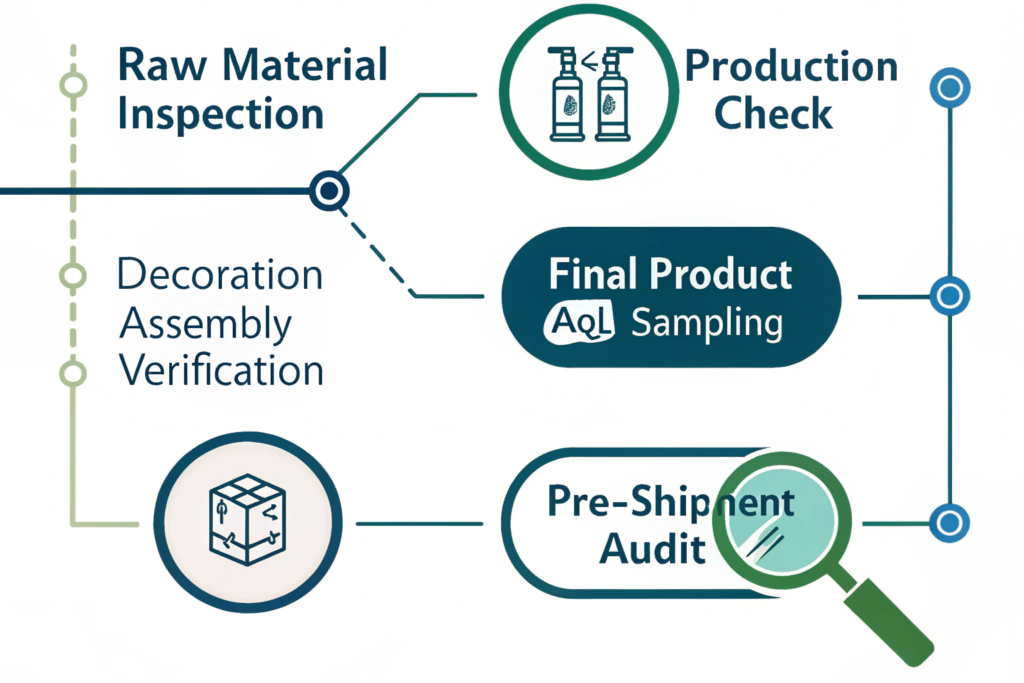
Pre-shipment inspection is vital, but catching defects earlier is better. You should mandate checks at critical production stages (called DUPRO inspections). Key points include: 1) Initial Production Check (IPC): When the first 100-200 pieces come off the line, verify that decorations match approved samples. 2) During Production Check: Inspect semi-finished goods to ensure processes like gluing or sewing are correct before mass assembly. 3) Final Random Inspection (FRI): The standard pre-shipment check on packed cartons. For decorations, the inspector must use tools like jewelers' loupes, tension gauges for clips, and rub tests for prints. They should also check for consistency across the entire order—a common flaw where the first 1,000 pieces are perfect, but quality slips in the last 2,000. Understanding the role of material selection in product longevity is key here, as poor base materials will fail no matter how well they are assembled.
How to protect your business with clear contracts and samples?
Even with the best intentions, misunderstandings happen. Clear legal and physical references—your contract and approval samples—are your final safety net. They translate your quality expectations from ideas into enforceable agreements.
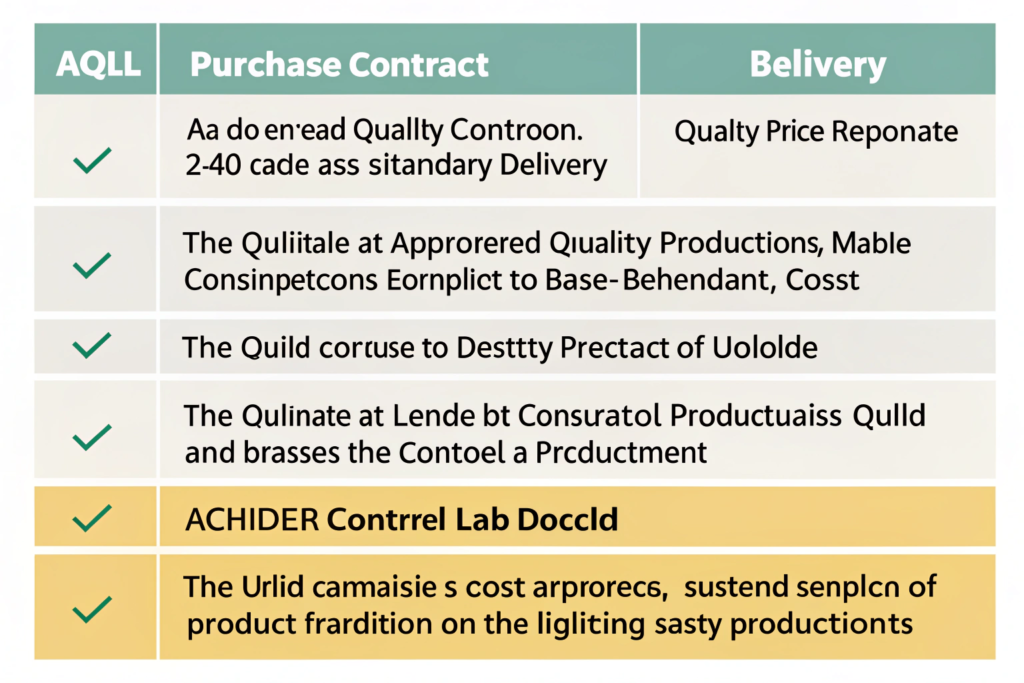
Your purchase contract must go beyond unit price and delivery date. It should explicitly reference the approved sample, the QC checklist, and the AQL standard as the basis for quality. Include clauses that allow for reinspection at a third-party lab at the supplier's cost if quality is disputed. Specify the consequences for failed inspections: who pays for rework, sorting, or ultimately, a canceled order? Equally important is the management of production samples. You should approve a "golden sample" before mass production, and the factory should keep a sealed copy as their benchmark. For custom designs, insist on seeing and testing a pre-production sample made with actual production materials and methods, not a hand-made prototype.
Why is a pre-production sample non-negotiable?
A pre-production sample (PPS) is your last chance to catch decoration flaws before thousands of units are made. It is produced on the factory's actual production line, using the mass-production materials and processes. Test this sample rigorously: wear it, wash it (if applicable), put it under stress. Does the plating on the hair stick wear off? Does the print on the bandana bleed? This is the time to catch issues with material compatibility or assembly speed. Approving the PPS with your signature means you agree that the factory can replicate this exact quality at scale. Any deviation in the bulk order from the approved PPS is a valid reason for rejection, giving you strong contractual leverage.
How to handle quality disputes and chargebacks?
Despite all precautions, disputes may arise. Your contract is your first recourse. Document everything with photos and videos. If goods arrive defective, a detailed inspection report from a reputable third-party inspection service is powerful evidence. Communicate clearly with the supplier, presenting the evidence against the contracted specifications. Solutions can include a price discount, a demand for rework and reinspection, or, in severe cases, a full return and refund. To avoid costly chargebacks from your own customers, which are a major pain point for entrepreneurs like Ron, having this rigorous upstream quality process is your best defense. It ensures the products you sell are durable and satisfactory, protecting your cash flow and brand reputation. Partnering with a supplier that offers end-to-end production support, including professional QC, minimizes these risks from the start. For a reliable partnership that prioritizes these protections, consider discussing your needs with Shanghai Fumao Clothing.
Conclusion
Avoiding low-quality hair accessories with inferior decorations is not a matter of luck; it's a disciplined process. It starts with educating yourself on common defects, continues with meticulously vetting and choosing a transparent, capable manufacturer, is executed through detailed checklists and staged inspections, and is finally protected by ironclad contracts and approval samples. By taking control of these four pillars, you transform your sourcing from a risky gamble into a reliable, scalable system.
This systematic approach builds a supply chain you can trust, allowing you to focus on growing your brand without the constant fear of product failure. It directly addresses the core pain points of savvy buyers: ensuring timeliness, controlling costs beyond just unit price, and guaranteeing security for your investment. If you are ready to source high-quality, beautifully decorated hair accessories with confidence and want a manufacturing partner who embeds these principles into every order, we should talk. Contact our Business Director, Elaine, at elaine@fumaoclothing.com to discuss how we can help you produce your own successful line of headwear and hair accessories.