
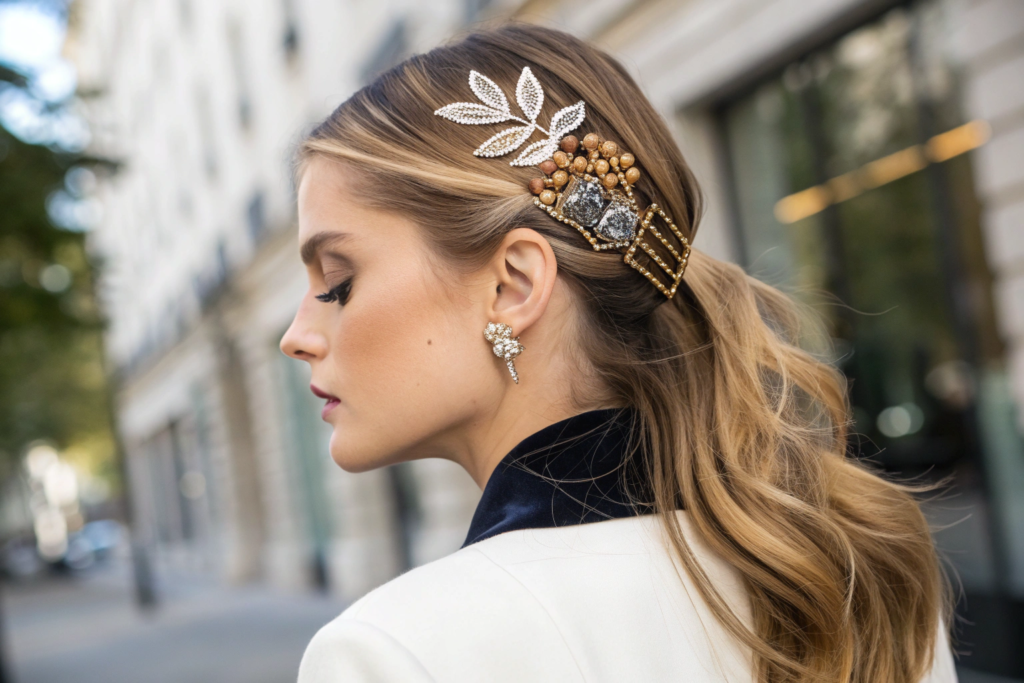
If you're operating in the fast-paced world of fast fashion, you know the core challenge: you must deliver newness at breakneck speed while still standing out in a saturated market where everyone is chasing the same trends. The pressure to differentiate is immense. This is where customizable hair accessories shift from being a niche offering to a strategic powerhouse.
Customizable hair clips enable fast fashion brands to differentiate by creating exclusive, on-demand product lines that bypass commoditization, foster direct consumer engagement, and inject agility into the traditional design-to-retail cycle. They transform a standard accessory into a unique brand asset and a dynamic data source.
At Shanghai Fumao Clothing, we've seen how brands leverage customization to move beyond competing on price and speed alone. Let's explore the specific mechanics of how this tool unlocks competitive advantage.
How Does Customization Break the Cycle of Commoditization?
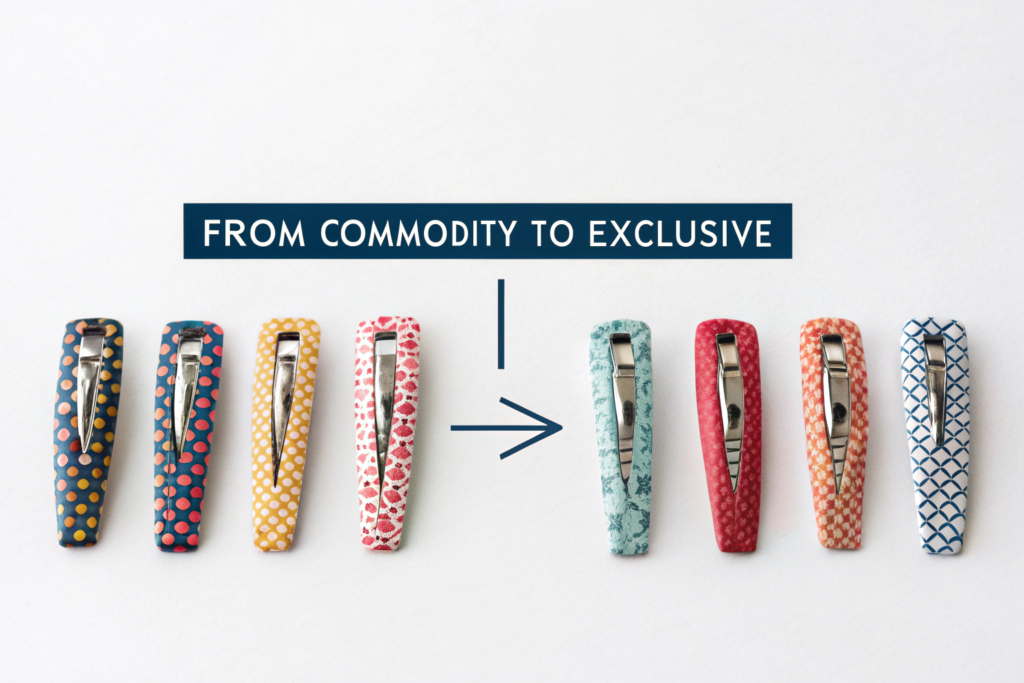
The greatest threat to a fast fashion brand is becoming indistinguishable—selling the same pearl clip or velvet scrunchie as every other retailer. Customization is the ultimate antidote to this commoditization.
When a brand offers customization, the product is no longer just the physical clip; it's the experience of co-creation. A customer who designs their own monogrammed barrette or selects a unique color combination for a claw clip is purchasing an item that cannot be found on Shein, ASOS, or Zara. This built-in exclusivity de-commoditizes the product overnight. It allows a brand to participate in a macro-trend (e.g., pearl accents) while offering a micro-personalized version that feels personally owned. This strategy directly addresses market saturation by making comparison shopping irrelevant. A study on consumer behavior in fashion highlights the growing demand for products that serve as extensions of personal identity, moving beyond mere trend-following.
How Does This Serve the Modern Fast Fashion Shopper?
The modern fast fashion shopper seeks both instant gratification and individual expression. They want the latest trend immediately but also desire to put their own stamp on it to stand out on social media. Customizable clips perfectly serve this duality. They provide the speed of fast fashion (often with shorter, made-to-order production cycles) coupled with the uniqueness of a bespoke item. This elevates the transaction from a simple purchase to a personal creative project, increasing emotional investment and perceived value far beyond the item's price tag.
Can Customization Function as a Real-Time Trend Lab?
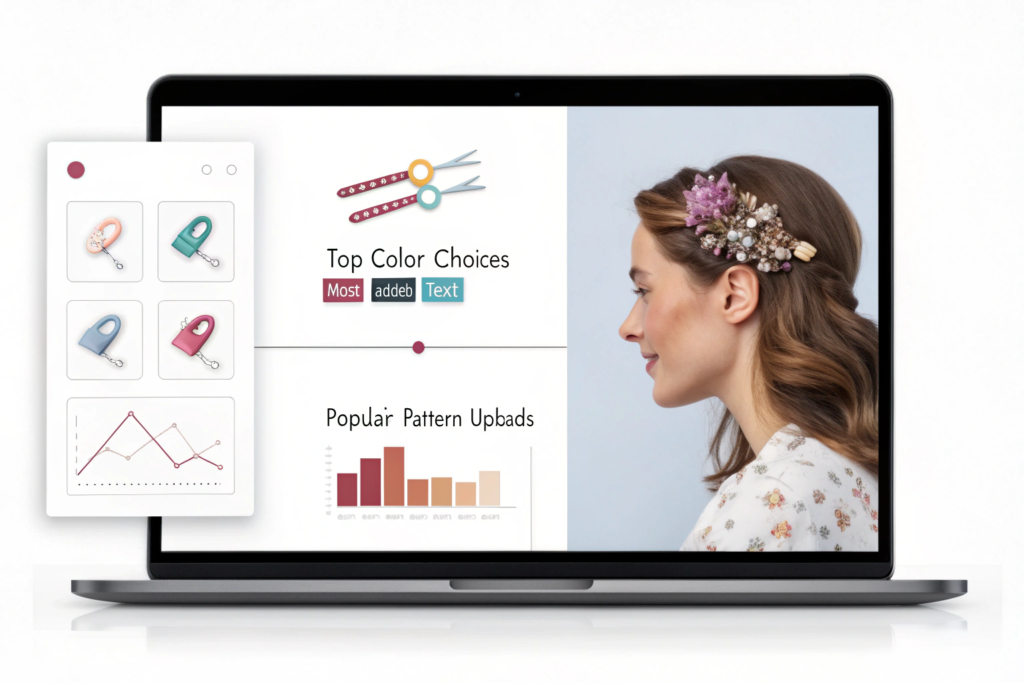
Absolutely. By analyzing which colors, materials, and design elements are most frequently chosen in the customizer, brands gain real-time, actionable data on consumer preferences. This is far more precise than traditional sales data. If "neon green" and "checkerboard print" are runaway favorites in the custom tool, a brand can confidently rush those elements into their next ready-to-wear standard collection. Customization becomes a low-risk market research engine that informs larger, faster production decisions.
How Does an On-Demand Model De-Risk Inventory and Speed Response?
Fast fashion's traditional "predict-and-produce" model is fraught with risk, often leading to overproduction and heavy markdowns. Customization introduces a more agile, demand-driven model that aligns with both financial and sustainability goals.
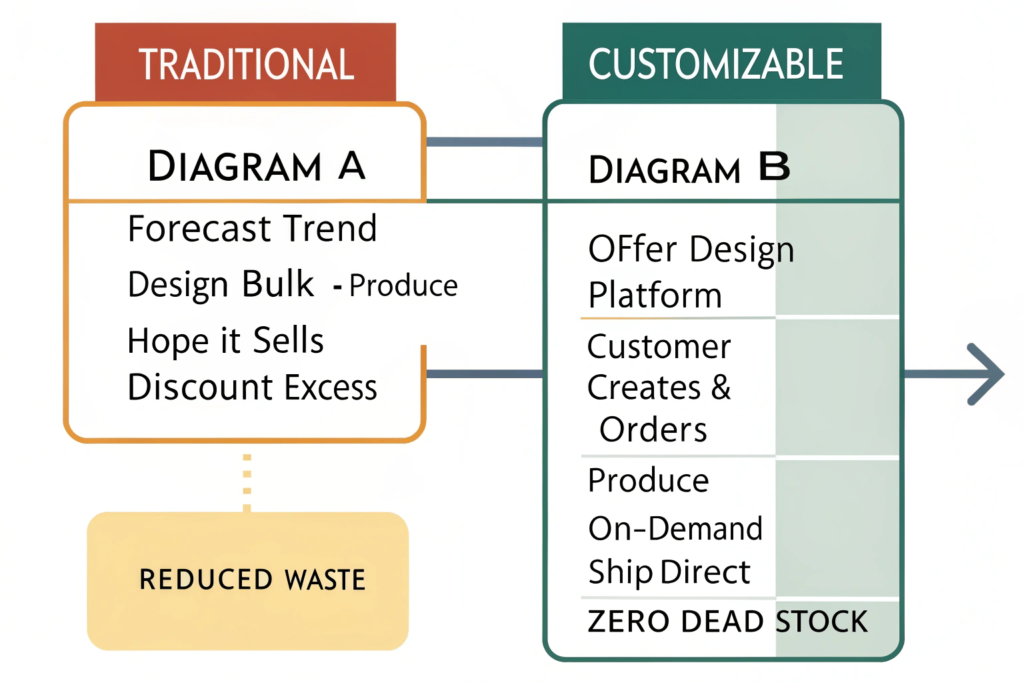
Traditional fast fashion operates by forecasting a trend, producing in bulk, and hoping it sells. Customization flips this to a confirm-and-produce model. Production begins only after a customer has confirmed their design and placed an order. This minimizes inventory risk and waste—a critical advantage in an industry under scrutiny for its environmental impact. It allows brands to offer a vastly wider virtual inventory (thousands of possible design combinations) without the physical and financial burden of holding that stock. This agility is a core tenet of modern supply chain innovation and lean retailing.
How Does Modular Design Make This Logistically Possible?
The key is modular design and postponed manufacturing. A brand works with its manufacturer to pre-produce a range of standardized base components (clip frames, metal springs) and decorative elements (printable surfaces, insert slots, charm attachments). The final, personalized assembly (printing, engraving, assembly of chosen components) is postponed until an order is received. This leverages fast fashion's efficient supply chains for bulk components while using final-stage customization to create uniqueness. It's a hybrid model that balances scale with personalization.
Does Personalization Conflict with the Need for Speed?
While the production time for a customized item is longer than picking a pre-made item off a shelf, this is strategically reframed. The wait becomes part of the value proposition: "Wait a little longer for something made uniquely for you." Crucially, it doesn't slow down the trend adoption cycle. Brands can instantly upload new design templates or colors into their customizer to reflect a viral trend, allowing them to capitalize on moments without committing to physical production of every variation, thus actually accelerating market responsiveness.
How Does Co-Creation Transform Customers into Brand Partners?
In an era where customer loyalty is fleeting, customization builds a direct and valuable relationship between brand and consumer, moving interactions beyond transactional to collaborative.
The customization process is an immersive brand experience. The time a customer spends designing their clip represents deep engagement, far exceeding passive browsing. This fosters a powerful sense of co-ownership in the final product. Furthermore, each design choice is a rich piece of first-party data. Brands learn not just what customers buy, but how they think and what they value in design. This data is a goldmine for understanding micro-segments and is immune to changes in third-party cookie tracking. Building these direct-to-consumer (DTC) relationships is a strategic imperative for future-proofing brands.
How is User-Generated Content (UGC) a Natural Byproduct?
A customer who creates a custom item is highly likely to share it on social media, generating authentic UGC and powerful word-of-mouth marketing. Brands can encourage this with branded hashtags and features, effectively turning their customer base into a decentralized, trusted marketing arm. This organic content is more credible and cost-effective than traditional advertising.
How Does This Data Enable Hyper-Personalized Marketing?
The collected data allows for communication that feels one-to-one. Follow-up emails can reference a customer's specific creation: "Love the pink leopard print clip you designed? Here are new patterns that pair perfectly." This level of hyper-personalization dramatically increases open rates, click-through rates, and conversion for future campaigns, creating a virtuous cycle of engagement and sales.
What Does a Successful Brand-Manufacturer Partnership Look Like?
Executing a successful customizable program requires a fundamental shift in the brand-manufacturer relationship. It demands a partnership built on flexibility, precision, and integrated systems, not just transactional orders.
This model requires a manufacturer that operates with extreme agility and technical capability. The manufacturer must support very low minimums for component runs, master rapid turnaround on small-batch, customized finishing (like laser engraving or digital printing), and have robust digital and physical systems to ensure each unique order is executed perfectly from website to warehouse. The relationship evolves into a collaborative, integrated partnership focused on operational fluidity and innovation.
Why is In-House or Tightly Integrated Production Control Critical?
For customization to be scalable and reliable, the manufacturer often needs to control or tightly coordinate multiple stages—component molding, decoration, assembly, and fulfillment. Working with a vertically-adept manufacturer like Shanghai Fumao Clothing minimizes communication errors, speeds up problem-solving, and ensures quality consistency across thousands of unique SKUs. This control is the backbone of a trustworthy custom experience.
How Does This Partnership Future-Proof a Brand?
This collaborative model builds a responsive supply chain that can adapt to new customization technologies (like AR try-on or AI design suggestions) and shifting consumer demands. It transforms the hair accessory category from a seasonal commodity into a perennial platform for innovation and customer connection, future-proofing the brand against market shifts.
Conclusion
For fast fashion brands, customizable hair clips are far more than a product category—they are a strategic tool for differentiation, de-risking, and deep customer connection. They solve core industry pain points: combating commoditization through exclusivity, reducing inventory waste via on-demand production, capturing invaluable data, and fostering loyalty through co-creation.
This approach allows brands to maintain the speed and trend-responsiveness that defines fast fashion while adding a critical layer of personalization, sustainability, and direct engagement that modern consumers increasingly demand. It represents a smart evolution of the fast fashion model itself.
Partner with a manufacturer built for flexibility, precision, and partnership. Contact us to discuss how we can co-develop a modular, scalable hair accessory program tailored to your fast fashion cycle. Reach out to our Business Director, Elaine, at elaine@fumaoclothing.com to explore a collaboration that puts unique, on-demand creation at the heart of your brand. Let Shanghai Fumao Clothing be the engine behind your brand's next evolution.