
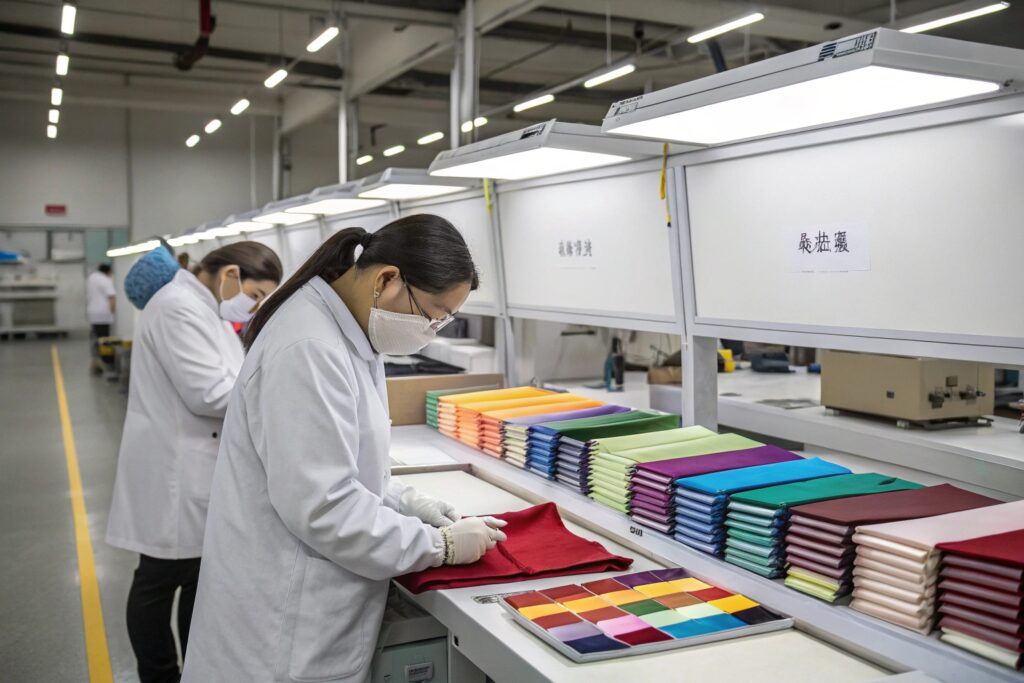
If you’ve ever received two batches of the “same” scrunchie headbands only to find their colors slightly off, you’re not alone. This small variation can cause big problems—especially for e-commerce sellers, retailers, and fashion brands who rely on visual consistency.
Color consistency isn’t a guessing game—it’s a technical process involving lab dips, color measurement tools, dye control, and skilled QC teams. Factories that specialize in color management ensure your scrunchie headbands look identical across all batches.
This article explains how manufacturers like HairAcc ensure your orders match every time—from the first sample to the final carton.
What Factors Cause Color Variations in Production?
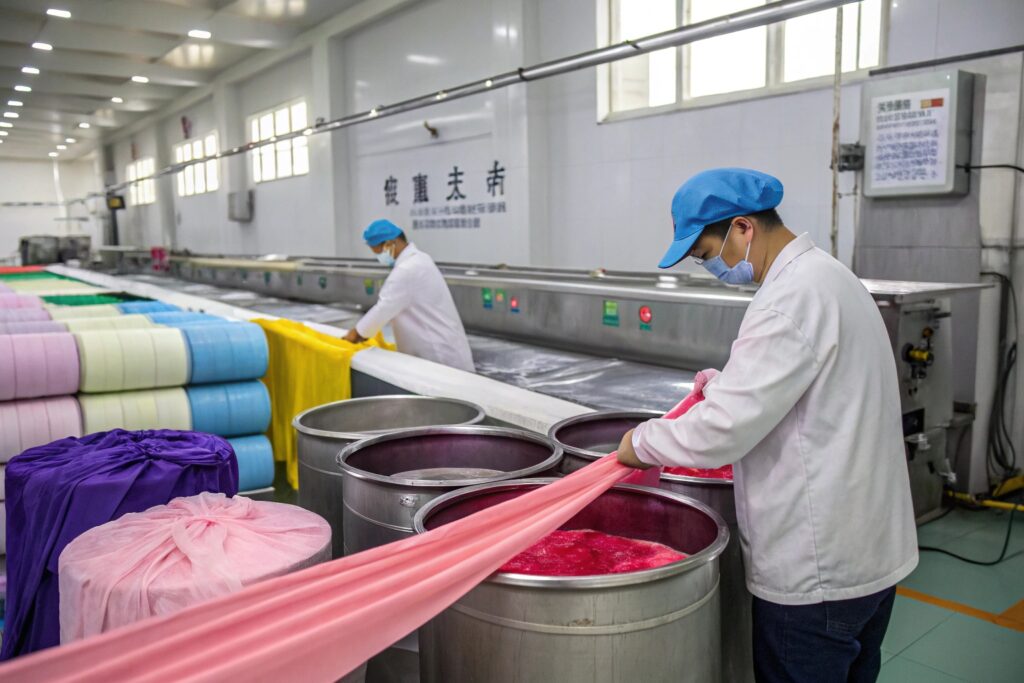
There are many factors that can affect color output. Dyeing is both science and craft, and even slight changes in process or material can shift the final result. Understanding these variables is key to managing them effectively.
Dye concentration, water temperature, fabric lot differences, drying conditions, and lighting can all cause visible color shifts—even with the same Pantone code.
How Do Fabric Lots Affect Dye Results?
Each batch of raw fabric, known as a "greige" lot, absorbs dye slightly differently. Natural fibers like cotton or viscose are especially variable. If two orders use different fabric lots, color pickup may vary—even if the dye formula is identical.
This is why reputable factories use fabric lot control methods and test dye recipes on every new roll. Even synthetic blends may require adjustments to maintain color fidelity.
Can External Conditions Change the Outcome?
Yes. Humidity, dye vat aging, drying temperature, and even water mineral content can impact the final shade. To mitigate this, top factories like HairAcc monitor temperature, pH, and time during every step, using standardized dyeing protocols for color consistency.
We also house our dyeing in climate-stable rooms and use automated dye mixers, minimizing human error and environmental fluctuation during large-volume orders.
How Do Labs Control and Approve Color Accuracy?
Before full production starts, color accuracy is tested through a “lab dip”—a small dyed fabric sample sent to the buyer for approval. This forms the color master reference used to measure every batch.
Factories use spectrophotometers, Pantone guides, and lightboxes to compare each production run against approved lab dips, ensuring visual and numerical accuracy.
What Is a Delta E Score?
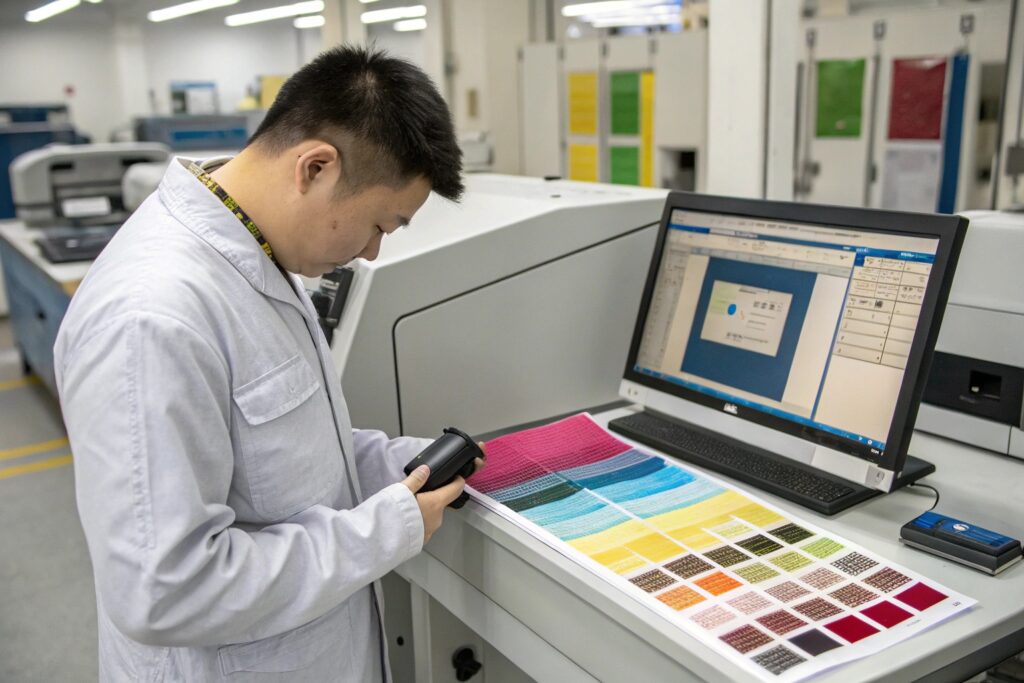
Delta E is a measurement of color difference. A Delta E of 1.0 or less is considered excellent—often imperceptible to the human eye. Factories use this metric to gauge how closely a new batch matches the approved sample.
Tools like Datacolor and X-Rite allow precision matching with digital records, helping us deliver repeat orders with <1.5 Delta E variance. These are logged and shared with clients upon request.
What Is a Light Box and Why Does It Matter?
A lightbox simulates different lighting environments—daylight, store light, and warm tones. Colors can appear differently under these conditions, so factories assess samples in controlled lightboxes to ensure accurate visual perception.
By viewing scrunchie headbands under D65, TL84, and UV light, our QC teams catch subtle mismatches before packing—something ISO 3664 standards require in many industries.
What Steps Do Professional QC Teams Take?
A reliable factory doesn’t stop at lab dips—it embeds quality checks at every stage of production. From fabric entry to final packaging, trained QC staff inspect and document color consistency against approved standards.
QC teams verify each production lot against lab-approved references using calibrated lighting and tools. They also flag shade bands—minor color changes within a roll—for buyer review.
What Are Shade Bands and How Are They Handled?
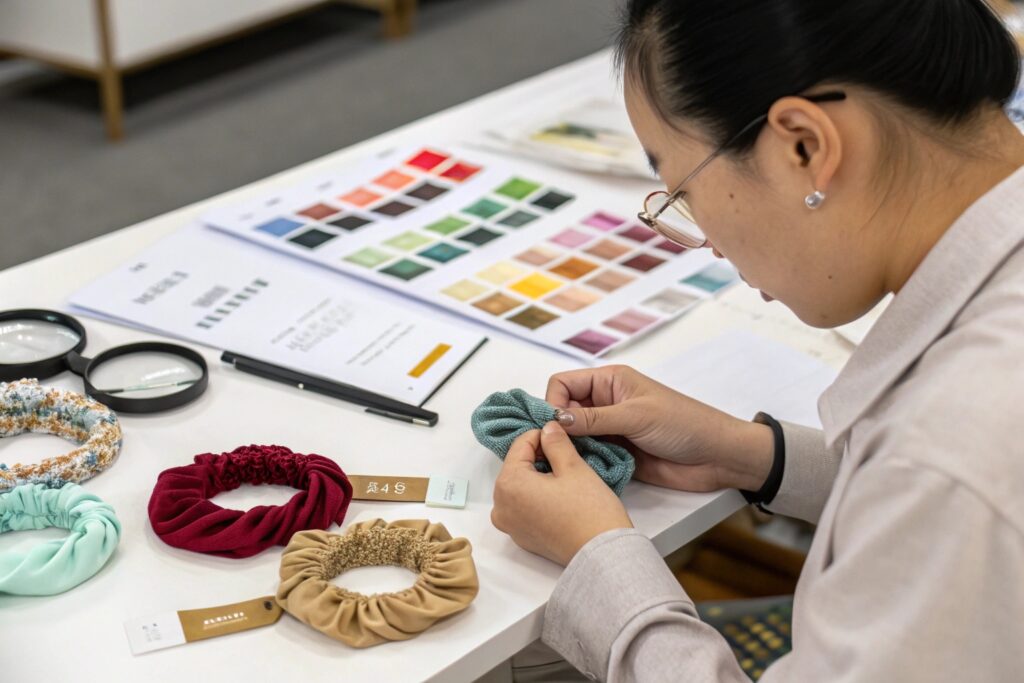
Shade bands refer to slight shifts in tone within the same fabric roll. These happen due to dye batch settling or uneven tension. If not caught, they may lead to scrunchie headbands in the same order looking subtly different.
At HairAcc, we review shade bands visually and with digital devices. If the variance exceeds acceptable levels, we either re-dye, separate by color group, or confirm with the buyer before packing—ensuring no surprises on arrival.
How Is Batch Tracking Documented?
Every dyed lot is labeled with a batch code. These are recorded in a production log and referenced during QC checks. Our team uses color report sheets that include the lab dip reference, production date, dye machine ID, and Delta E score.
This traceability gives buyers confidence. If there’s ever a concern, we can pull the exact roll and reverify its color performance, offering transparency in production.
How Do Factories Maintain Color Over Long-Term Orders?
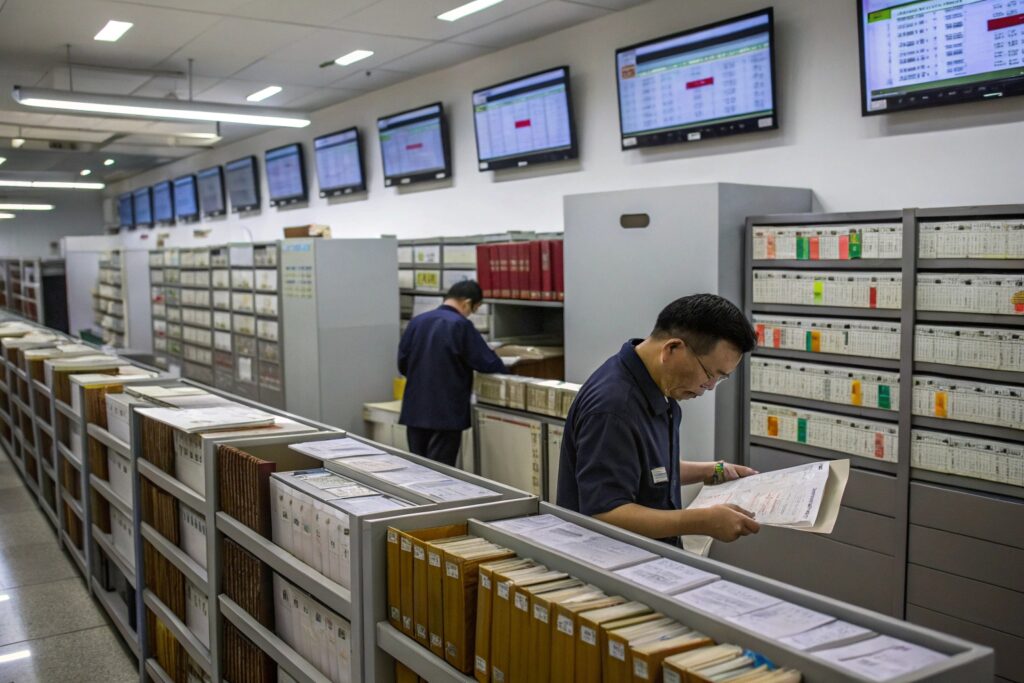
Clients often reorder successful SKUs months or even years apart. Without good records, color matching becomes a guessing game. That’s why great factories build archives and digital libraries for each client’s styles.
Top factories maintain lab dip libraries, digital color profiles, and dye formulas for each order—ensuring repeat orders match originals exactly.
How Are Color Archives Built and Used?
Each approved lab dip is saved both physically (as a swatch) and digitally (with spectrometer data). These are stored under the client’s account and cross-checked before any repeat dyeing. That means a client’s spring-summer pink from 2023 can be perfectly matched in 2025.
We also keep leftover dyed fabrics labeled and stored by batch, enabling smaller reorders without redyeing. This reduces lead time and cost for our long-term clients.
How Is Formula Replication Guaranteed?
Factories log each recipe: dye names, gram weights, temperature curves, and time sequences. These parameters are stored in dye machine software or recipe sheets. This ensures that, even years later, the same pink velvet used in your bestselling scrunchie is replicated exactly.
We use ERP-integrated dye systems to link recipe control with production flow. It’s part of how HairAcc builds long-term consistency across seasons and scale.
Conclusion
Color consistency is a hallmark of a serious factory. For accessories like scrunchie headbands, even slight variations can damage your brand’s trust or inventory value. That’s why we invest in precision dyeing, quality control, and digital tools to keep every batch perfectly aligned.
At HairAcc, we go beyond visual checks. We rely on science, experience, and technology to deliver repeatable results—batch after batch. Whether you’re placing your first or fiftieth order, you can count on your colors being right, every time.