

Are you noticing a surge in customers asking for functional yet stylish headwear to complement their active lifestyles? You're selling activewear, but your accessory line feels incomplete. The generic sweatbands you offer lack the fashion appeal that modern consumers crave, leaving you unable to capitalize on the booming athleisure trend and the profitable opportunity to increase the average order value from your existing customer base.
Yes, elastic head wraps are definitively trending in the activewear wholesale market. Their popularity is driven by the fusion of fashion and function ("athleisure"), offering sweat-wicking performance, a secure no-slip fit, and a stylish aesthetic. Wholesalers are seeing high demand for these versatile accessories from gym-goers, runners, and yoga enthusiasts who want products that perform well and look great.
As a manufacturer who has been at the forefront of the hair accessories industry for over a decade, I've seen this trend explode firsthand. We've shifted a significant portion of our R&D and production capacity at Shanghai Fumao Clothing to develop high-performance elastic head wraps for major US and European activewear brands. They are no longer just a simple accessory; they are a core component of the modern athletic wardrobe. In this article, I'll break down the specific materials driving this trend, the features that wholesale buyers are demanding, and how you can source them effectively to capture this growing market.
What Materials Offer the Best Performance?
You know your activewear customers demand performance. A simple cotton headband just won't cut it when they're in the middle of a high-intensity workout. It gets saturated with sweat, slips out of place, and becomes uncomfortable. Offering a product that fails during use is a fast way to lose customer trust and get stuck with inventory that won't sell.
The best-performing materials for activewear head wraps are technical synthetic blends, typically combining polyester, spandex (Lycra), and sometimes nylon. These fabrics offer a critical combination of moisture-wicking properties to keep sweat away from the skin, four-way stretch for a comfortable and secure fit, and excellent durability for repeated washing.
I remember a pivotal meeting with a large American sportswear buyer, someone like Ron, who was looking to develop a proprietary line of headbands. He brought samples from his competitors, and his main complaint was that they would stretch out and lose their shape after a few washes. He wanted a product with longevity. We presented him with a blend we had developed: 88% polyester and 12% high-modulus spandex. We provided him with lab reports showing its superior shape retention and recovery after 50 wash cycles. This data-driven approach, focusing on the technical aspects of the material, won him over. It showed him we understood the specific demands of the activewear market.
Why is moisture-wicking so important?
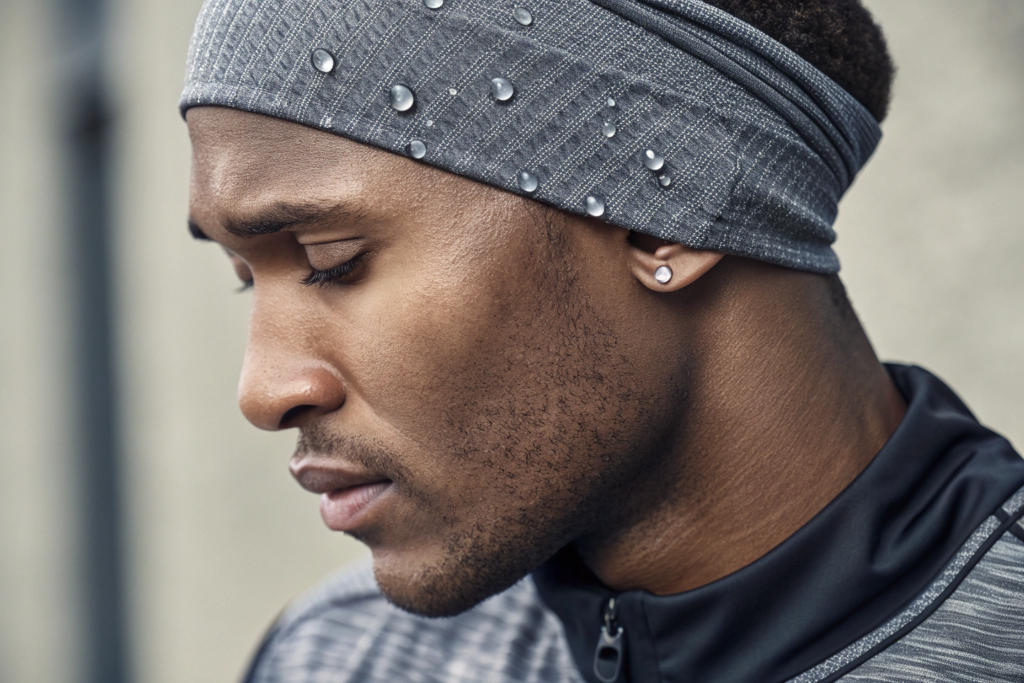
Moisture-wicking is the key performance feature. Here’s how it works:
- The synthetic fibers, like polyester, are hydrophobic, meaning they don't absorb much water.
- Instead of soaking up sweat like cotton, the fabric's capillary action pulls moisture from the skin to the outer surface of the head wrap.
- Once on the surface, the moisture can evaporate quickly, keeping the wearer dry, comfortable, and focused.
This technology is the same found in high-end athletic shirts and leggings. You can learn more about the science of performance fabrics from textile industry resources like the ITJ (International Textile Journal). When marketing to wholesale buyers, using terms like "moisture-wicking," "sweat-wicking," and "quick-dry" is essential.
What is the role of spandex?
Spandex (often known by the brand name Lycra) is the hero of fit and comfort. It's a polyurethane fiber that can stretch over 500% without breaking and, crucially, return to its original shape.
- Four-Way Stretch: Blending spandex into the fabric allows the head wrap to stretch both crosswise and lengthwise. This ensures a snug, comfortable fit for a wide range of head sizes without being too tight.
- Shape Retention: It's what prevents the head wrap from becoming a stretched-out, useless band after a few uses. This durability is a major quality indicator.
As we'll see when we discuss What Design Features Prevent Slipping?, the right amount of spandex is critical for creating a no-slip fit.
What Design Features Prevent Slipping?
The number one complaint about any headband or head wrap is that it slips during activity. A customer who has to constantly readjust their head wrap during a run or a yoga class will not buy from you again. You need to offer a product that solves this core problem, providing a "set it and forget it" experience that allows your customers to focus on their workout, not their accessories.
To prevent slipping, the most effective design features are the inclusion of a silicone grip strip on the inner surface of the head wrap and a tapered, ergonomic design. The silicone provides direct friction against the hair, while a wider front that tapers towards the back allows the wrap to conform to the head's natural shape, creating a more secure fit.
This was a game-changer for us. For years, the only solution was to make headbands tighter, which caused headaches. Then, we started experimenting with applying a thin, clear line of medical-grade silicone to the inside of our head wraps. We sent samples to a group of marathon runners for testing. The feedback was unanimous: the head wraps didn't budge, even after hours of running. This small, almost invisible feature completely solved the biggest pain point. Now, a silicone grip strip is a non-negotiable feature for almost every activewear head wrap we produce at Shanghai Fumao Clothing.

How does a silicone grip strip work?
Silicone is a soft, tacky polymer that creates a high-friction surface. When a thin strip is applied to the fabric, it gently grips the hair without pulling or causing damage.
- Application: It's typically applied as a liquid and then cured to form a durable, flexible strip. It can be applied in a straight line, a wavy pattern, or as small dots.
- Effectiveness: Even a single, thin line of silicone can dramatically increase the head wrap's ability to stay in place during dynamic movements like jumping or running.
This feature is a powerful selling point. When describing your product, be sure to highlight the "no-slip silicone grip" as a key benefit.
Why is a tapered design more effective?
A simple, uniform tube of fabric doesn't match the shape of a human head. A well-designed activewear head wrap is often engineered with a more ergonomic shape.
- Wider Front: A wider section at the front (typically 3-4 inches) provides better coverage to hold back hair and absorb sweat across the forehead.
- Tapered Back: The wrap then tapers to a narrower section (around 1-2 inches) at the nape of the neck. This reduces bulk and helps the wrap sit securely under the occipital bone (the bump at the back of your head), which acts as a natural anchor point.
This thoughtful design, combined with high-stretch performance materials, creates a product that feels custom-made and stays put. You can see examples of these ergonomic designs in the product lines of major sportswear brands like Lululemon.
How to Meet Wholesale Price Points and MOQs?
You've identified the perfect, high-performance, no-slip head wrap. But can you source it at a price point that allows for a healthy retail margin? And can you meet the manufacturer's Minimum Order Quantity (MOQ) without over-investing in a single product? Navigating the financial side of sourcing from a factory can be intimidating and is often the biggest hurdle for new and growing businesses.
To meet wholesale price points and MOQs, it's crucial to work directly with a factory that can offer economies of scale. Provide a clear target price and detailed specifications to get an accurate quote. For MOQs, many manufacturers are flexible and may allow you to split the order across multiple colors or designs to meet the total quantity requirement.
This is a conversation I have every day. A buyer will come to me and say, "I love your product, but my target price is X." My job isn't to just say yes or no. It's to find a solution. I might ask, "Can we use a slightly different but still high-performance fabric blend? Can we simplify the packaging?" Regarding MOQs, we are often flexible. For a new client, I might say, "Our MOQ is 3,000 pieces, but you can choose up to six colors, 500 pieces each." This allows them to offer a variety to their customers without taking a huge risk on a single color. A good manufacturing partner is a problem-solver, not just an order-taker.
How can you negotiate a better price?
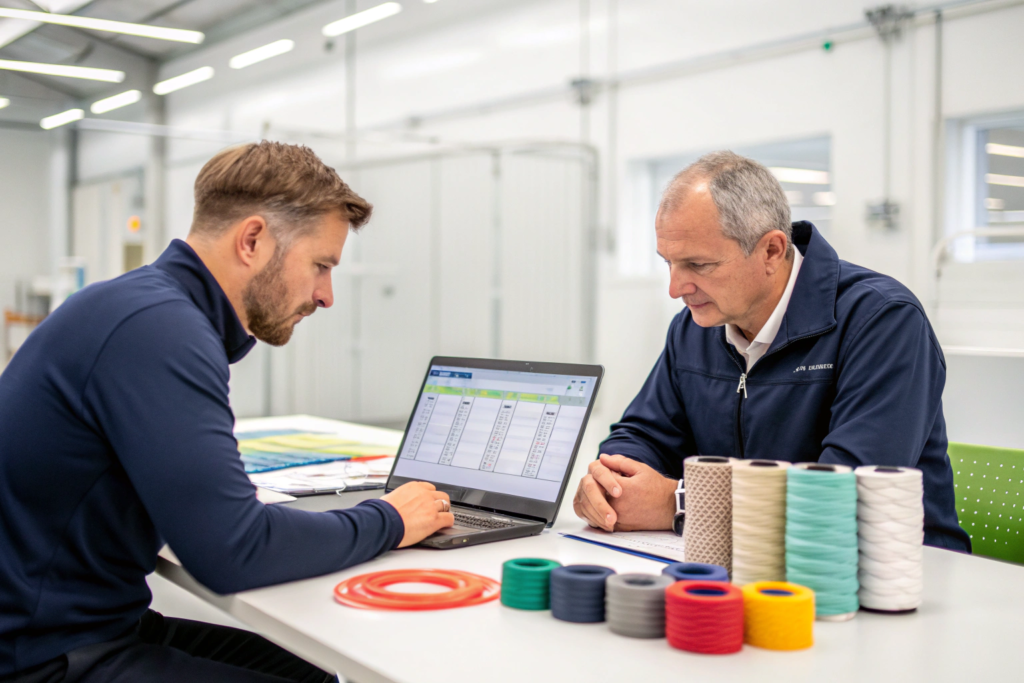
Price is always a factor of volume and complexity. Here are ways to work with your supplier for a better price:
- Increase Volume: The single most effective way to lower the per-unit cost is to order more.
- Simplify Design: A complex design with many seams or extra features will cost more in labor. A simpler, elegant design can be more cost-effective.
- Provide Clear Specifications: The more detailed your tech pack, the more accurately the factory can quote. Ambiguity leads to factories quoting higher to cover potential risks. Resources like Techpacker offer tools to help you create professional tech packs.
- Build a Relationship: Long-term partners often get better pricing. Show the factory you are interested in a long-term relationship, not just a one-off order.
What are realistic MOQs for custom designs?
MOQs are necessary because factories have to buy fabric in bulk and set up machinery for each specific production run.
- Typical MOQs: For a custom-designed elastic head wrap, MOQs from a mid-to-large-sized factory can range from 1,000 to 5,000 pieces per style.
- Color Assortments: As mentioned, the most important negotiation point is the ability to split this MOQ across multiple colorways. This is the key to building a vibrant and appealing collection for your retail customers.
- Stock Programs: Some manufacturers also offer "stock" programs, where you can buy their existing designs in smaller quantities. This can be a great way to test the market before committing to a large custom order.
The key is open communication. Be upfront with your supplier about your budget and volume capabilities.
How Do You Ensure Consistent Quality in Bulk Production?
You've approved a perfect pre-production sample. But how do you guarantee that the 5,000th piece produced is just as good as the first? The fear of inconsistent quality across a bulk order—variations in color, size, or stitching—is a major risk for any wholesaler. A shipment of defective products can wipe out your profit margin and damage your brand's credibility.
To ensure consistent quality in bulk production, you must implement a multi-stage quality control (QC) process. This includes raw material inspection before production begins, in-line inspections during the assembly process, and a final random inspection of finished goods before shipment. Partnering with a factory that has a dedicated, internal QC team is essential.
At our factory, quality control is a culture, not just a department. We have a dedicated QC team that reports directly to me, not the production manager. This ensures they can halt a production run if standards aren't being met, without pressure. We conduct a "4-point system" inspection on all incoming performance fabrics to check for defects before they are even cut. During production, our in-line QC team checks for stitching consistency and correct placement of silicone grips. This rigorous, multi-step process is the only way to ensure that every single piece in a 10,000-piece order is something we are proud to put our name on.
What are the key QC checkpoints?
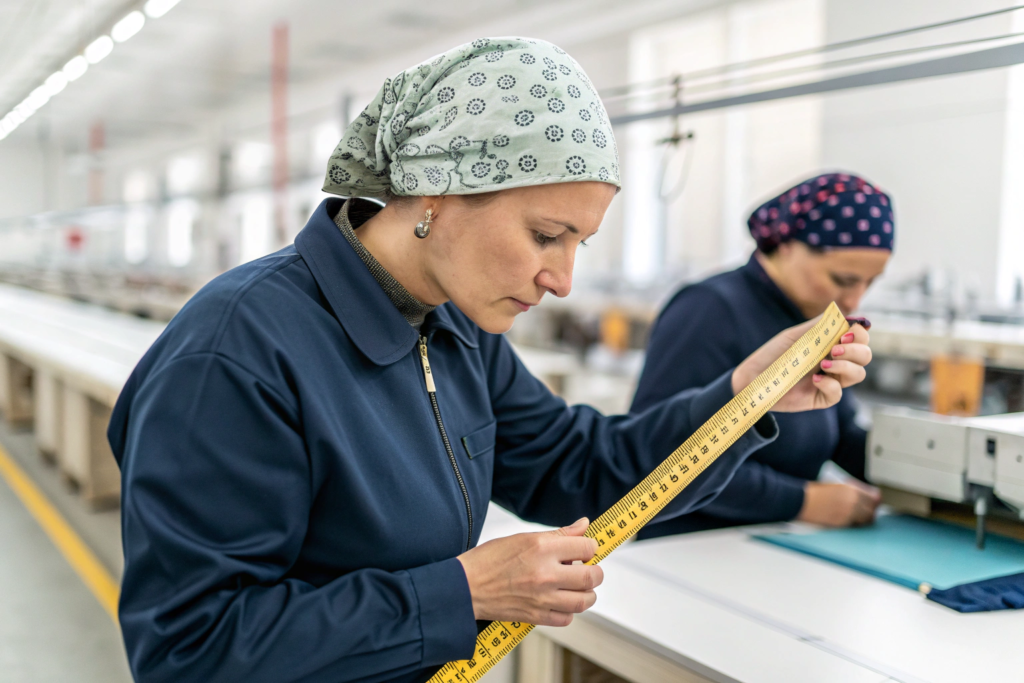
A robust QC plan should include at least three stages:
- Raw Material Inspection: Before production, all materials (fabric, thread, silicone, packaging) are inspected to ensure they match the approved specifications and are free from defects.
- In-Process Quality Control (IPQC): During manufacturing, QC inspectors randomly check products as they come off the assembly line. This catches any systemic problems early, such as a machine being calibrated incorrectly.
- Final Quality Control (FQC): Before the products are packed for shipping, a final random sample (based on AQL standards) is inspected. This is the final check for overall quality, dimensions, color accuracy, and packaging.
What is AQL and how is it used?
AQL stands for "Acceptable Quality Limit." It is a statistical method used for product inspection, defined by standards like ISO 2859-1.
- How it works: It determines the sample size to be inspected from a given lot size and the maximum number of defective items allowed in that sample for the lot to be accepted.
- Example: For an order of 5,000 head wraps, AQL 2.5 might specify that you inspect 200 pieces. If you find more than 10 "major" defects, you would reject the entire shipment.
- Why it matters: It provides an objective, internationally recognized standard for quality. You and your supplier can agree on an AQL level in your contract, which removes subjectivity from the final inspection. You can hire third-party inspection companies like QIMA to perform an AQL inspection on your behalf.
By establishing a clear QC plan and AQL standard, you transform quality from a hope into a verifiable metric.
Conclusion
The trend is clear: elastic head wraps are no longer a niche item but a mainstream staple in the activewear market. The modern consumer demands a product that delivers on both performance and style, and the wholesale market is rapidly expanding to meet this need. By focusing on high-performance, moisture-wicking fabrics, incorporating essential no-slip design features like silicone grips, and partnering with a manufacturer who understands the nuances of quality control and flexible MOQs, you can confidently and profitably tap into this lucrative trend.
Building a successful activewear accessory line requires a partner who is as committed to quality and performance as you are. We have spent years perfecting the materials, designs, and processes to create best-in-class elastic head wraps. If you are ready to offer your customers a product that truly performs, I invite you to start a conversation with us. Contact our Business Director, Elaine, at elaine@fumaoclothing.com to discuss your vision, get a quote, and learn how we can help you build your next winning product.