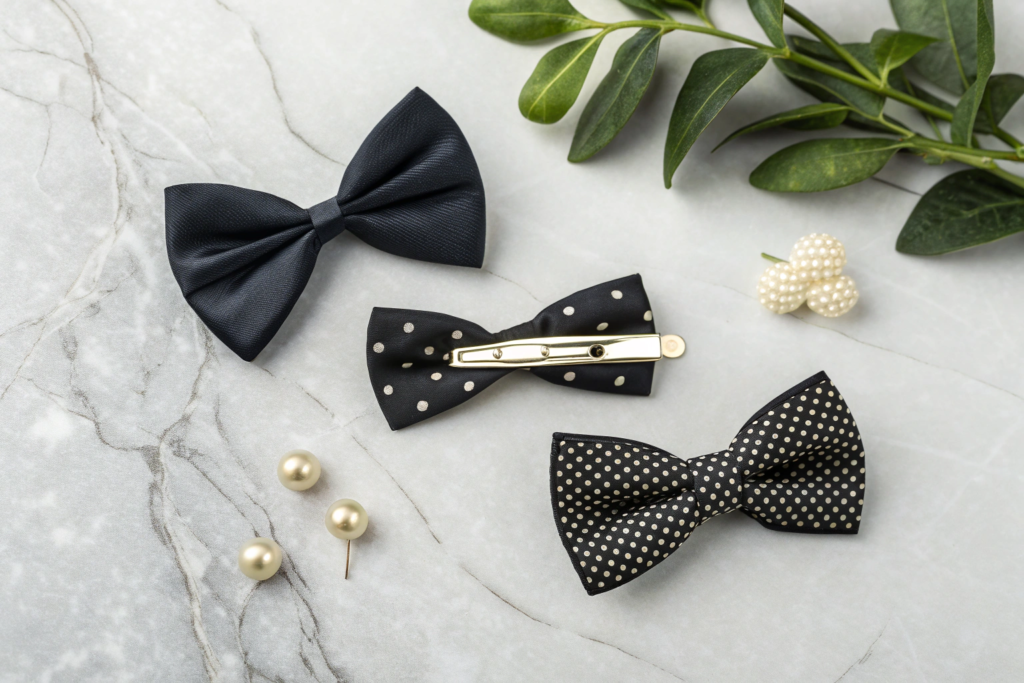
As a buyer looking to offer versatile and trendy hair accessories, you want to maximize variety while keeping inventory costs efficient. The idea of bow clips with detachable bows is smart—it allows one base clip to work with multiple bow styles. The good news is, based on the industry's capabilities and market offerings, Chinese suppliers are absolutely equipped to manufacture these.
Yes, Chinese manufacturers can provide bow clips with detachable bows. This design falls well within their expertise in both modular accessories and customizable hair pieces. The technical feasibility is high, as it involves standard attachment mechanisms like clips, pins, or small clasps that local factories routinely handle. The key is finding the right specialized supplier who understands this specific product request and can ensure the detachable mechanism is both secure and user-friendly.
Why is the Detachable Bow Design Commercially Smart?
The detachable bow concept aligns perfectly with current consumer desires for personalization, value, and sustainability. It allows a single, well-made clip base to become multiple accessories, appealing to customers who enjoy mixing and matching their look. For you as a buyer, this means offering more perceived variety without proportionally increasing your inventory or shipping costs. It’s an efficient way to cater to the fast-changing trends in the fashion accessories market.
What Are the Common and Reliable Detachment Mechanisms?
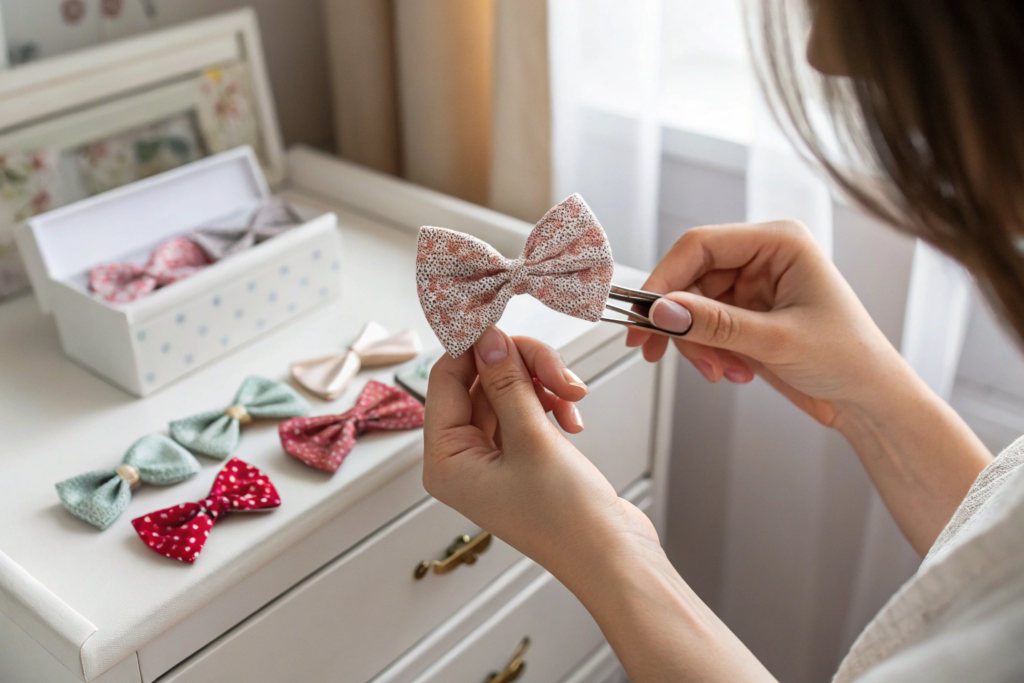
The success of this product hinges on the connection method. The most common and reliable mechanisms include:
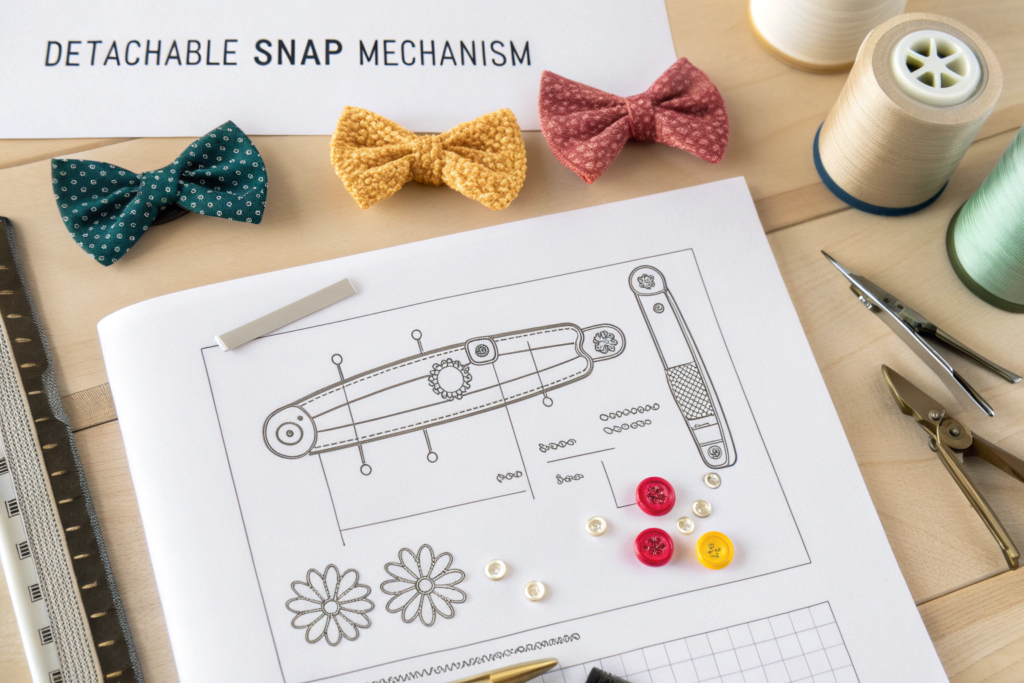
- Snap Buttons/Press Studs: These are very popular for fabric bows. A small metal or plastic snap is sewn or glued onto the back of the bow, which clicks securely into a corresponding socket on the clip. They are inexpensive and easy for customers to use.
- Slide-On Clasps or Bars: Often seen with more rigid bows (made of acrylic, wood, or molded resin), the bow has a horizontal bar on the back that slides snugly into a groove or clasp mounted on the clip. This offers a very secure and sleek look.
- Small Screw or Pin: This is a more permanent but still changeable option. A tiny screw or pin through the bow and into the clip base can be tightened with a miniature tool (often provided). It’s extremely secure but less convenient for quick changes.
When discussing with suppliers, asking for prototypes to test the “click” and grip strength of these mechanisms is crucial. A high-quality supplier will have a professional QC team to ensure these small parts are durable and function consistently across thousands of units.
How Does This Affect Material Choices and Cost?
The detachable feature influences both material selection and pricing structure:
| Consideration | Impact on Product & Sourcing |
|---|---|
| Base Clip Quality | The base clip becomes a critical, reusable component. It must be high-quality, with a strong spring and a smooth finish. Investing in a better base (e.g., sturdy metal vs. plastic) elevates the entire product line. |
| Bow Material Freedom | You can source bows in diverse materials without worrying about the clip mechanism each time. Think satin, velvet, acrylic, lace, or even embroidered fabrics, allowing for a rich product mix. |
| Pricing Model | Suppliers may quote separately for the base clip unit and the interchangeable bow units. This allows for flexible bundling (e.g., selling a clip with 3 bows as a set). MOQs might apply to each component type. |
| Packaging | Packaging needs to securely hold and display both the clip and the additional bows. Think about clear plastic boxes with separate compartments or sets that look collectible. |
For a product like this, partnering with a supplier like Shanghai Fumao Clothing that has integrated capabilities—from material sourcing and accessory printing to final assembly and inspection—can streamline communication and ensure cohesive quality.
How to Source This Product Successfully from China?
To turn this concept into a successful inventory item, your communication and sourcing strategy need to be precise.
Clearly, you must move beyond generic product listings and engage in direct, detailed communication with suppliers that show a capacity for customization. The search results show many suppliers listing standard bow clips, but your requirement is a step beyond that. You need to identify partners who explicitly offer custom design and OEM services.
What Specifications Should You Provide to Potential Suppliers?
To get accurate quotes and samples, provide suppliers with a clear specification sheet. This should include:
- Base Clip: Specify the exact type (alligator clip, snap clip, jaw clip), size (length in cm), material (metal, plastic, with/without teeth), and finish (matte, shiny, painted color).
- Bow Design: Provide sketches, dimensions, and material references for your desired bows (e.g., "5cm wide satin bow, similar to style in your catalog code XXX").
- Connection Mechanism: Clearly state your preferred attachment method (e.g., "size 10 line snap button" or "3mm wide slide-on metal bar"). If unsure, ask for their recommendation and samples.
- Quality Benchmarks: Mention any specific tests, such as requiring the bow to withstand a certain number of attachment/detachment cycles without loosening.
- Packaging: Outline how you want the set packaged (e.g., "1 clip and 3 bows in a polybag," "display card with attachable bows").
Suppliers with strong development capacity will respond with technical feedback and can provide fast sampling to let you test the product firsthand.
What Are the Key Pitfalls to Avoid?
Being aware of common challenges can save time and cost:
- Weak Connection: The biggest risk is a flimsy mechanism where the bow detaches too easily or wobbles. Insist on physical samples and test them rigorously.
- Inconsistent Dye Lots: If ordering fabric bows in multiple colors, ensure the supplier's dyeing factory processes can guarantee color consistency across batches.
- Misaligned MOQs: Confirm if the Minimum Order Quantity (MOQ) applies to each bow style individually or to the total unit sets. This significantly impacts your initial order planning.
- Packaging Damage: Ensure the packaging factory designs inserts or compartments that prevent the bows from scratching or detaching during shipping.
What is the custom design process?
You're sold on the idea, but how do you translate your vision for a unique bow collection into a real, manufacturable product? You have specific ideas for fabrics, colors, and bow shapes. You need a manufacturing partner who can listen to your ideas and provide the technical expertise to bring them to life, ensuring the final product is both beautiful and functional.
Our custom (OEM/ODM) design process for detachable bows is a detailed, collaborative journey where we act as your development partner. We start by consulting on the best mechanism for your specific bow designs and target user. Then, we guide you through fabric sourcing, color matching, and branding options, creating physical prototypes for your approval before any mass production begins.
This is where the magic happens. It's a partnership. You bring the brand vision, and we bring the manufacturing and engineering expertise. At Shanghai Fumao Clothing, our team loves this part of the job. We get to solve creative problems and help our clients launch products that are truly unique. We'll advise you on which fabrics hold their shape best, which clip types are most secure, and how to design packaging that tells the story of your product. Let's look at how we'd approach this together. This process is built on a foundation of strong quality control.

How do you choose the right materials and fabrics?
The choice of fabric is critical. For a crisp, structured bow, you might choose a grosgrain ribbon or a sturdy cotton. For a softer, more romantic look, a silk or velvet might be better. We'll provide you with a wide range of fabric options from our extensive network of textile suppliers. We'll also consider the fabric's durability and how well it will hold up to being attached and detached repeatedly. Our expertise in textile science is crucial here. We help you select a material that not only looks great but also performs flawlessly, a key consideration for any high-quality garment or accessory.
What does the prototyping and testing phase involve?
This is the most important step. Once we've settled on a design and materials, we will create a full pre-production sample set for you. This will include the base clip and a few detachable bows. We want you to use it, test it, and try to break it. Does the bow slide on and off easily? Does it stay secure during a full day of wear? Does the fabric fray? Your feedback is essential. We will refine the prototype based on your comments until it is perfect. This iterative prototyping process is the best way to guarantee that the final mass-produced product will meet your quality standards.
How do you ensure quality and durability?
Your biggest fear is launching this innovative product, only to have the detachable mechanism fail after a few uses. A broken loop or a loose sleeve would lead to customer frustration, negative reviews, and costly returns. How can you be confident that the clips you source will be durable enough to withstand real-world use by your customers?
We ensure durability through a combination of high-quality component sourcing and rigorous, function-specific testing. We use reinforced stitching for all loops and sleeves and source high-grade metal clips and elastics. Most importantly, we conduct "cycle testing" where we mechanically attach and detach the bow hundreds of times to simulate a lifetime of use and ensure the mechanism doesn't wear out.
As a manufacturer, I know that a product's reputation lives or dies by its weakest point. For a detachable bow clip, that point is the mechanism. That's why we put so much focus on reinforcing and testing it. We treat it like an engineered part, not just a decorative element. This commitment to durability is how we protect your brand and ensure your customers receive a product they can rely on. This is the final and most critical piece of the puzzle, building on the innovative design.

What specific tests are performed on the mechanism?
Beyond the cycle testing, we perform pull tests to ensure the stitching on the sleeve or loop won't break under force. We also conduct "wear tests" where our own staff will wear the prototypes for several days to see how they perform in real-world scenarios. This combination of machine testing and human feedback gives us a complete picture of the product's durability. These methods are adapted from standardized textile testing procedures. It's how we can confidently guarantee the quality of every shipment.
How do you control quality in mass production?
Our quality control is not just a final check; it's integrated into the entire production line. We have specific QC checkpoints after the bows are sewn, after the mechanisms are attached, and during final assembly. Our QC team is trained to look specifically for inconsistencies in stitching, sleeve width, and elastic tension. Any unit that doesn't meet our strict standards is removed from the production line. This multi-stage inspection process is a core principle of Total Quality Management (TQM) and ensures that the quality of the 10,000th unit is identical to the approved prototype.
Conclusion
Chinese suppliers are fully capable of manufacturing high-quality bow clips with detachable bows, a product that matches today's demand for customizable fashion. The path to success lies in detailed specification, partnering with a responsive and capable supplier, and rigorously testing the prototypes for the detachable mechanism's durability and ease of use.
To explore manufacturing your own line of versatile, detachable bow clips, contact our Business Director Elaine at elaine@fumaoclothing.com. We can discuss your design ideas, provide sample options for different attachment mechanisms, and offer a competitive quote tailored to your needs. Let us help you create a standout product that offers your customers endless styling possibilities.