
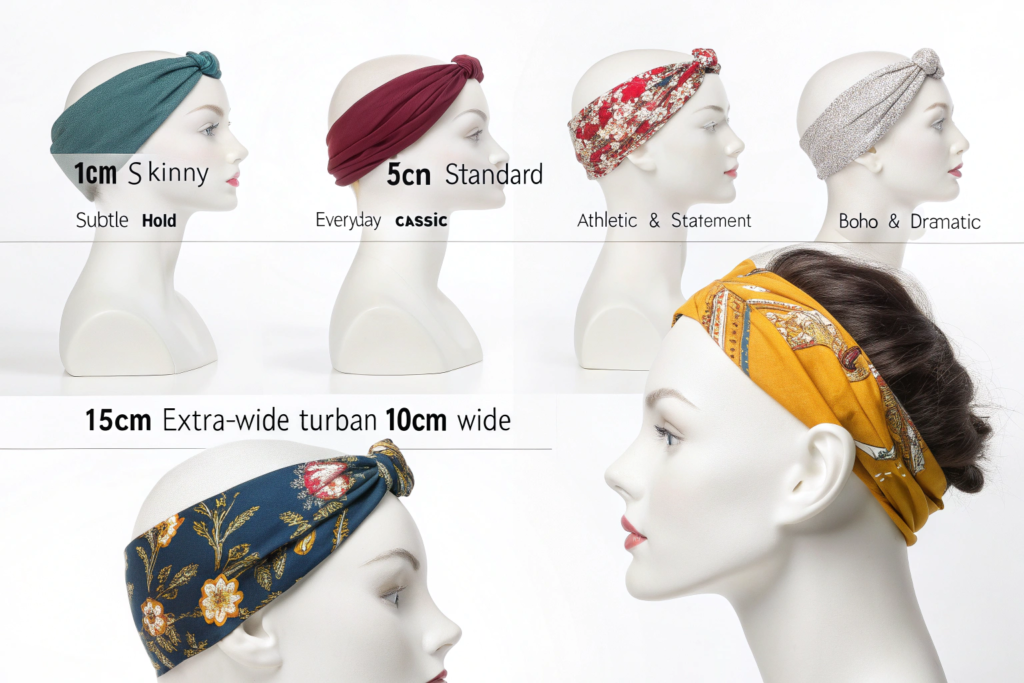
If you're sourcing or designing fabric headbands, selecting the right width isn't just an aesthetic choice—it's a critical functional decision that directly impacts comfort, style, and market appeal. The wrong width can lead to customer discomfort, slippage, or a product that simply doesn't sell because it doesn't suit its intended audience. Understanding how to match width to purpose is key to building a successful product line.
The appropriate width of a fabric headband is primarily determined by its intended function, the target customer's head size and hairstyle, and the desired fashion statement. It requires balancing comfort, hold, and visual proportion. From skinny, discreet bands to wide, statement-making wraps, each width serves a distinct purpose and customer need.
As a manufacturer at Shanghai Fumao Clothing, we guide our clients through these decisions daily to ensure their collections are both beautiful and commercially sound. Here is a comprehensive framework for making the right width choice.
How Does the Intended Function Dictate the Ideal Width?
The primary purpose of the headband is the most important factor in choosing its width. Different activities and needs call for fundamentally different designs, moving from pure utility to pure decoration.
For athletic performance and sweat management, width is a functional tool. A wider band (5cm to 10cm or more) provides a larger surface area to absorb moisture, prevents slippage by distributing pressure across a broader area of the scalp, and can effectively contain thick hair and shorter layers during intense movement. In contrast, a headband designed for subtle styling and managing flyaways serves a gentler purpose. A narrow to medium width (1.5cm to 4cm) is ideal for pushing hair back gently, adding a touch of color or pattern without overwhelming the look. When the goal is to make a bold fashion statement, width becomes the primary visual driver. Very wide bands (8cm to 15cm+), sometimes overlapping to form a turban style, offer a large canvas for dramatic prints, textures, and embellishments, transforming the accessory into the outfit's focal point.

Why is Width a Direct Driver of Comfort and Wearability?
Comfort is dictated by pressure distribution. A very narrow band (under 1cm) can concentrate pressure on a thin line of the scalp, especially if elasticized, leading to discomfort and "headband headaches." A wider band spreads this pressure over a larger area, feeling more secure and less constricting. However, an overly wide band on a small head can feel bulky, slip forward, or visually overwhelm the wearer. The universal sweet spot for all-day, general-purpose comfort for most adults often lies in the 3cm to 6cm range.
How Does Function Influence the Choice of Materials?
The intended function guides material selection, which must be compatible with the chosen width. A wide athletic headband must utilize absorbent, stretchy, and quick-drying fabrics like terry cloth or technical polyester blends. A wide fashion headwrap, however, might use non-stretch, decorative fabrics like silk, velvet, or brocade, relying on ties or a hidden elastic section for fit. The width must be technically feasible with the fabric's inherent properties—a very wide band in a heavy, non-stretch fabric may be difficult to keep in place.
How Should Customer Anatomy and Personal Style Guide Your Choice?
A one-size-fits-all approach fails in headbands because proportion is everything. A successful collection caters to diversity by offering a range of widths tailored to different physical features and aesthetic preferences.
Key anatomical and stylistic considerations include:
- Head Size and Proportions: Petite head sizes (common in children and some adults) can be visually overwhelmed by very wide bands. Narrower widths (2cm-4cm) are often more proportionate. Larger head circumferences can carry and often require wider styles for a balanced look and secure fit.
- Face Shape and Hairstyle: This is a crucial styling principle. Wider headbands tend to shorten and widen the appearance of the face. They can be exceptionally flattering on long, oval faces but may accentuate roundness in round faces. Narrower headbands have a less dramatic effect on face shape. Furthermore, a customer with a voluminous Afro or thick curls might need a wider band for hold, while someone with a sleek bob might prefer a skinny band for a minimalist accent.

What Are the Standard Width Categories and Their Target Audiences?
| Width Category | Typical Measurement | Best For | Key Considerations |
|---|---|---|---|
| Skinny | 0.5cm - 2cm | Fine hair, children, subtle accent, 90s/Y2K revival style. | Can slip easily; often more decorative than functional. |
| Standard/Classic | 2.5cm - 4.5cm | Everyday wear, most face shapes, holding back medium hair. | The "safe" and most versatile width for a general audience. |
| Wide | 5cm - 8cm | Athletic activities, thick/curly hair, making a moderate statement. | Excellent sweat absorption and hold; check proportion on smaller heads. |
| Extra-Wide/Turban | 9cm+ | Bold fashion statements, complete hairstyle coverage, cultural styles. | Often requires specific styling; can be a signature look item. |
How Do You Design for Diverse Hair Types and Textures?
Hair texture directly influences the functional effectiveness of a width. Thick, curly, or voluminous hair often needs the anchoring power and surface area of a wider headband to stay in place comfortably. Fine, straight hair might be held securely by a standard width, but a very wide band could slip off more easily due to less natural friction. Product descriptions that guide the customer ("Great for thick, curly hair" or "Delicate hold for fine hair") build trust, manage expectations, and reduce return rates.
What is the Impact of Fashion Trends and Material Properties?
Headband width, like other silhouette details, is subject to the cyclical nature of fashion. Simultaneously, the physical properties of materials impose practical constraints on design.
Historically, skinny headbands peaked in the late 90s/Y2K era and have seen strong, recurring revivals. Wide, embellished headbands were iconic in the 1980s and resurfaced with the boho-chic trend of the 2010s. Currently, the market supports a pluralistic mix, with standard and wide widths remaining perennial staples due to their core functionality. For a brand, staying attuned to these cycles via runway reports, street style photography, and retail trend forecasts is essential for capturing trend-driven demand. When a specific width trend emerges, agility in sampling and production is key.

How Do Fabric Stretch, Thickness, and Drape Interact with Width?
The chosen fabric's behavior is a critical technical partner to your width decision:
- Stretch Fabrics (Knit, Jersey): Offer the most flexibility. A wide band made from a stretchy fabric can comfortably conform to various head sizes without needing adjustable features.
- Non-Stretch/Woven Fabrics (Silk, Brocade, Quilted Cotton): The width is more fixed. These designs almost always require a separate elasticated section at the back or a tie closure. The final width must be carefully decided, as the fabric won't stretch to accommodate.
- Thick or Stiff Fabrics (Faux Fur, Structured Felt): A wide band in a very thick material can become bulky, hot, and cumbersome. For such materials, a moderate width is often more wearable and aesthetically pleasing.
- Drape: A fluid fabric like silk chiffon on a wide band will create a soft, romantic look, while the same width in stiff canvas will create a sharp, architectural form.
Why is Physical Prototyping an Non-Negotiable Step?
Before finalizing any width for bulk production, creating physical samples and conducting wear-tests is indispensable. Test prototypes on models with different head sizes, face shapes, and hair types. Does the extra-wide wool band overheat? Does the skinny metallic-edged band cause pressure points? This empirical testing validates design choices, uncovers unforeseen issues, and prevents costly mistakes in large-scale manufacturing. This rigorous prototyping phase is a cornerstone of our product development partnership with clients at Shanghai Fumao Clothing.
What Are the Core Factors for Choosing Fabric Headband Width?
The width of a fabric headband directly impacts its functionality, comfort, and aesthetic effect. A wider headband, typically ranging from 3 to 5 inches in breadth, offers enhanced support and coverage, making it ideal for active use such as workouts, running, or outdoor activities where sweat management is crucial. Its broader surface area helps absorb moisture more effectively, keeping the hair and forehead dry, while the added thickness provides a snug fit that stays in place even during vigorous movement.
In terms of comfort, wider headbands distribute pressure more evenly around the head, reducing the likelihood of pinching or discomfort over extended wear, though they may feel bulkier for some users.

How to Match Headband Width to Your Face Shape for Balanced Aesthetics?
When selecting a headband, the width plays a crucial role in achieving a balanced and flattering look that complements your unique facial structure. Understanding how different face shapes interact with headband dimensions can transform a simple accessory into a style-enhancing piece. For round faces, characterized by soft, curved features and a width roughly equal to their length, a medium to wide headband (typically 3-4 inches in width) works best.
Which Width Suits Your Usage Scenarios and Comfort Needs?
Beyond face shape, your daily activities and comfort preferences are key to choosing the right width. For those with active lifestyles—such as frequent travelers, hikers, or individuals who spend long hours commuting—opting for a slightly wider frame can offer enhanced stability and protection against wind, dust, and debris.
A broader lens surface also provides a more expansive field of vision, reducing peripheral blind spots that might be encountered while navigating busy streets or uneven terrain. Conversely, if your routine involves extended periods indoors, like working at a desk or engaging in creative tasks, a narrower width may be preferable, as it sits more comfortably on the nose bridge without causing pressure points or pinching.
Conclusion
Choosing the appropriate width for a fabric headband is a strategic design exercise that synthesizes ergonomics, market intelligence, and material science. It demands asking: What is this product's core function? Who is the ideal wearer? What are the limits and possibilities of my materials?
By systematically evaluating intended use, target customer anatomy, and fabric properties, you can design a headband collection that is not only stylish but also deeply considered—ensuring each piece is comfortable, functional, and perfectly proportioned for its intended audience. This thoughtful approach fosters customer loyalty, minimizes returns, and creates clear, compelling segmentation within your product line.
Partner with a manufacturer that offers expert design consultation and a rigorous prototyping process. Contact us to discuss your vision, from on-trend skinny bands to high-performance wide wraps, and leverage our expertise in fit, function, and fabrication. Reach out to our Business Director, Elaine, at elaine@fumaoclothing.com for a consultation to begin the sampling journey. Let Shanghai Fumao Clothing help you craft headbands that are as intelligently designed as they are beautiful.