
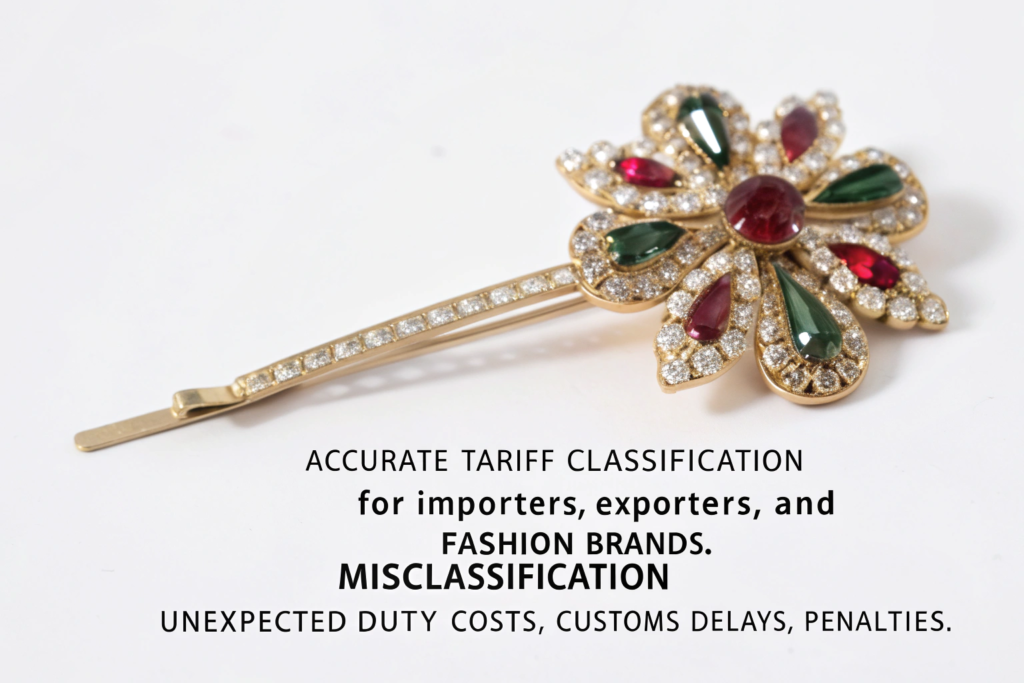
For importers, exporters, and fashion brands navigating international trade, the tariff classification of a decorative hair accessory is a critical business decision. Misclassification can lead to unexpected duty costs, customs delays, penalties, and compliance headaches. You might think that a beautifully crafted, gem-encrusted hairpin is simply a "hair ornament," but customs authorities may see it as "jewellery," with significantly different financial and regulatory implications.
The fundamental difference in tariff classification hinges on the primary material composition and value of the item. In essence, if an article is made principally of precious materials for adornment, it's jewellery. If it's made of common materials primarily for the utilitarian purpose of holding or decorating hair, it's a hair ornament. This distinction is governed by the international Harmonized System (HS) codes, which are used by most countries to standardize trade classification.
Understanding this distinction is not just academic—it directly impacts your landed cost and supply chain efficiency. Let's break down the core chapters, the key rules for classification, and the practical steps to ensure you declare your products correctly.
What Are the Core HS Code Chapters for These Items?
Internationally, hair ornaments and jewellery fall under two distinct sections of the Harmonized System. Getting the chapter right is the first and most crucial step.
Which Chapter Covers Hair Ornaments?
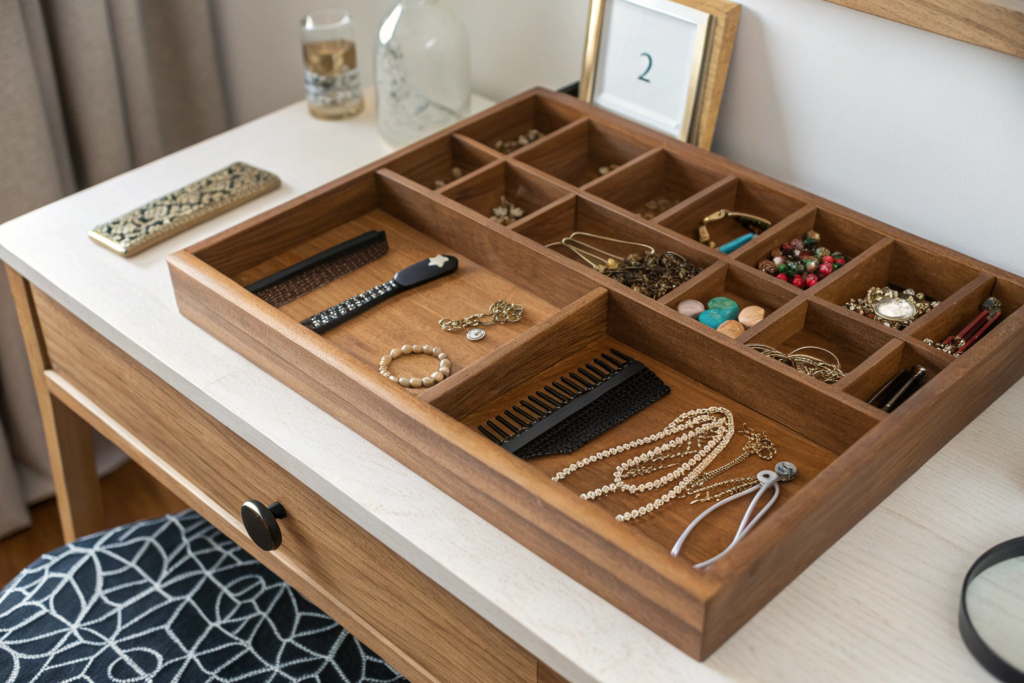
Hair ornaments are typically classified under Chapter 96: Miscellaneous Manufactured Articles. Specifically, they often fall within heading 96.15, which covers "Combs, hair-slides and the like; hairpins, curling pins, curling grips, hair-curlers and the like." This chapter is for articles made from common materials like plastic, base metal (e.g., steel, copper alloy), wood, or textile, where the primary function is practical—to hold, style, or decorate hair.
- Examples: Simple plastic claw clips, fabric scrunchies, metal bobby pins, decorative but mass-produced resin barrettes.
- Key Characteristic: Their identity is derived from their function as a hair accessory, not from the intrinsic value of their materials.
Which Chapter Covers Jewellery?
Jewellery is classified under Chapter 71: Natural or Cultured Pearls, Precious or Semi-Precious Stones, Precious Metals, Metals Clad with Precious Metal, and Articles Thereof. The relevant heading is usually 71.13, which covers "Articles of jewellery and parts thereof, of precious metal or of metal clad with precious metal," or 71.14 for articles of other precious materials like natural or cultured pearls.
- Examples: A gold hairpin with a diamond accent, a silver hair comb set with turquoise, a platinum hair vine with sapphires.
- Key Characteristic: Their identity and essential character come from the precious metal, pearls, or genuine gemstones they are made of.
How Do You Determine the Correct Classification?
The line can seem blurry for high-fashion items. Customs authorities use specific legal notes and rules within the HS system to make the determination.
What is the "Essential Character" Rule?
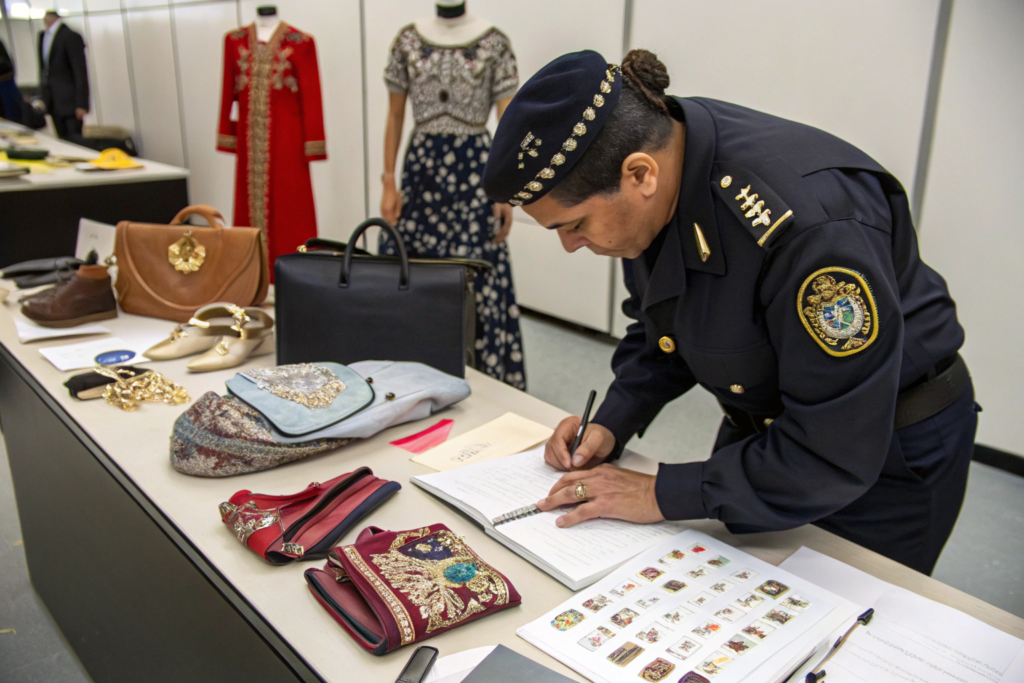
This is the most important guiding principle. According to General Rule for the Interpretation (GRI) 3(b) of the HS, the classification of composite goods is determined by the material or component which gives them their essential character. For a hair accessory:
- If a hairpin is made of base metal but has a small cubic zirconia decoration, the base metal (and its function) likely gives it its essential character → Hair Ornament (Chapter 96).
- If a hairpin is made of sterling silver and is valued primarily for that silver, the precious metal gives it its essential character → Jewellery (Chapter 71).
- If a hair clip is made of plastic but entirely covered in a layer of faux pearls, the essential character may be debated, but it often falls to the base material (plastic) and function.
What About Value and Marketing?
While not the sole determinant, the value breakdown and how the product is marketed and sold are strong indicators.
- Commercial Valuation: If over 50% of the product's value comes from precious metals/stones, it strongly points to jewellery classification. A $200 item where $150 of cost is from the silver and amethyst will be hard to classify as a simple hair ornament.
- Retail Packaging & Description: An item sold in a jewellery box, described as "sterling silver hair jewellery" on an invoice or website, and priced like fine jewellery will be treated as such by customs. This commercial context is considered in borderline cases.
What Are the Practical Implications of Getting it Wrong?
Misclassification isn't a minor paperwork error; it has direct and often costly consequences for your business. When employees are incorrectly classified—whether as independent contractors instead of full-time workers or vice versa—it can lead to a cascade of financial and legal repercussions. For instance, misclassifying a worker as an independent contractor may result in the business failing to pay required payroll taxes, such as Social Security and Medicare contributions, which not only creates immediate tax liabilities but also exposes the company to penalties and interest from regulatory agencies like the IRS.

How Does it Affect Duty Rates and Taxes?
Duty rates for jewellery (Chapter 71) are almost always significantly higher than those for miscellaneous articles like hair ornaments (Chapter 96). For example, in the United States under the Harmonized Tariff Schedule (HTSUS), a base metal hair clip might have a duty rate of 4-5%, while a silver hair ornament could be subject to a rate of 6.5% or more, plus potential additional taxes. Underpaying duties due to misclassification can result in back-payment demands with interest.
What Are the Compliance and Legal Risks?
Using an incorrect HS code is a violation of customs regulations. The risks include:
- Customs Holds and Seizures: Your shipment can be detained at port for inspection and correction, causing costly delays.
- Audits and Penalties: Customs authorities may audit past shipments, leading to substantial fines and penalties for unpaid duties.
- Loss of Privileges: Repeated errors can damage your company's customs compliance record, potentially leading to increased scrutiny on all future shipments.
How Can You Ensure Correct Classification?
Taking proactive steps to classify your products correctly is an essential part of responsible international trade.
What Are the Key Steps in the Self-Classification Process?
- Gather Complete Product Specifications: Know exactly what your product is made of. This includes the full material breakdown by weight and value (e.g., "70% zinc alloy, 25% polyester ribbon, 5% glass crystal"). For a manufacturer like Shanghai Fumao Clothing, having detailed Bills of Materials (BOMs) is the foundation.
- Consult the Official Tariff Schedules: Use the official customs website of your destination country (e.g., U.S. International Trade Commission for HTSUS, EU's TARIC database). Don't rely on general internet searches for codes.
- Apply the HS Rules Methodically: Start with the heading that most specifically describes your article. Read the Section and Chapter Notes carefully, as they include critical exclusions and definitions (e.g., Chapter 71 notes define "precious metal"). Apply the GRI rules step-by-step to determine the essential character.
- Document Your Decision: Keep a record of the HS code you selected, the product description, and the rationale for your classification choice. This is invaluable if your decision is ever questioned.
When Should You Seek a Binding Ruling or Expert Advice?
For high-value, complex, or new products, it is wise to seek certainty.
- Request a Binding Ruling: Many customs authorities (like U.S. Customs and Border Protection or the UK's HMRC) allow importers to apply for a Binding Tariff Information (BTI) or advance ruling. This is a legally binding decision from customs on how to classify your specific product. It provides peace of mind and protects you from future reclassification for a set period.
- Hire a Customs Broker or Trade Consultant: These professionals specialize in tariff classification and can provide expert guidance, especially for tricky items that blend fashion and fine materials. Their fee is often a worthwhile investment compared to the cost of a classification error.
Conclusion
The tariff classification difference between hair ornaments and jewellery is a material-driven distinction with major financial and legal consequences. The core rule is to follow the essential character of the product: common materials for a functional purpose lead to Chapter 96, while precious materials for adornment lead to Chapter 71. Relying on guesswork or using a competitor's code is a high-risk strategy.
Ensuring accurate classification requires diligence—meticulous product documentation, careful consultation of official tariff schedules, and, for complex items, seeking expert advice or binding rulings from customs authorities.
As a manufacturer deeply involved in global logistics, Shanghai Fumao Clothing understands that accurate classification is part of our value-added service. We work to provide clear product specifications to support our clients' customs declarations. If you are developing a new line of hair accessories and need clarity on the material specifications that influence classification, we can assist. For further discussion on product development and compliance, please contact our Business Director, Elaine, at elaine@fumaoclothing.com.