
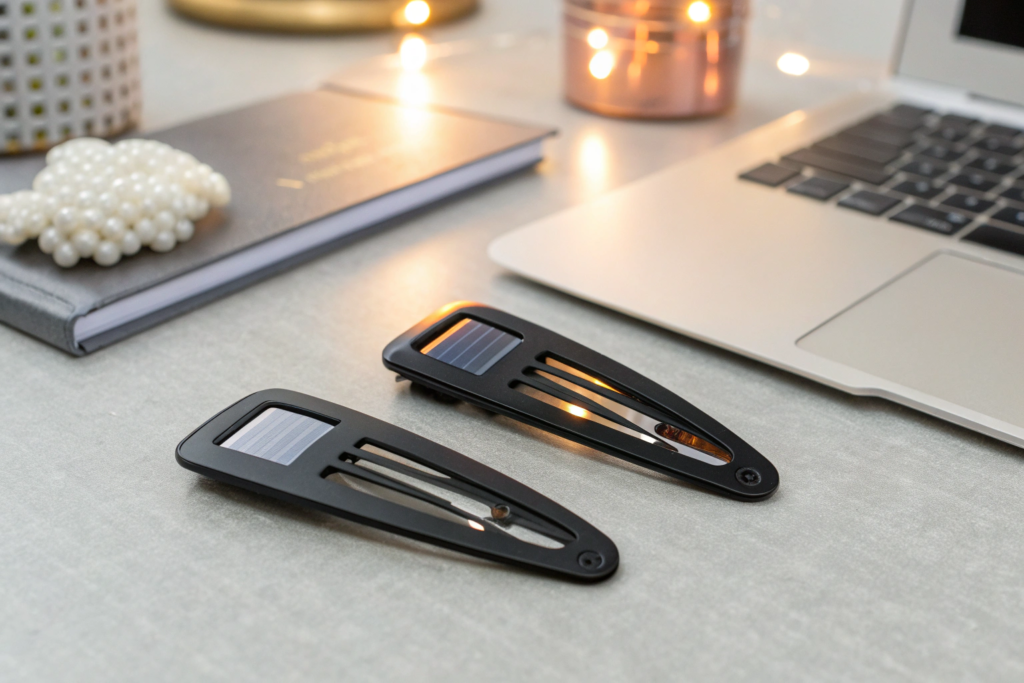
Looking for solar-charging glow hairpins for your business can be a real challenge. You know there's a market for innovative, eco-friendly accessories that combine technology with style, but finding ready-to-sell products or reliable manufacturers for such a niche item feels nearly impossible. Existing products are either standard LED hairpins or bulky solar gadgets, leaving a clear gap for truly wearable, solar-powered light-up hair accessories.
The truth is, "solar-charging glow hairpins" as a finished, mainstream consumer product are not readily available on the market today. What you will find are proven technical concepts in patent documents and a parallel, thriving market for battery-powered LED hair accessories. This indicates a significant white-space opportunity. For a fashion-forward brand, the realistic path is not to find a supplier, but to custom-develop this product by integrating existing solar technology with proven LED hairpin designs.
For buyers and brand owners, understanding this landscape is the first step to capturing a unique market position. Let's explore what current technology can achieve, analyze the successful adjacent market, and outline the clear path to creating your own line of solar-charging glow hairpins.
What is the Current State of Solar-Powered Hair Accessory Technology?
The foundational technology for solar-charging hair accessories exists and is documented in functional patents. These are not consumer products, but they provide a complete technical blueprint that proves the concept is viable and manufacturable.
What Do Existing Patents and Concepts Show Us?
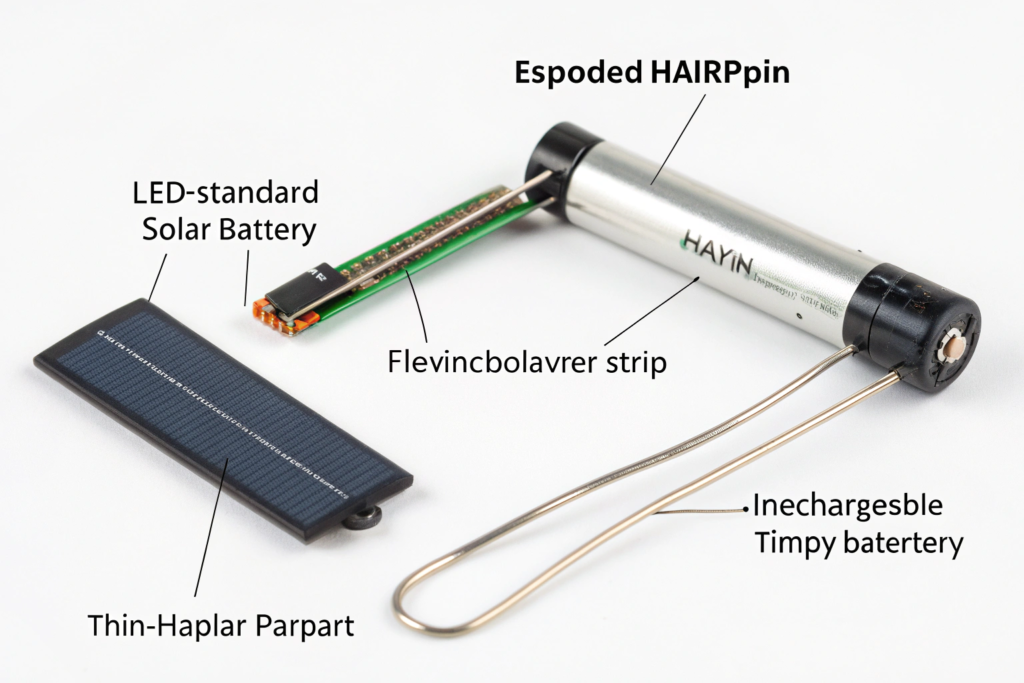
Several utility model patents explicitly describe the integration of solar cells into hair accessories. For example, one patent details a "solar charging type electric hairpin" that includes a solar panel to charge an internal battery, which then powers the device for hairstyling. Another patent outlines a "convenient hair ring" (or scrunchie) that uses a miniature solar electric plate to convert light into electricity, powering an electromagnetic closure system. Most relevantly, a patent for a "solar lighting hair clip" describes a design where solar panels on the clip's arms charge a battery that powers LED lights for illumination. These patents confirm that the core engineering challenge—miniaturizing solar charging circuits to fit within a hair accessory—has been solved conceptually.
How Feasible is Miniaturization and Design Integration?
The technical hurdles are manageable. Patents show the use of flexible, thin-film solar panels that can be adhered to curved surfaces like a hairpin's spine or a headband. The energy needs for a few small, efficient LEDs are low, meaning a correspondingly small battery (like a rechargeable coin cell) and a compact solar panel are sufficient. The key for a commercially appealing product is the design integration. The solar panel must be seamlessly incorporated into the accessory's aesthetics—perhaps as a sleek, colored strip or a decorative metallic panel—rather than looking like an added technical component. This seamless integration is where a manufacturer's design expertise becomes critical.
How Does the Mature Market for LED Hair Accessories Inform Development?
While solar-charging variants are rare, the market for glowing hair accessories is well-established and growing, dominated by battery-powered LED products. This market validates consumer demand and provides a clear template for successful product design, safety, and marketing.
What Makes Battery-Powered LED Hairpins Successful?
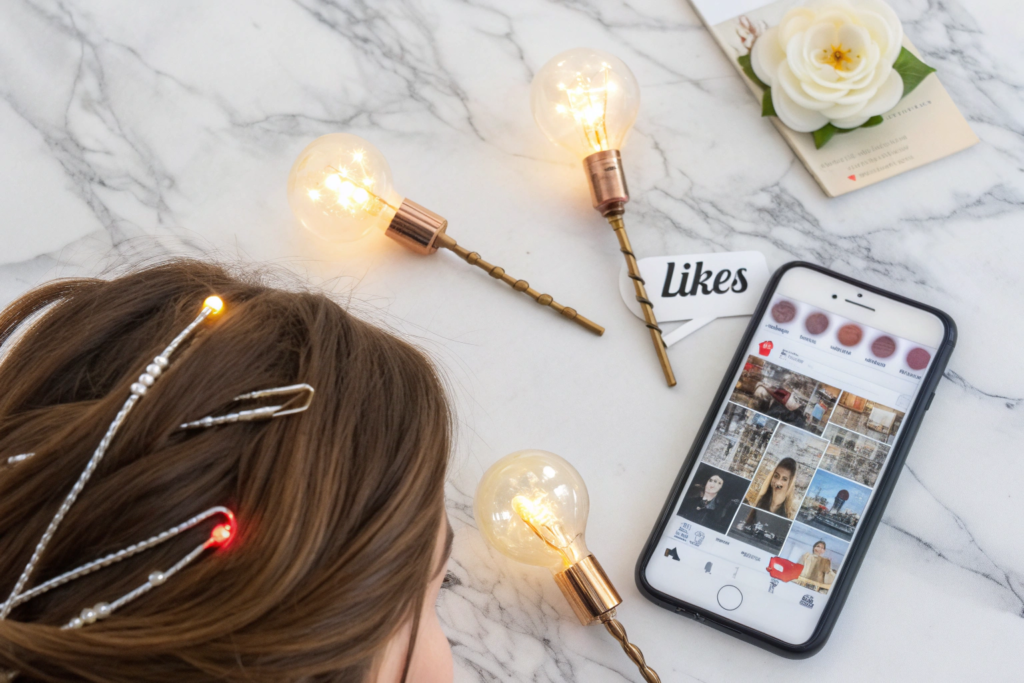
Products like the popular "glowing light bulb hairpin" are successful because they perfectly blend novelty, aesthetics, and function. They are designed first and foremost as fashion accessories, with the light feature serving as a fun enhancement for parties, concerts, or photos. Crucially, they are user-friendly, typically powered by easily replaceable button batteries. The market has also established clear safety and quality benchmarks, such as using safe ABS plastics, ensuring lights are not too bright, and having secure battery compartments. This proven market shows that consumers are willing to buy light-up hair accessories, provided they are stylish, safe, and easy to use.
What Are the Limitations That Solar Charging Could Solve?
The current LED hairpin market has two pain points that a solar-charging design directly addresses. First, there is the hassle and ongoing cost of replacing batteries. Second, there is an environmental concern associated with disposable batteries. A well-designed solar-charging hairpin would offer a superior value proposition: convenience and sustainability. Marketing could focus on the "never buy batteries again" angle and the eco-friendly appeal, allowing a brand to command a premium price point in a market currently focused on lower-cost, disposable options.
What is the Practical Path to Sourcing or Creating This Product?
Given the absence of ready-made suppliers, the most effective path is custom development with an experienced manufacturer. This allows for control over design, technology integration, and brand positioning from the outset.
Why is Custom Development the Only Viable Option?
Mass-produced, off-the-shelf "solar charging glow hairpins" are not available because the product sits at the intersection of two niches: high-tech accessories and sustainable fashion. Generic factories do not stock such specialized items. Therefore, partnering with a manufacturer that has expertise in both electronic hair accessories and new product development is essential. This partner can source the micro solar panels and rechargeable circuits, and then integrate them into a custom hairpin design that matches your brand's vision. This is the standard path for bringing a truly innovative accessory to market.
What Should You Look for in a Development Partner?
You need a manufacturer with proven Research and Development (R&D) capabilities and experience in small electronics integration. They should be able to:
- Interpret Technical Concepts: Understand and adapt existing patent ideas into a commercially viable, cost-effective design.
- Handle Electronics Sourcing: Manage the supply chain for miniature solar cells, micro-USB or wireless charging modules, and rechargeable batteries.
- Ensure Quality and Safety: Implement rigorous testing for waterproofing (for sweat), charging cycles, light durability, and material safety, building on established norms from the LED hairpin market.
- Offer Design Flexibility: Work with you to create multiple styles (minimalist barrettes, decorative clips, etc.) where the solar panel is an aesthetic feature.
What are the Key Considerations for Market Success?
Turning this innovative concept into a commercial success requires careful planning beyond the technical prototype. Pricing, marketing, and consumer education will be just as important as the product's function.

How Do You Balance Cost, Design, and Function?
This will be a premium product. The key is to ensure the premium price is justified by superior design and a clear benefit. The solar panel must be visually integrated—not an afterthought. It could be a sleek metallic inlay, a translucent panel with a pattern, or a flexible strip that follows the accessory's contour. The product must also be as lightweight and comfortable as any standard high-quality hairpin. The manufacturer must prioritize this balance, as a bulky or ugly design will fail no matter how good the technology is. Learn more Shanghai Fumao Clothingdetails page.
How Should You Position and Market the Product?
Marketing cannot focus solely on the technology. The narrative should be: "Effortless Glamour, Powered by Light." Highlight the convenience (no batteries), the sustainability story, and the magic of having your accessory "charge up" during the day to glow at night. Target early adopters in fashion-tech, festival-goers, and eco-conscious consumers. Provide clear instructions on charging (e.g., "wear it outdoors for 2 hours" or "place it on a sunny windowsill"). Success depends on selling an aspirational lifestyle and a smart solution, not just a gadget.
Conclusion
Finding ready-to-buy solar-charging glow hairpins is currently not possible, but this uncovers a genuine market opportunity. The technology is proven in patents, and consumer demand for light-up accessories is established. The strategic path forward is to custom-develop this product by collaborating with a manufacturer skilled in integrating micro-electronics into fashion accessories. This approach allows you to control the design, ensure quality, and own a unique product that combines sustainability with style.
If you are looking to pioneer this innovative category, Shanghai Fumao Clothing is your ideal partner. We specialize in end-to-end development, from concept design and technical R&D—drawing on proven principles from existing patents—to mass production and quality assurance. We can help you navigate the integration of solar technology to create a line of fashionable, functional, and market-ready solar-charging glow hairpins. To discuss developing your own exclusive line, please contact our Business Director, Elaine, at elaine@fumaoclothing.com for a consultation.