
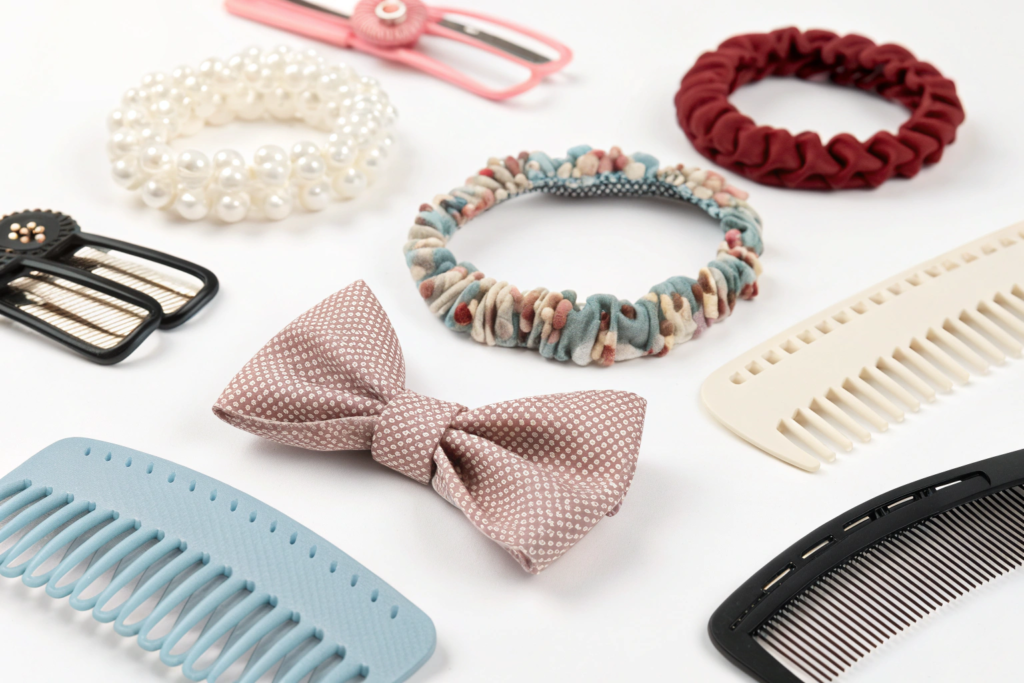
Finding the right hair accessory for individuals with limited hand dexterity or other accessibility needs is a challenge many businesses face. You know your customers deserve stylish options that offer independence, but sourcing innovative, functional, and truly compliant designs can feel nearly impossible. The struggle to merge genuine assistance with fashionable appeal often leaves retailers with a narrow, unattractive product range that fails the very people it aims to serve.
Custom ADA-compliant adaptive hair clips are not one-size-fits-all; they encompass a range of personalized design options focused on easier fastening, enhanced grip, and secure hold. These can include custom magnetic closures, enlarged grip surfaces, adaptive mechanisms that reduce the need for pinching, and designs compatible with assistive devices. As a manufacturer, we specialize in translating these core accessibility principles into customizable, on-trend hair accessories that retailers can confidently offer.
Understanding these custom options in detail is key to making informed decisions for your product line. Let's explore the specific design features that define this category, how they solve real user challenges, and the practical steps for bringing these inclusive products to your market.
What are the key design features of adaptive hair clips?
The core design features of adaptive hair clips focus on modifying the traditional mechanics of fastening to require less precision, strength, or fine motor control. These are not merely aesthetic changes but functional re-engineerings.
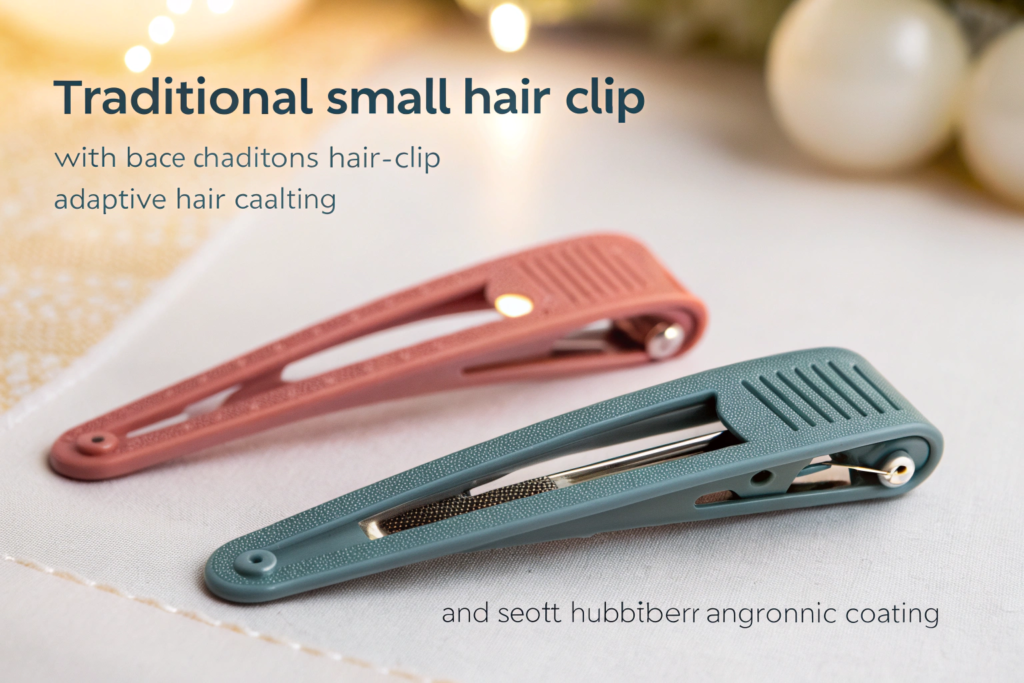
How Do You Simplify the Fastening Mechanism?
The primary challenge with standard clips is the precise pinching and aligning required. A leading solution is integrating magnetic closures. Instead of struggling with a traditional clasp, users can bring two magnetic components close together for them to snap securely into place. This technology, inspired by advancements in adaptive equipment for easier handling, can be seamlessly built into claw clips, barrettes, and decorative pins. Another option is developing lever-action or push-button clips that open with a broad press from the palm or heel of the hand and close securely with a simple push against the head. These mechanisms dramatically reduce the need for the isolated finger strength that traditional designs demand.
What Makes a Hair Clip Easier to Grip and Handle?
This involves expanding the physical interface between the user's hand and the clip. We can customize clips with enlarged, textured surfaces. Adding non-slip materials like soft-touch silicone or rubberized coatings to the outer wings of a claw clip or the top of a barrette provides much-needed stability during handling. Furthermore, incorporating extended tabs or loops gives users a larger target to hook a finger into or leverage against. For bobby pins or similar items, designing them with a wider, wave-like profile instead of a straight pin makes them easier to pick up from a flat surface and provides a more secure hold in the hair with less slippage. Prioritizing lightweight materials also reduces hand fatigue during application.
How can adaptive clips integrate with assistive devices?
Beyond standalone improvements, the most innovative adaptive hair clips are designed to work in concert with existing assistive technologies, offering users even greater autonomy.
What Are Universal Cuff Attachment Points?
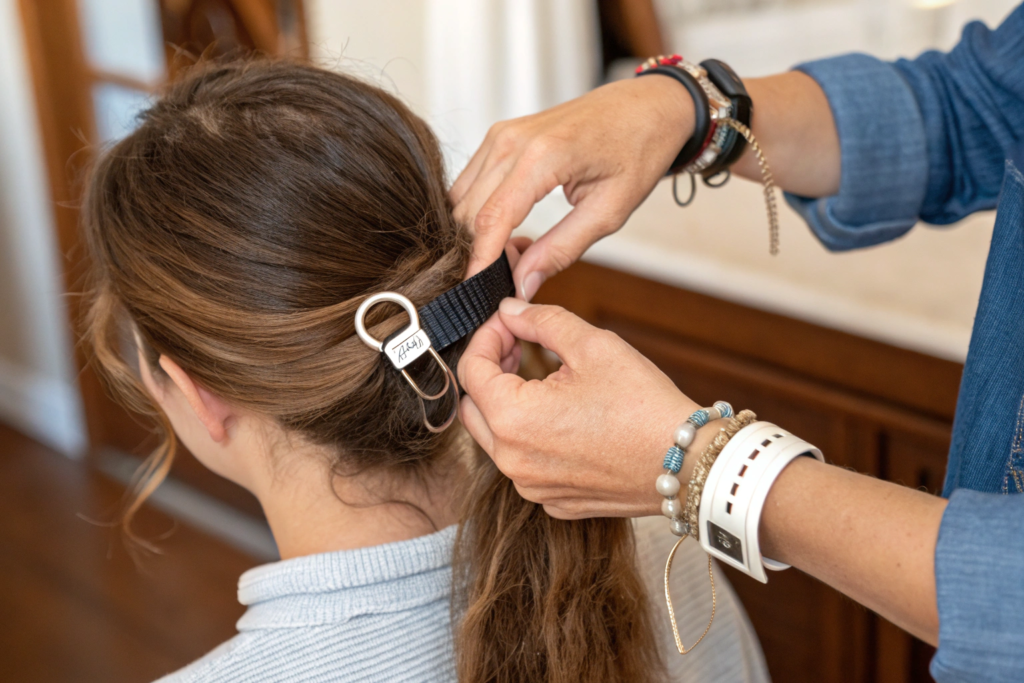
Some users rely on universal cuffs—straps worn on the hand that have slots or mounts for holding items. We can design hair clips with integrated attachment points, such as sturdy loops or specially shaped backs that securely slot into these cuffs. This allows the user to "wear" the clip on their hand, position it in their hair, and release it from the cuff easily. This integration turns a difficult task into a manageable one. The principle is similar to how universal adapter kits allow users to connect everyday items like hairbrushes to assistive systems, but applied directly to the accessory's design.
Is Magnetic Integration a Viable Option?
Yes, building on magnetic closure systems, clips can be designed to interface with magnetic adaptive aids. For instance, a clip could have a small steel plate or secondary magnet embedded in its back. A user could then handle it using a tool with a strong magnet on the end, allowing for extended reach and easier manipulation. This approach offers flexibility, as the same magnetic tool could be used for various clips and other items. When exploring such assistive technology integrations, it's crucial to ensure the magnetic strength is sufficient for control but safe for all-day wear and doesn't interfere with medical devices.
What are the material and safety considerations?
Choosing the right materials is not just about aesthetics or cost; for adaptive hair clips, it directly impacts safety, function, and comfort.
Which Materials Ensure Safety and Durability?
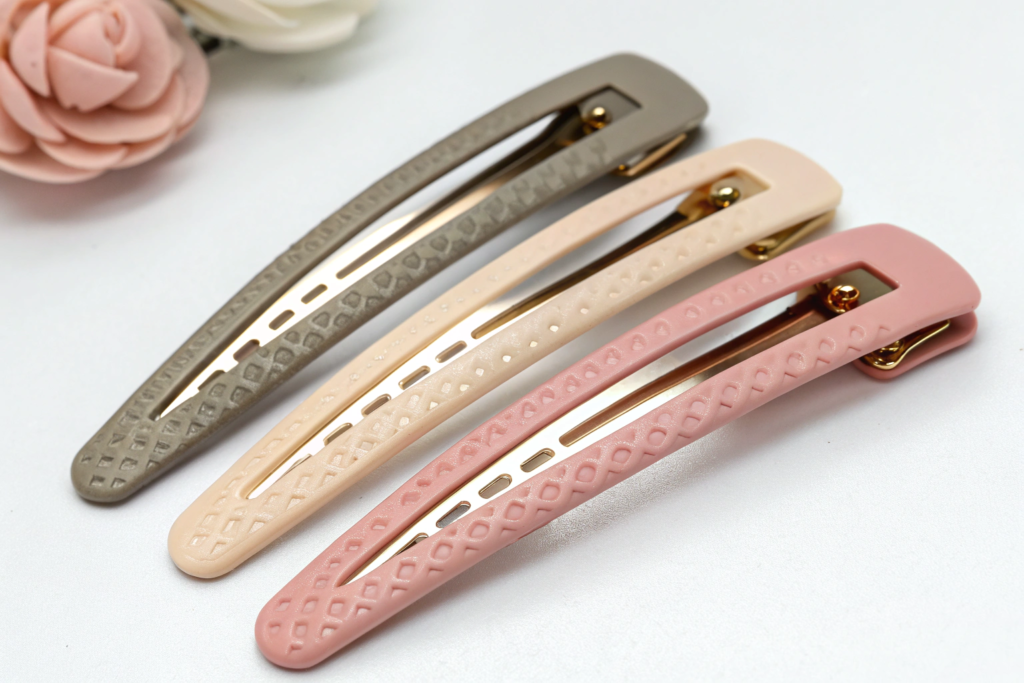
Material selection must follow a strict hierarchy: safety first, then durability, then style. We insist on using hypoallergenic metals (like surgical-grade stainless steel for components) and non-toxic, latex-free polymers. All coatings and colorants must be safe for prolonged skin contact. Durability is equally important; mechanisms must withstand repeated use without breaking. For example, magnets must be securely sealed within the housing to prevent swallowing hazards, and any plastic parts must have a high resistance to fatigue from repeated opening and closing. Rigorous product testing for strength and material integrity is a non-negotiable part of our production process at Shanghai Fumao Clothing.
How Do You Balance Function with Fashion?
The goal is to make accessibility invisible or, better yet, stylish. Functional elements like enlarged grips can be sculpted into sleek, modern shapes. Textured surfaces can incorporate patterns that look decorative. A wide spectrum of on-trend colors and finishes—from matte pastels to metallic shines—can be applied to adaptive designs. Furthermore, we can incorporate popular decorative elements like faux pearls, subtle bows, or geometric shapes that draw the eye to the style, not the adaptation. The customization capabilities at Shanghai Fumao Clothing mean retailers don't have to choose between a functional product and a beautiful one; we ensure they are seamlessly combined.
What does the custom design and production process involve?
Creating a successful line of adaptive hair accessories requires a collaborative and detailed-oriented approach from concept to delivery.
What Are the First Steps in a Custom Project?
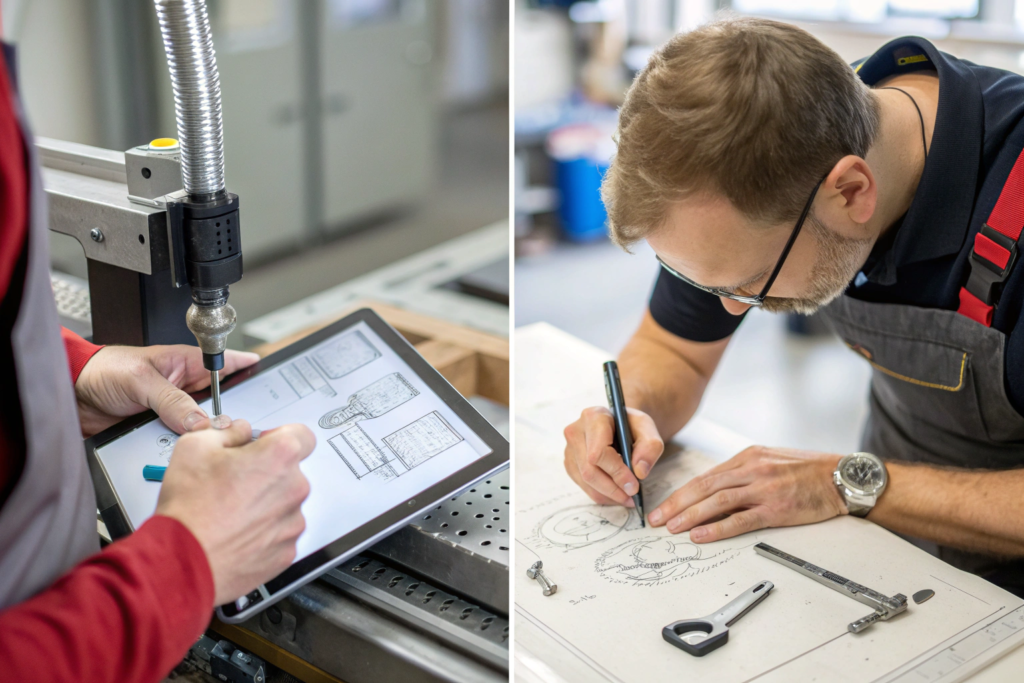
The process begins with a deep dive into your target market and specific needs. Are you focusing on seniors, individuals with arthritis, or a broader inclusive fashion market? We then move to the conceptual design phase, where our team creates 2D sketches and 3D renderings of the proposed clips, highlighting the adaptive features. The next critical step is functional prototyping. We produce physical samples using approximate materials so you can test the mechanism, grip, and ergonomics. This stage is all about refinement—adjusting sizes, spring tensions, or magnet strengths based on hands-on feedback.
How Do You Ensure Quality and Compliance?
| Once the prototype is approved, we prepare for production with a focus on quality control (QC). For adaptive items, QC checks are more stringent: | Checkpoint | Purpose |
|---|---|---|
| Mechanical Function Test | Ensures smooth, reliable operation over repeated use. | |
| Grip and Force Test | Verifies opening/closing force is within accessible limits. | |
| Material Safety Verification | Confirms non-toxic, hypoallergenic material compliance. | |
| Final Assembly Inspection | Examines finish, part security, and overall appearance. |
We manage this entire end-to-end production process, including sampling, mass production, quality control, and logistics, to deliver a product that meets both your specifications and the high expectations of end-users.
Conclusion
Custom ADA-compliant adaptive hair clips represent a meaningful opportunity to expand your product line into the growing inclusive fashion market. By focusing on intelligent design features like magnetic closures and enhanced grips, integrating with assistive technologies, prioritizing safe and durable materials, and following a thorough custom production process, you can offer products that are both empowering and stylish.
If you are looking to partner with a manufacturer that understands the nuances of functional fashion, Shanghai Fumao Clothing is your ideal partner. We combine development expertise with a commitment to quality and accessibility. To discuss developing your own line of adaptive hair accessories, please contact our Business Director, Elaine. She can provide further consultation, samples, and quotes. Reach her at: elaine@fumaoclothing.com.