

As the owner of HairAcc with extensive experience in international hair accessory manufacturing and export, I understand that proper product classification represents one of the most significant opportunities for cost savings in global trade. The difference between optimal and poor classification can impact your bottom line by 5-15% through duty savings alone.
The most effective classification strategies for hair accessories involve precise Harmonized System (HS) code selection, material composition optimization, functional characteristic emphasis, and strategic product design that leverages preferential trade agreements and duty exemption categories.These approaches require deep understanding of both customs regulations and product design principles to maximize savings while maintaining compliance.
The global hair accessory market faces complex tariff structures that vary significantly by country and product characteristics. Based on our experience exporting to over 40 countries, here's a comprehensive guide to classification strategies that optimize tariff outcomes while ensuring full regulatory compliance.
What Are the Key HS Code Categories for Hair Accessories?
Understanding the fundamental HS code structure provides the foundation for optimal classification. Hair accessories span multiple chapters in the harmonized system, each with different duty rates and regulatory requirements.
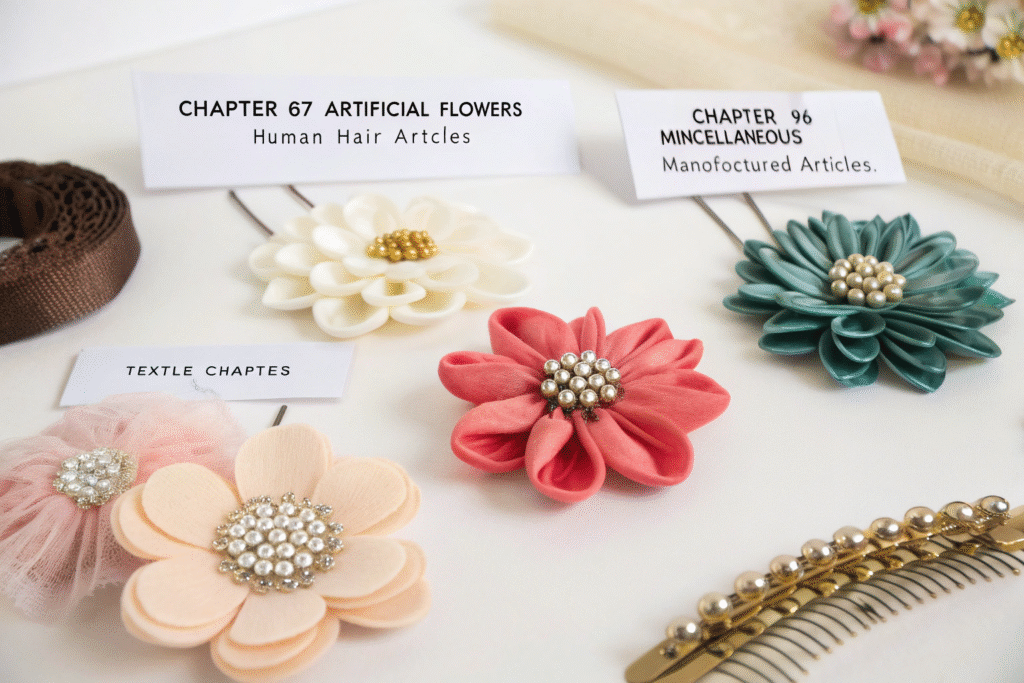
The primary HS categories for hair accessories include Chapter 67 for artificial flowers and human hair articles, Chapter 96 for miscellaneous manufactured articles, and various textile chapters for fabric-based accessories, with duty rates ranging from 0% to 17% depending on specific classification.Strategic categorization within these chapters can dramatically impact total landed costs.
How Does Chapter 67 Classification Work?
Chapter 67 covers "prepared feathers, down and articles made of feathers or down; artificial flowers; articles of human hair." This chapter typically applies to hair accessories containing human hair, such as hair extensions integrated with clips or decorative elements made from artificial flowers. The duty rates in this chapter vary significantly based on the specific materials and construction methods. For example, hair accessories classified under HS 6704 as "hairnets" often carry lower duties than fashion items in other chapters. Understanding the precise definitions and legal notes for this chapter is essential for proper classification of hair-integrated products.
What Opportunities Exist in Chapter 96?
Chapter 96 covers "miscellaneous manufactured articles" and includes some of the most favorable classifications for hair accessories. Items like combs and hair slides under HS 9615 typically carry moderate duty rates of 3-8%. The key advantage of Chapter 96 classifications is their generally straightforward requirements and consistent application across most markets. Products must meet specific criteria regarding materials and primary function to qualify for these classifications. Manufacturers can design products specifically to meet Chapter 96 requirements by emphasizing comb-like functions or slide mechanisms in their designs.
How Can Material Selection Impact Tariff Classification?
Material composition represents one of the most powerful levers for optimizing tariff classification. Different materials trigger classification in different chapters with substantially different duty rates.
Strategic material selection involves choosing base materials that qualify for lower duty rates, avoiding mixed-material compositions that trigger higher-rate classifications, and utilizing materials covered by preferential trade agreements or duty exemption programs.*This approach requires balancing material costs against potential duty savings.

What Are the Advantages of Plastic and Base Metal Components?
Plastic and base metal components often provide the most favorable tariff outcomes for hair accessories. Products made primarily from plastics typically classify under HS 3926 as other articles of plastics with duty rates around 3-5%. Similarly, base metal hair accessories without precious metal content may classify under HS 8313 with comparable rates. These classifications generally offer lower duties than textile-based classifications and avoid the higher rates associated with precious metals or complex composite materials. Manufacturers can optimize classification by ensuring plastic or base metal components constitute the essential character of the product.
How Do Textile Materials Affect Classification?
Textile-based hair accessories face more complex classification scenarios that can significantly impact duty rates. Simple textile hair accessories may classify under HS 6117 as made up clothing accessories with duty rates varying by fiber content, while more structured items might fall under other chapters. The key is ensuring textile products meet specific criteria for their chosen classification, such as being knitted rather than woven or meeting particular size and construction requirements. Manufacturers should carefully document fiber content percentages and construction methods to support their preferred textile classifications.
What Design Strategies Optimize Tariff Outcomes?
Product design decisions made during development can predetermined tariff classification outcomes. Strategic design approaches can ensure products qualify for favorable classifications without compromising aesthetic appeal or functionality.
Effective design strategies include emphasizing functional characteristics over decorative elements, maintaining material consistency throughout the product, avoiding mixed-material compositions, and designing to specific classification criteria that offer duty advantages.These approaches require close collaboration between design and international trade teams.
How Can Functional Design Influence Classification?
Emphasizing functional characteristics can steer classification toward more favorable categories. For example, designing hair clips with clear comb-like functions can support classification under HS 9615 rather than as jewelry or fashion accessories. Similarly, creating headbands with therapeutic or medical characteristics might qualify for special classifications with reduced or zero duty rates. The key is ensuring the functional elements represent the essential character of the product and are not merely incidental features. Manufacturers should document the functional aspects through design specifications and marketing materials to support their classification position.
What Role Does Product Complexity Play in Classification?
Product complexity often leads to less favorable classification outcomes. Simple, single-material products typically classify more predictably and favorably than complex, multi-material items. When products contain multiple materials, customs authorities apply the essential character test to determine classification, which can result in classification under higher-duty chapters. Manufacturers can optimize classification by minimizing material variety and ensuring the primary material determines the essential character. For necessary multi-material products, careful documentation of cost percentages and manufacturing processes helps support the optimal classification position.
How Do Regional Trade Agreements Affect Classification Strategy?
Regional trade agreements and preference programs create additional opportunities for tariff optimization beyond basic HS code classification. Understanding these programs allows manufacturers to leverage special duty rates unavailable through standard classification alone.
Strategic utilization of trade agreements involves qualifying products for preference programs through rules of origin compliance, selecting materials from preference-eligible countries, and maintaining documentation to support preferential claims.These approaches can reduce or eliminate duties entirely for qualifying shipments.

What Are the Key Preference Programs for Hair Accessories?
Major preference programs including USMCA for North American trade, the European Union's GSP program for developing countries, and ASEAN-China FTA for Asian trade offer significant duty advantages for qualifying hair accessories. Each program has specific rules of origin requiring minimum regional value content or substantial transformation within member countries. Manufacturers can structure their sourcing and production to meet these requirements, often by ensuring sufficient processing occurs within preference-eligible countries or by using materials sourced from member countries.
How Can Manufacturers Document Origin Compliance?
Proper origin documentation requires maintaining detailed records of material sources, production processes, and cost calculations. The certificate of origin process involves tracking the country of origin for all materials, documenting the substantial transformation test, and calculating regional value content when required. Manufacturers should implement systems to capture this information throughout production and maintain it for potential verification by customs authorities. Proper documentation not only supports preferential claims but also provides defense during customs audits and verification processes.
Conclusion
Optimal tariff classification for hair accessories requires a comprehensive approach combining precise HS code selection, strategic material choices, intentional product design, and utilization of available preference programs. The most successful manufacturers integrate classification considerations into their product development process from the earliest stages, creating products that not only meet market demands but also optimize global trade costs. This proactive approach typically yields duty savings of 5-15% while ensuring full compliance with international trade regulations.
If you're seeking to optimize your hair accessory classifications for better tariff outcomes, we invite you to contact HairAcc to discuss your specific requirements. With our extensive experience in international trade compliance and product development, we can help you develop classification strategies that maximize savings while maintaining compliance. Reach out to our Business Director Elaine at elaine@fumaoclothing.com to explore how we can optimize your product classifications for better tariff outcomes.