

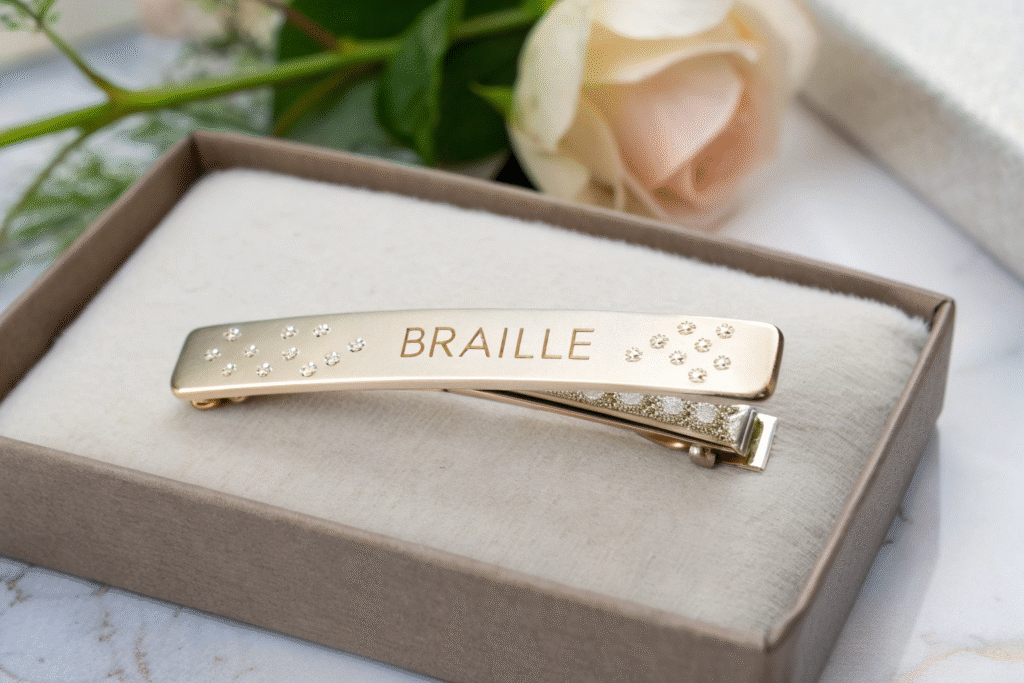
The development of Braille-engraved hair barrettes represents an exciting convergence of fashion accessibility and functional design. These innovative accessories serve both decorative purposes and practical communication tools, creating inclusive fashion options for visually impaired individuals while raising awareness about Braille literacy among sighted users.
Custom options for Braille-engraved hair barrettes include personalized message engraving, multiple Braille grade selections, various material choices, specialized finish options, and custom sizing configurations.These customization features allow for both personal expression and practical functionality, creating accessories that are truly tailored to individual needs and preferences. The most comprehensive customization programs offer end-to-end personalization from message translation to specialized packaging with Braille labels.
Understanding the full range of customization possibilities helps in creating meaningful, functional accessories that bridge fashion and accessibility. Let's explore the specific custom options available and how they enhance both usability and aesthetic appeal.
What Personalization Options Are Available for Braille Messages?
The core value of Braille-engraved barrettes lies in their ability to convey personalized messages through tactile reading. The customization process involves both technical translation and thoughtful design considerations.
Message personalization extends beyond simple text translation to include considerations of meaning, placement, and integration with the overall design aesthetic. The most successful designs balance readability with visual appeal.
How Does Message Translation and Customization Work?
Personal name engraving allows individuals to wear barrettes featuring their own names or the names of loved ones in Braille. Inspirational phrase inclusion offers pre-selected or custom positive affirmations, quotes, or meaningful phrases translated into Braille. Special date commemoration enables engraving of significant dates in Braille format, often combined with decorative elements. Secret message capability provides discreet communication that can be read tactilely but may not be visually obvious to sighted observers.
What Technical Considerations Guide Message Placement?
Character spacing optimization ensures proper tactile readability by maintaining standard Braille cell dimensions and spacing requirements. Message length accommodation varies by barrette size, with smaller barrettes accommodating shorter messages and larger designs allowing for phrases or multiple lines. Integration with decorative elements positions Braille messaging to complement rather than conflict with aesthetic design features. Orientation options allow for horizontal, vertical, or curved message placement based on user preference and barrette design.
What Material Choices Support Effective Braille Engraving?
Material selection significantly impacts both the durability of Braille characters and the overall aesthetic quality of the finished barrette. Different materials offer distinct advantages for tactile readability, longevity, and visual appeal.
The best materials for Braille engraving combine durability with precise character definition, ensuring that Braille dots remain clearly readable through extended use while maintaining their visual elegance.
Which Metals Provide the Best Engraving Results?
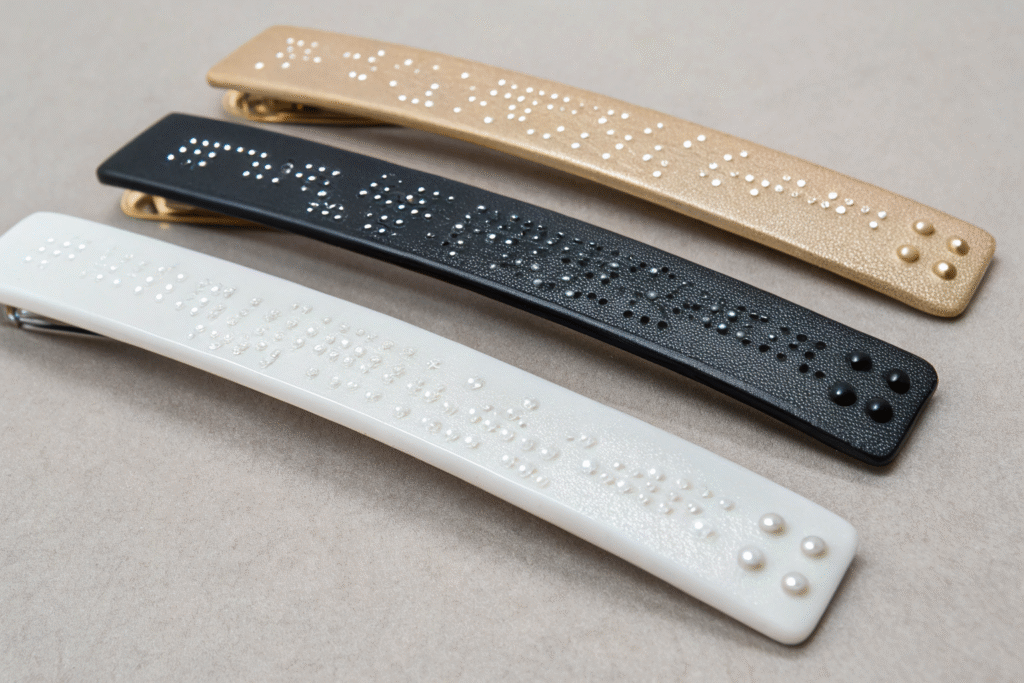
Surgical stainless steel offers excellent durability and precise engraving definition with resistance to tarnishing and corrosion. Sterling silver provides a premium appearance with good engraving precision and traditional jewelry appeal. Aluminum alloys offer lightweight options with good engraving clarity and anodized color possibilities. Bronze and brass develop attractive patinas over time while maintaining clear Braille character definition.
What Alternative Materials Work for Braille Barrettes?
Wood varieties including bamboo, maple, and walnut offer warm natural aesthetics with laser engraving capabilities for precise Braille characters. Acrylic and resin materials allow for vibrant color options and excellent contrast for visually impaired users with some sight. Sustainable materials like recycled metals, bio-resins, and certified woods appeal to environmentally conscious consumers. Composite materials combine multiple substances to achieve specific tactile or visual properties not available in single materials.
What Braille Specification Options Are Available?
Braille customization extends beyond simple message translation to include technical specifications that affect readability and user experience. These options accommodate different Braille reading preferences and proficiency levels.
Understanding Braille technical specifications ensures that engraved messages are accessible to the intended users while complying with established Braille standards.
How Do Braille Grade Options Differ?
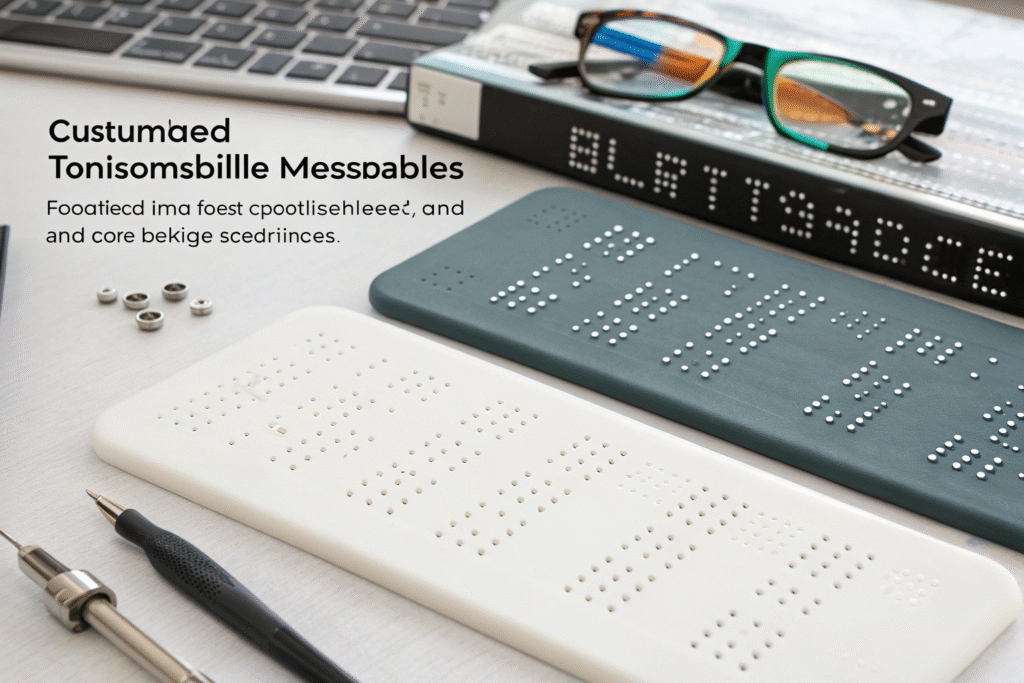
Grade 1 Braille uses full spelling of all words, making it ideal for beginners, children, or those with limited Braille proficiency. Grade 2 Braille incorporates contractions and abbreviations, following standard literary Braille conventions for faster reading. Unified English Braille (UEB) represents the current international standard, ensuring consistency across English-speaking regions. Technical Braille formatting includes specialized codes for mathematics, music, or computer notation when relevant to the message.
What Technical Specifications Ensure Readability?
Dot height and diameter adhere to official Braille standards (typically 0.5-0.9mm height) to ensure comfortable tactile recognition. Character spacing follows established specifications for inter-point and inter-cell distances to prevent reading errors. Dot shape precision maintains rounded, consistently formed characters without sharp edges that could cause discomfort. Base material contrast provides sufficient differentiation between Braille dots and the background material for users with limited vision.
What Functional and Accessibility Features Can Be Customized?
Beyond the Braille messaging itself, numerous functional and accessibility features can be tailored to individual needs and preferences. These customizations enhance usability for people with varying levels of vision and manual dexterity.
Thoughtful functional design ensures that Braille barrettes are not only meaningful but also practical and easy to use for people with visual impairments.
What Closure Mechanisms Enhance Usability?
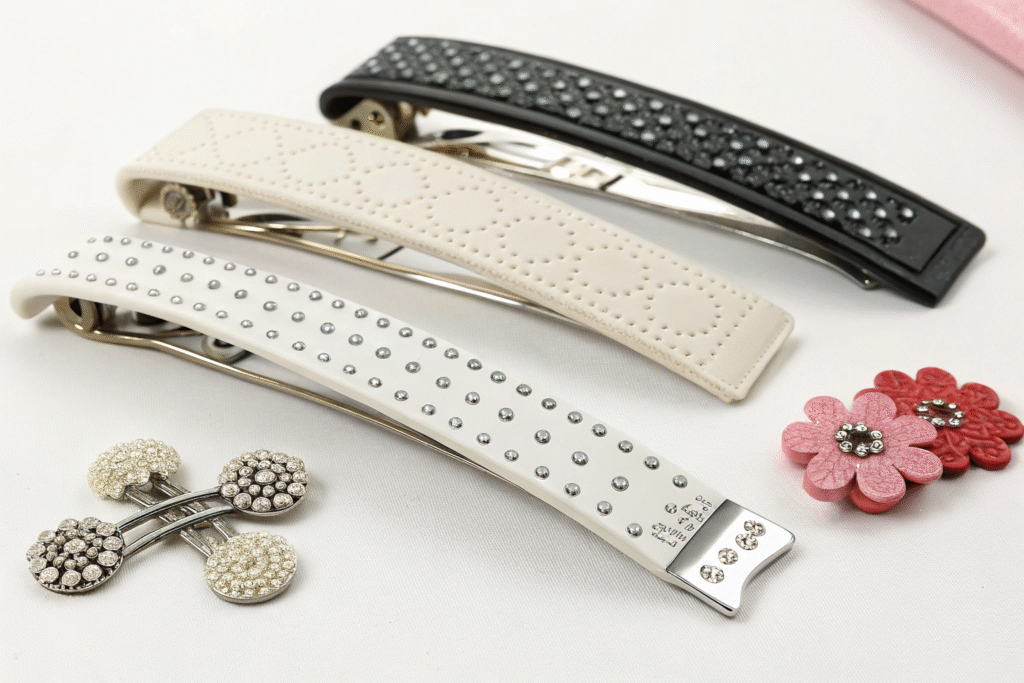
Magnetic clasps provide easy one-handed operation with audible click confirmation of secure fastening. Large-grip mechanical clasps offer tactile guidance and easier handling for users with limited fine motor skills. Slide locks with textured surfaces provide secure closure with clear tactile indicators of locked and unlocked positions. Elastic band alternatives to traditional clasps accommodate users who find mechanical closures challenging to operate.
How Can Additional Accessibility Features Be Incorporated?
Tactile orientation markers help users identify the correct positioning without visual assistance. Audible feedback mechanisms provide sound confirmation of secure closure. High-contrast color choices enhance visibility for users with partial sight. Non-slip grip surfaces prevent accidental dropping during handling and application.
What Finishing and Packaging Options Support Accessibility?
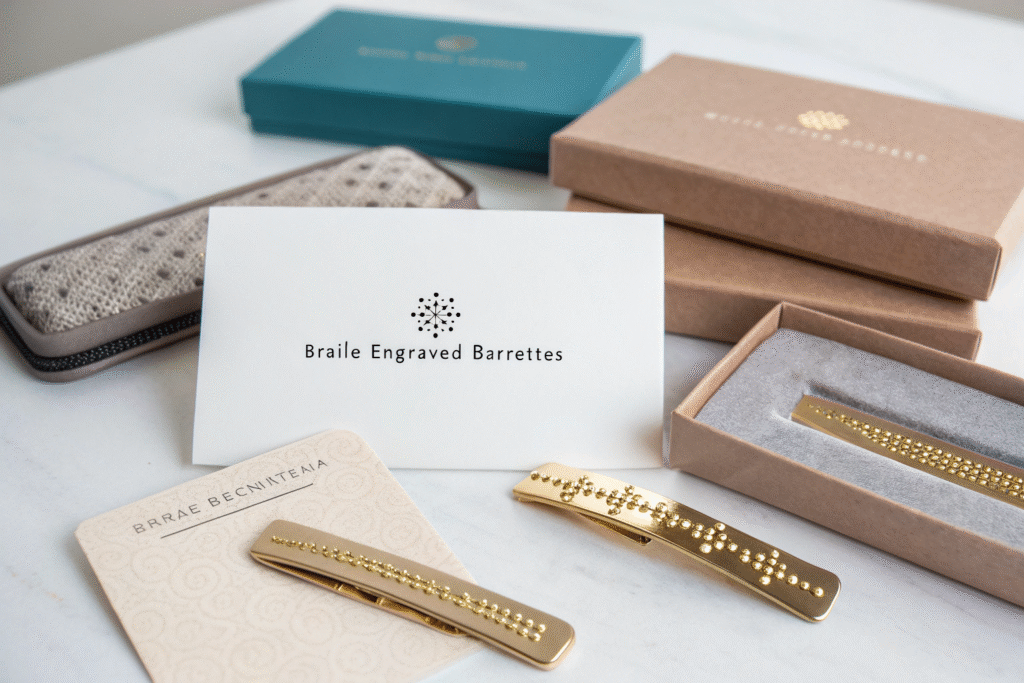
The customization experience extends to finishing touches and packaging that enhance both the presentation and accessibility of Braille-engraved barrettes. These elements contribute to the overall user experience from unboxing to daily use.
Comprehensive customization considers the entire product experience, ensuring that accessibility and personalization extend beyond the barrette itself to include packaging and supporting materials.
What Specialized Finishing Techniques Are Available?
Contrast enhancement creates clear visual differentiation between Braille dots and the background material. Protective coatings ensure durability of Braille characters while maintaining tactile clarity. Texture variation uses different surface finishes to create visual interest and additional tactile cues. Edge softening ensures all barrette edges are smooth and comfortable against the skin and hair.
How Can Packaging Be Made Accessible?
Braille labeling on packaging identifies contents and provides usage information without requiring sighted assistance. Tactile packaging elements help distinguish different barrette styles or messages through touch. Audio packaging options may include QR codes linking to audio descriptions or instructions. Easy-open packaging designs consider the challenges faced by users with visual impairments or limited dexterity.
Conclusion
Braille-engraved hair barrettes offer extensive customization options that span personal messaging, material selection, technical specifications, functional features, and accessibility considerations. The most successful designs balance aesthetic appeal with practical functionality, creating accessories that are both fashionable and meaningfully accessible.
By understanding the full range of customization possibilities, individuals and organizations can create Braille barrettes that serve as powerful tools for self-expression, awareness raising, and inclusive fashion. The thoughtful integration of Braille into hair accessories represents a significant step toward more inclusive fashion design that considers the needs of visually impaired individuals.
If you're interested in developing custom Braille-engraved hair barrettes, we specialize in accessible accessory design that combines fashion sensibility with practical functionality. Contact our Business Director, Elaine, at elaine@fumaoclothing.com to discuss your Braille barrette customization needs and request samples of our accessible design collections. We're committed to creating fashion that truly includes everyone.