
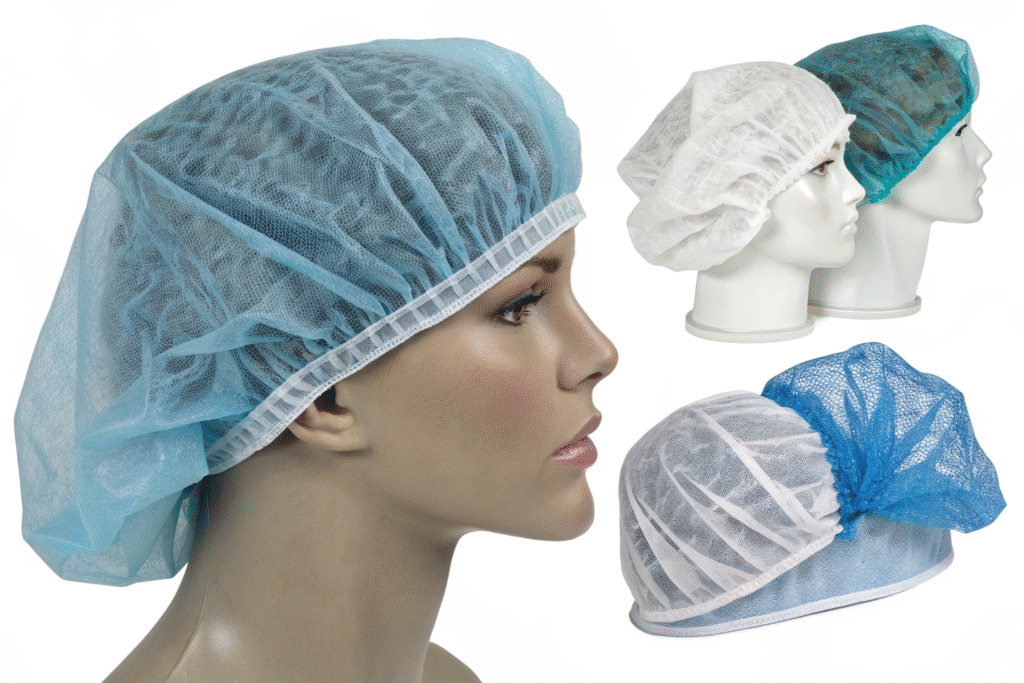
Hair containment represents a critical safety and hygiene requirement in both medical and food service environments. The consequences of hair contamination can range from regulatory violations and product recalls in food service to surgical site infections and cross-contamination in medical settings. Choosing the appropriate hair nets requires understanding the distinct requirements of each industry while recognizing their shared need for absolute reliability.
The best hair nets for medical and food service industries are single-use disposable bouffant caps made from non-woven polypropylene for general use, with spun-bound polypropylene for higher-risk areas, and breathable mesh designs for extended wear comfort. These materials provide the optimal balance of containment effectiveness, comfort, and compliance with industry-specific regulations. The most reliable hair nets feature elasticized bands for secure fit, full coverage designs that contain all hair types, and materials that minimize lint generation in sensitive environments.
Understanding the specific requirements of different applications within these industries helps select the most appropriate hair net solutions. Let's examine the key considerations and optimal choices for various medical and food service scenarios.
What Material Characteristics Define High-Quality Hair Nets?
The foundation of effective hair containment lies in material selection. Different environments demand specific material properties to ensure both protection and wearer comfort throughout extended shifts.
Quality hair nets balance multiple performance characteristics without compromising on the primary function of complete hair containment. The best materials address industry-specific concerns about contamination, comfort, and compliance.
Why is Non-Woven Polypropylene the Industry Standard?
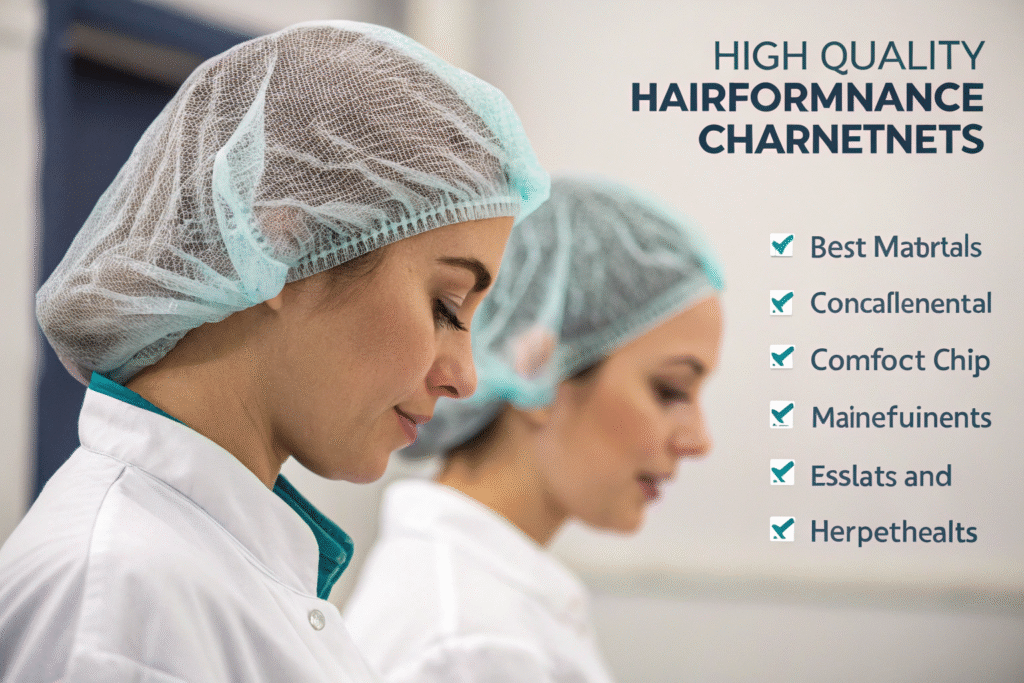
Non-woven polypropylene offers excellent breathability while providing reliable hair containment, making it suitable for extended wear in both medical and food service settings. The material's inherent static resistance minimizes airborne fiber release, crucial in environments where particulate contamination must be controlled. Its moisture resistance prevents saturation from perspiration while maintaining a professional appearance throughout long shifts. The cost-effectiveness of polypropylene makes single-use disposal practical for high-volume environments without compromising protection quality.
What Specialty Materials Address Specific Needs?
Spun-bound polypropylene provides enhanced strength and reduced linting for critical areas like surgical suites and pharmaceutical manufacturing clean rooms. Micro-porous films laminated to non-woven substrates create fluid-resistant barriers essential for procedures involving significant liquid exposure. Cotton-blend materials offer superior comfort for extended wear but require careful evaluation of lint generation and laundering protocols. Mesh constructions maximize airflow for hot kitchen environments while maintaining secure hair containment through precise engineering of aperture sizes.
How Do Medical Industry Requirements Differ from Food Service?
While both industries prioritize hair containment, their specific applications demand tailored solutions. Understanding these distinctions ensures appropriate product selection for each environment.
Medical applications often involve higher stakes regarding sterility and infection control, while food service focuses more on preventing physical contamination and meeting regulatory standards.
What Makes Surgical Hair Nets Unique?
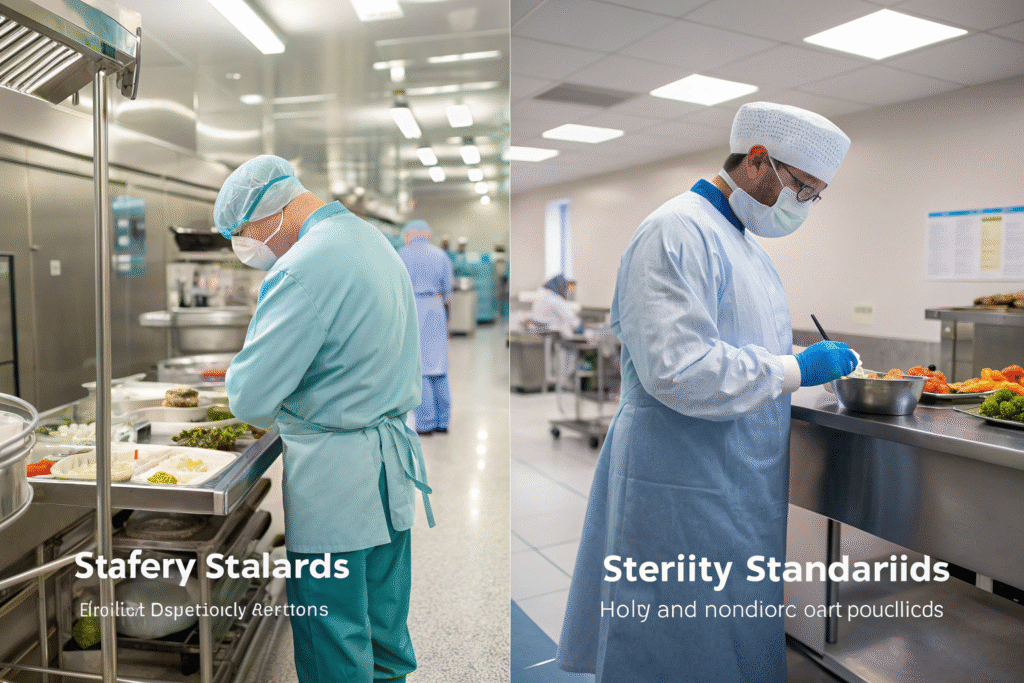
OR-approved bouffant caps provide complete peripheral coverage with secure neck and ear protection, addressing the heightened infection control requirements of surgical environments. Reinforcement at stress points ensures integrity during lengthy procedures and dynamic movements. Anti-static treatments prevent interference with sensitive electronic equipment while reducing airborne fiber contamination. High-visibility colors facilitate quick visual confirmation of proper hair containment among surgical team members.
How Do Food Service Requirements Influence Design?
Food service hair nets prioritize secure containment during vigorous activity and heat exposure common in commercial kitchens. Bright colors, often blue, enhance visibility for compliance monitoring and differentiate from food products. Extended back coverage addresses the particular concern of longer hair while maintaining comfort during repetitive kitchen motions. Chemical resistance to cleaning agents and food substances ensures durability throughout a complete shift despite environmental exposures.
What Regulatory Standards Govern Hair Net Selection?
Compliance with industry-specific regulations represents a non-negotiable requirement for hair net selection. Understanding these standards ensures both legal compliance and optimal protection.
Regulatory requirements evolve based on emerging research and incident analysis, making ongoing compliance monitoring essential for facilities management.

Which Food Industry Standards Apply?
FDA Food Code requirements mandate that food employees wear hair restraints that effectively contain all hair, with specific provisions for different food handling activities. HACCP programs often include hair containment as a critical control point in food safety plans, requiring documented compliance. ISO 22000 food safety management systems specify hair restraint requirements as part of prerequisite programs. Third-party audit standards like SQF and BRC include specific hair net requirements that must be met for certification.
What Healthcare Regulations Dictate Requirements?
AORN guidelines provide detailed specifications for surgical hair containment based on current evidence regarding surgical site infection prevention. Joint Commission standards include provisions for appropriate personal protective equipment, including hair covers in specified clinical situations. CDC recommendations address hair containment as part of standard precautions for infection control in healthcare settings. OSHA regulations may apply regarding personal protective equipment when hair contamination presents a workplace hazard.
What Design Features Enhance Effectiveness and Compliance?
Beyond basic material selection, specific design elements significantly impact the real-world effectiveness of hair nets in professional environments. These features address practical wearability concerns while ensuring consistent proper use.
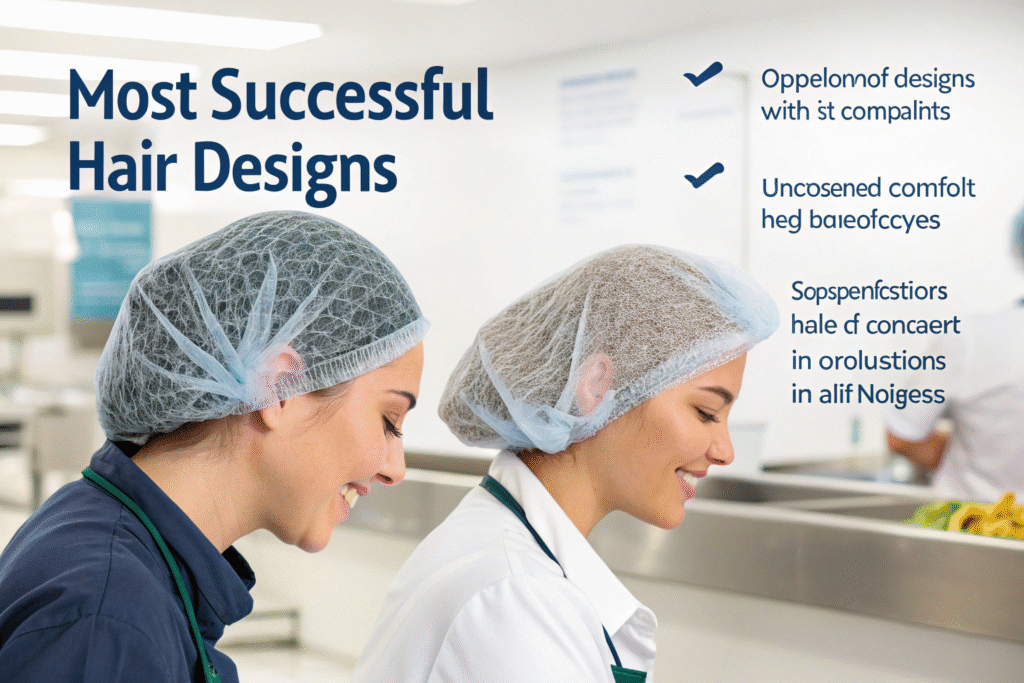
The most successful hair net designs anticipate common workplace challenges and user complaints, creating solutions that encourage compliance through improved comfort and convenience.
How Does Elastic Band Design Impact Wearability?
Wide, latex-free elastic bands distribute pressure evenly to prevent headaches and hairline irritation during extended wear. Multiple sizing options accommodate different head circumferences while ensuring consistent coverage across diverse workforces. Breathable elastic constructions reduce heat buildup and moisture accumulation at the hairline. Secure but comfortable tension maintains position without requiring frequent adjustment during dynamic work activities.
What Coverage Innovations Address Common Gaps?
Extended nape coverage captures shorter hairs at the neckline that often escape standard designs. Temple and sideburn containment features address the common failure point of shorter facial framing hairs. Forehead barriers prevent hair escape from the front hairline during downward head movements. Volume accommodation designs expand to contain thick or abundant hair without excessive pressure or visible distortion.
How to Evaluate Hair Net Performance and Quality?
Systematic evaluation ensures selected hair nets meet both performance requirements and cost considerations. A structured assessment approach identifies the optimal balance of protection, comfort, and value.
Quality assessment should simulate real-world conditions rather than relying solely on manufacturer specifications or standardized laboratory tests.

What Performance Metrics Matter Most?
Containment effectiveness should be verified using standardized testing with different hair types, lengths, and styles representative of the actual workforce. Donning and doffing ease impacts compliance, with optimal designs allowing quick application without mirrors or assistance. Shift-long comfort determines consistent wear, requiring assessment of pressure points, heat buildup, and irritation potential. Material integrity must withstand typical workplace movements and environmental exposures without tearing or losing containment effectiveness.
How Should Cost-Effectiveness Be Assessed?
Total cost of ownership calculations should include not just per-unit pricing but also compliance rates, replacement frequency, and storage requirements. Workforce acceptance directly impacts compliance, making user preference an important economic consideration despite being difficult to quantify. Regulatory compliance costs including audit preparation and potential violation consequences must be factored into the overall value assessment. Supply chain reliability affects operational continuity, making supplier stability and inventory management factors in the procurement decision.
Conclusion
Selecting the best hair nets for medical and food service industries requires balancing regulatory compliance, protection effectiveness, wearer comfort, and economic considerations. The optimal choice varies based on specific applications within these industries, with surgical environments demanding the highest level of containment while food service must address heat and activity challenges.
By understanding material properties, design features, regulatory requirements, and performance evaluation methods, facilities can implement hair containment programs that protect their products and patients while maintaining workforce cooperation. The most successful programs involve end-users in the selection process and provide education about the importance of consistent, proper hair net usage.
If you're seeking hair net solutions tailored to your specific medical or food service requirements, we offer comprehensive hair containment products meeting the highest industry standards. Contact our Business Director, Elaine, at elaine@fumaoclothing.com to discuss your specific needs and request samples of our medical and food service hair net collections. We combine regulatory expertise with practical wearability to create solutions that ensure compliance and protection.