
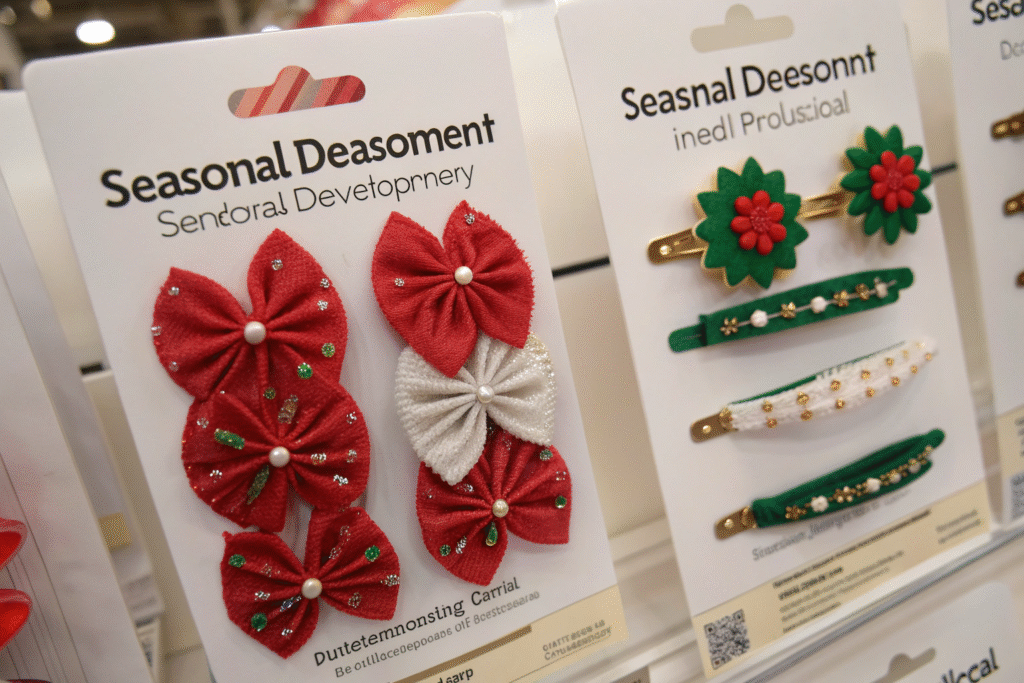
Seasonal hair accessories like festive barrettes present unique challenges for inventory management and minimum order quantity (MOQ) planning. The compressed selling window, unpredictable demand patterns, and fashion sensitivity require specialized approaches that balance risk mitigation with opportunity capture.
Successful MOQ strategies for seasonal items combine flexible manufacturing partnerships, phased ordering systems, and creative product development that extends shelf life beyond the core season. The most effective approaches recognize that seasonal doesn't have to mean single-use, transforming limited-time products into versatile accessories with year-round appeal through smart design and marketing strategies.
How can manufacturers offer flexible MOQs for seasonal items?
Manufacturers have developed innovative approaches to accommodate the unique needs of seasonal hair accessory businesses while maintaining production efficiency.
Progressive manufacturers now offer tiered MOQ systems that combine core seasonal designs with customizable elements. This allows smaller initial orders while maintaining production efficiency. Many factories also implement shared production slots where multiple clients' seasonal items are produced in the same manufacturing cycle, reducing individual MOQ requirements. The most flexible partners provide modular designs where basic components are manufactured in larger quantities, with seasonal customization added in smaller batches.
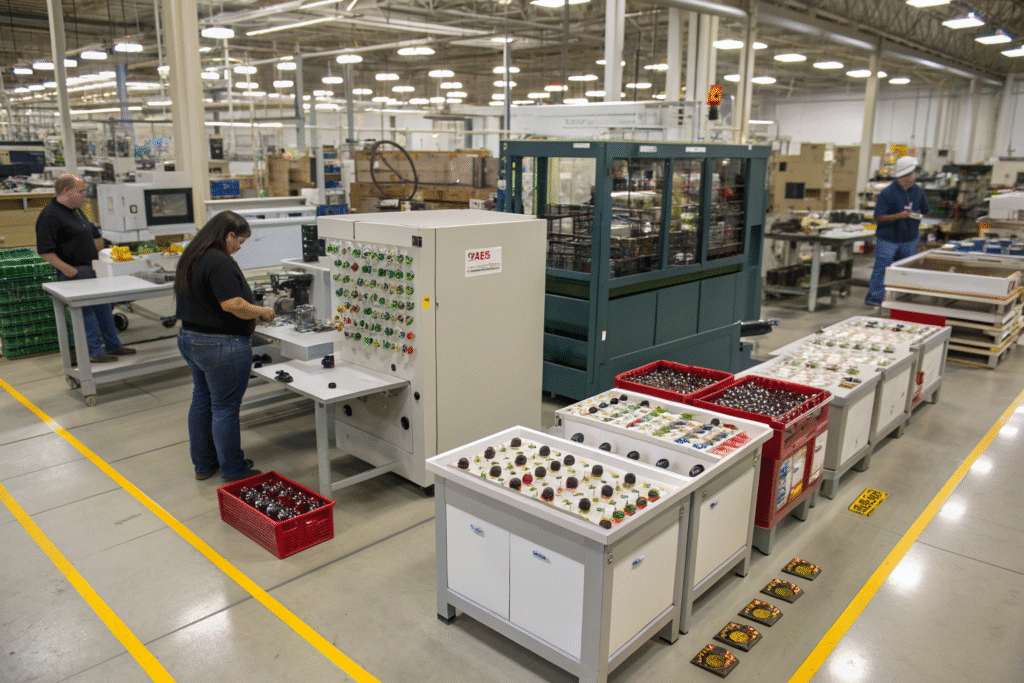
What are tiered MOQ systems?
Tiered MOQ systems allow buyers to order different quantities at varying price points. For festive barrettes, this might mean MOQ of 500 pieces for basic designs, 300 pieces for mid-range styles with simple seasonal elements, and as low as 100 pieces for highly customized premium designs. This approach enables buyers to test multiple designs without overcommitting to any single style. Manufacturers benefit from maintaining efficient production runs while offering accessibility to smaller seasonal businesses.
How do shared production slots work?
Shared production slots combine orders from multiple buyers for similar products within the same manufacturing cycle. For example, a factory might produce red and green barrettes for several Christmas collections simultaneously, with each buyer receiving their specific design variations. This approach significantly reduces individual MOQs while maintaining cost-effective production volumes. The key is finding manufacturers who specialize in seasonal items and have established systems for managing multiple client orders within coordinated production schedules.
What inventory strategies minimize seasonal risk?
Smart inventory management transforms seasonal hair accessories from high-risk investments into manageable business opportunities.
The most effective inventory strategies combine conservative initial orders with rapid replenishment systems. This approach involves ordering 40-60% of projected seasonal demand upfront, with pre-negotiated replenishment terms for fast-turnaround additional production. Successful businesses also implement pre-order systems that gauge customer interest before committing to full production quantities. Additionally, designing festive barrettes with elements that can be easily modified for other seasons extends their selling potential.
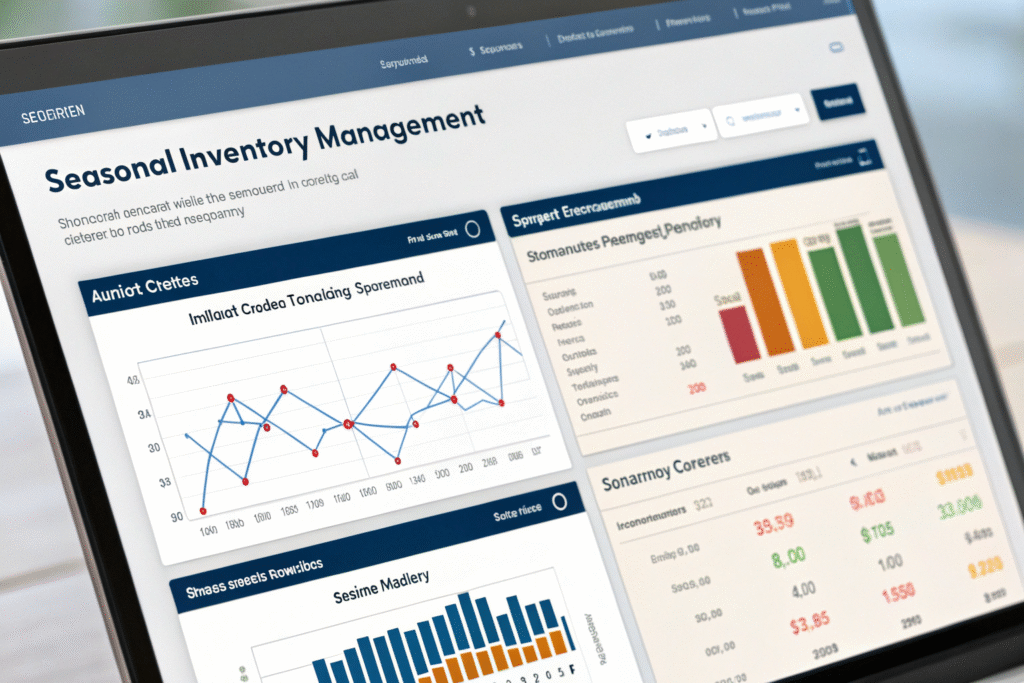
How do pre-order systems reduce inventory risk?
Pre-order systems allow businesses to test market demand before committing to full production quantities. By launching seasonal collections 2-3 months in advance with attractive pre-order pricing, companies can gauge customer interest and adjust initial order quantities accordingly. This approach is particularly effective for festive barrettes where design appeal can be highly subjective. The data collected from pre-orders provides valuable insights for refining marketing strategies and production planning.
What makes designs seasonally versatile?
Seasonally versatile barrettes incorporate festive elements in ways that can be reinterpreted for other occasions. For example, a Christmas barrette with removable holiday charms can transition to everyday wear by simply changing the decoration. Designs that use color schemes and motifs that work across multiple seasons—like gold accents that work for both Christmas and New Year's—extend the selling window significantly. The most successful designs maintain their seasonal appeal while offering enough versatility to justify purchase for regular use.
How can product development extend seasonal relevance?
Strategic product development transforms limited-season items into year-round revenue generators through smart design choices and marketing angles.
The most successful seasonal barrette collections incorporate design elements that transcend their original seasonal context. This includes creating pieces that work for multiple holidays within a season, designing with materials and colors that transition well between seasons, and developing styling options that demonstrate year-round wearability. Additionally, limited edition releases and collectible series create urgency while maintaining manageable production quantities.
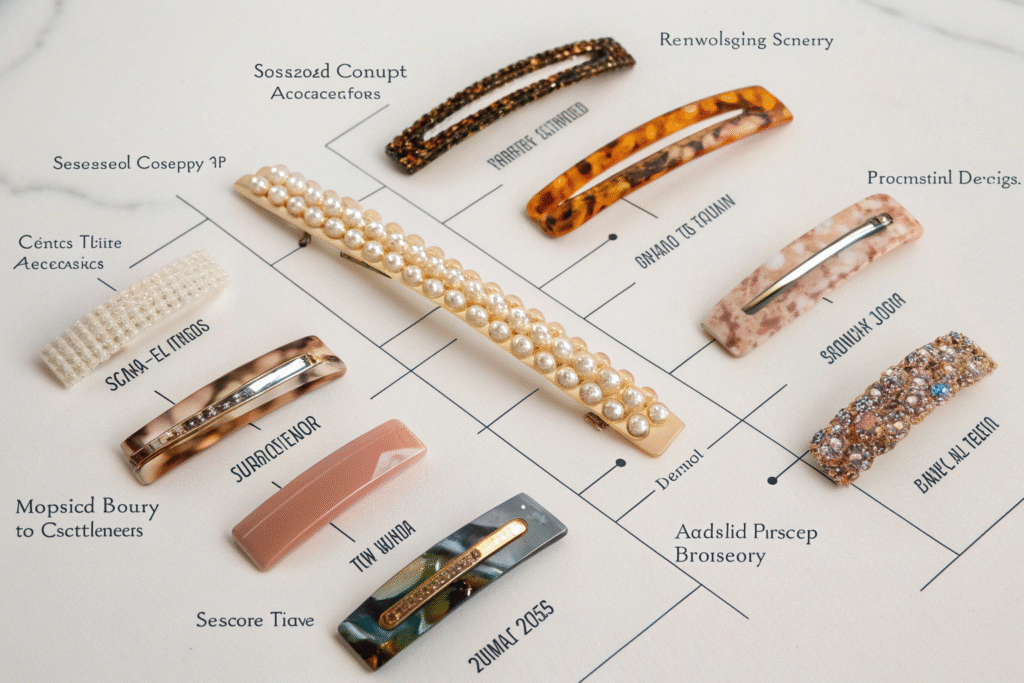
What design elements support cross-season appeal?
Cross-season designs incorporate seasonal colors in ways that work year-round. For example, red barrettes can transition from Christmas to Valentine's Day to Fourth of July with appropriate styling and marketing. Designs that feature modular elements—like interchangeable decorations or reversible color options—significantly extend product lifespan. The most versatile pieces use seasonal accents as enhancements rather than the entire design focus, allowing them to work in different contexts with simple styling changes.
How do limited editions manage MOQ effectively?
Limited edition releases create scarcity and urgency that supports smaller production quantities. By marketing festive barrettes as collector's items or series pieces, businesses can maintain higher perceived value while working with manageable MOQs. This approach allows for testing multiple designs in smaller quantities, with successful styles potentially becoming core products in future seasons. The limited availability actually enhances appeal while reducing inventory risk.
What manufacturing partnerships support seasonal flexibility?
The right manufacturing relationships are crucial for navigating the unique challenges of seasonal hair accessory production.
Manufacturers who specialize in seasonal items typically offer faster turnaround times, more flexible order quantities, and experience with the specific demands of time-sensitive production. The most valuable partners provide design assistance to optimize products for efficient manufacturing, maintain buffer stock of common materials, and offer realistic timelines that account for seasonal production peaks. Building long-term relationships with these specialists provides priority access during busy periods.

What should seasonal businesses look for in manufacturers?
Ideal manufacturing partners for seasonal items demonstrate proven experience with similar products, transparent communication about capacity constraints, and flexibility in accommodating last-minute changes. They should offer realistic production timelines that account for seasonal rush periods and provide clear documentation of their quality control processes. The best partners also help optimize designs for manufacturing efficiency without compromising aesthetic appeal.
How do long-term partnerships benefit seasonal production?
Long-term manufacturing relationships provide priority scheduling during peak seasons, better pricing through established trust, and more flexible payment terms that ease cash flow during intensive production periods. Manufacturers who understand a business's seasonal patterns can proactively plan capacity and material procurement, reducing lead times when they matter most. These relationships often evolve to include collaborative product development that specifically addresses seasonal business challenges.
How can marketing extend seasonal product lifespan?
Creative marketing strategies transform seasonal hair accessories from single-purpose items to versatile fashion staples.
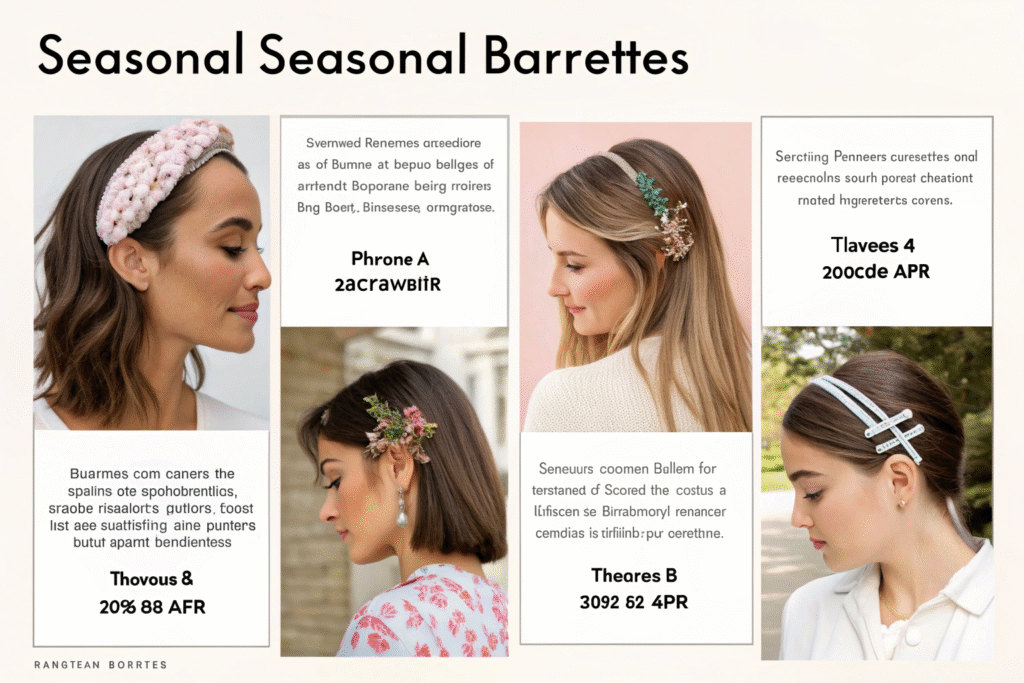
Strategic marketing focuses on demonstrating multiple use occasions, styling variations, and seasonal transitions that maximize each design's potential. This includes creating content that shows how festive barrettes can be worn beyond their original seasonal context, developing styling guides that highlight versatility, and timing promotional campaigns to reinforce different use occasions throughout the year. Limited-time offers and bundle strategies also help move inventory while maintaining brand value.
What content demonstrates product versatility?
Effective content shows festive barrettes in multiple styling contexts beyond their original seasonal intention. This includes tutorials showing how Christmas barrettes can be worn for birthday celebrations, date nights, or even professional settings with appropriate styling. User-generated content campaigns that encourage customers to share their own creative uses provide authentic demonstrations of versatility while building community engagement.
How do bundle strategies support MOQ management?
Bundle strategies combine slower-moving seasonal items with popular core products to maintain inventory movement while supporting efficient MOQs. For example, pairing a festive barrette with best-selling basic styles creates value while moving seasonal inventory. Limited-time bundles create urgency without devaluing individual products. This approach allows businesses to maintain production efficiency while ensuring seasonal items don't become dead stock.
Conclusion
Successful MOQ strategies for seasonal hair barrettes require balancing production efficiency with inventory risk management. The most effective approaches combine flexible manufacturing partnerships, strategic product development that extends seasonal relevance, and creative marketing that demonstrates year-round versatility.
By implementing tiered MOQ systems, conservative initial ordering with rapid replenishment capabilities, and designs that transition across multiple seasons, businesses can maximize seasonal opportunities while minimizing financial exposure. The key lies in treating seasonal items as part of a broader product ecosystem rather than isolated limited-time offerings.
Ready to develop your seasonal hair barrette collection with optimized MOQ strategies? Contact our production team at production@hairacc.com to discuss flexible manufacturing solutions and inventory strategies tailored to seasonal business needs.