
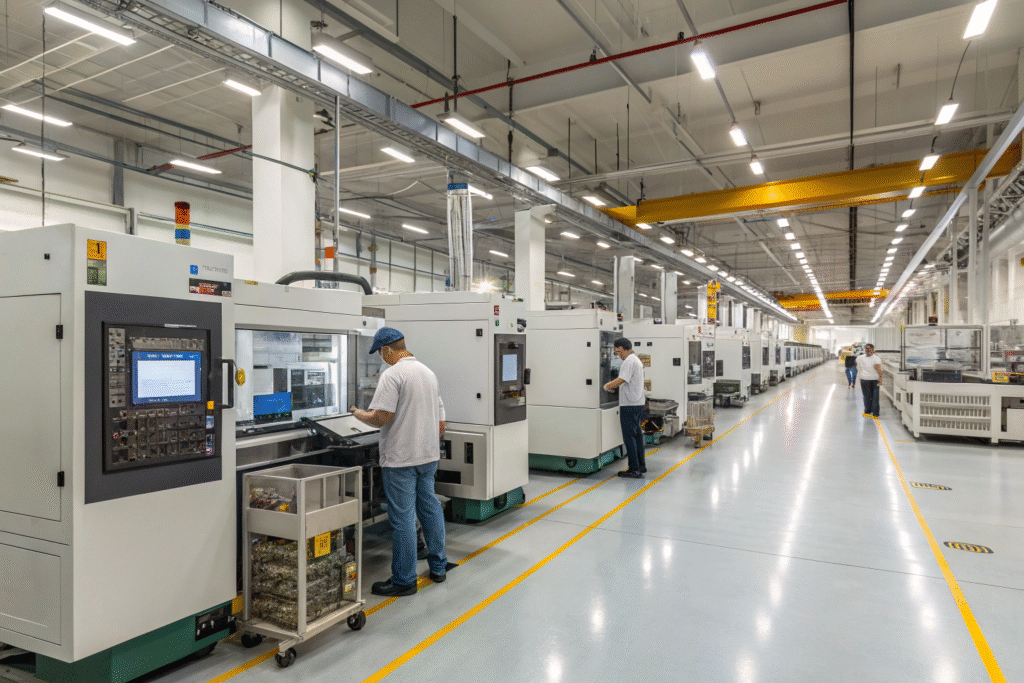
When barrette manufacturers struggle with delays, poor visibility, or unexpected downtime, their businesses lose orders and damage customer trust. Buyers, especially in Europe and the US, now expect reliable delivery and consistent quality. Without effective production monitoring, factories often face wasted resources, rising costs, and difficulty in scaling.
Manufacturers implement real-time production monitoring for barrettes by combining IoT sensors, MES software, dashboards, and predictive analytics to track every step of production, reduce downtime, and ensure quality.
To stay competitive, especially with fast-moving trends in the fashion accessories market, real-time monitoring is no longer optional. It allows manufacturers like us to optimize production flow, improve efficiency, and meet strict international buyers’ demands while reducing risks of missed deadlines.
What Is Real-Time Production Monitoring in Manufacturing?
When factories produce thousands of barrettes daily, they need a system that tells them exactly what is happening on each machine at every moment. Without this, managers rely on manual reporting, which is slow and inaccurate. This problem leads to late deliveries and poor decision-making.
Real-time production monitoring in manufacturing is the use of IoT sensors, MES software, and dashboards to track machine status, production counts, cycle times, and quality metrics instantly, instead of waiting for manual reports.
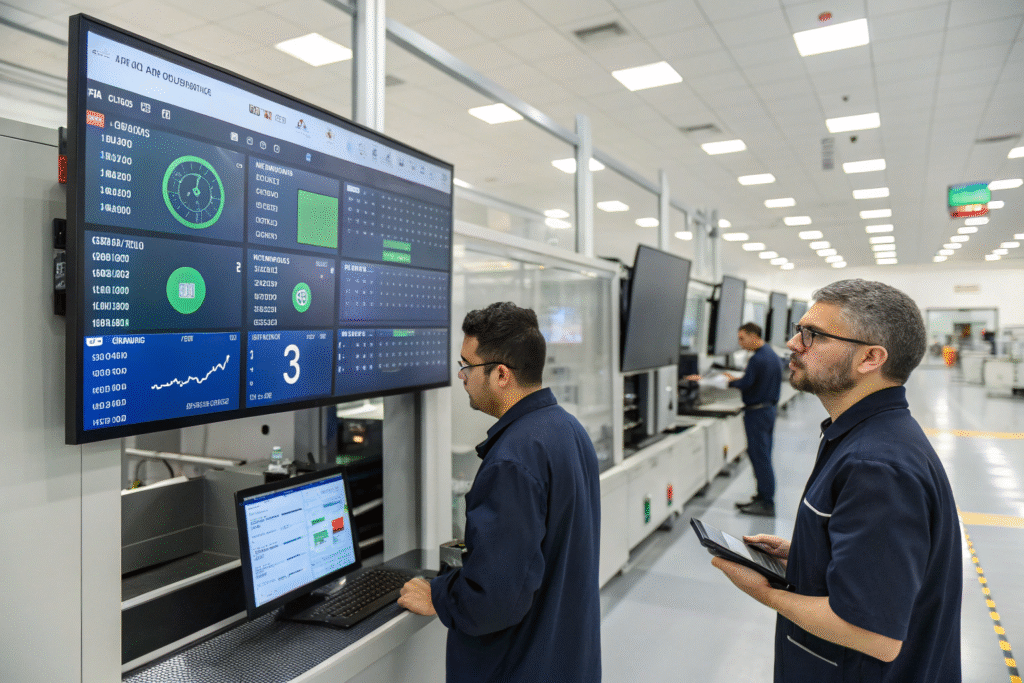
Real-time systems reduce guesswork. They show whether machines are running, if operators are efficient, or if materials are running low. This makes production transparent and gives managers power to act quickly.
Why Do Hair Accessory Manufacturers Need Real-Time Data?
Buyers today want on-time delivery and consistent quality. If a barrette shipment arrives late, retailers lose sales. Real-time data helps factories avoid bottlenecks by giving alerts when machines stop or slow down. For example, platforms like MachineMetrics allow managers to track machine health and respond instantly. Another useful solution is MTConnect, which makes communication between machines and monitoring systems easier.
How Does MES Improve Barrette Production Efficiency?
Manufacturing Execution Systems (MES) help manage the entire shop floor. With MES, managers know which order is running, which operator is working, and how many barrettes are complete. Solutions like DMeXPro MES or Siemens Opcenter are widely used in accessories production. For barrettes, this means faster delivery schedules, better control of raw materials, and fewer delays.
How Do IoT Sensors Support Barrette Production Lines?
In traditional factories, operators had to manually record how many barrettes they produced. This was slow and caused mistakes. IoT sensors now automate this process by collecting live data directly from machines.
IoT sensors support barrette production by monitoring machine status, cycle time, temperature, and output, then sending this data in real time to dashboards for managers to analyze.
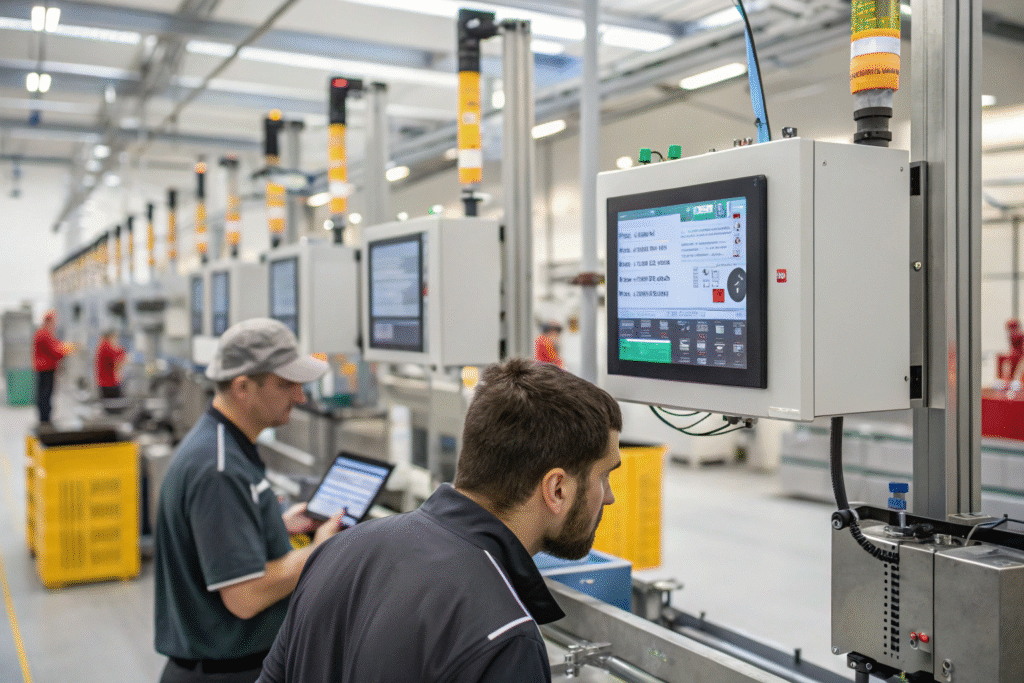
Factories that use IoT avoid downtime because the system alerts managers when a machine overheats or stops. This prevents waste and ensures stable production.
What Are the Benefits of Using IoT in Hair Accessory Manufacturing?
IoT improves efficiency and product quality. For barrettes, where small decorative parts are sensitive, sensors ensure accurate production. TechRadar explains that IoT systems also help with predictive maintenance. This means machines are repaired before they break down, reducing unexpected stoppages. Another benefit is integration with ERP systems that connect production with finance and logistics.
How Can IoT Reduce Downtime in Barrette Production?
Downtime is expensive. For every minute a molding machine stops, hundreds of barrettes are delayed. IoT sensors track machine behavior and send alerts when performance drops. Platforms like P3 Adaptive show how real-time alerts allow managers to respond faster. Another option is using AI-based predictive monitoring, which detects early warning signals before breakdowns occur.
How Do Dashboards and Analytics Improve Production?
Factories collect a lot of data, but if managers cannot see it clearly, it is useless. Dashboards and analytics give a simple view of complex operations.
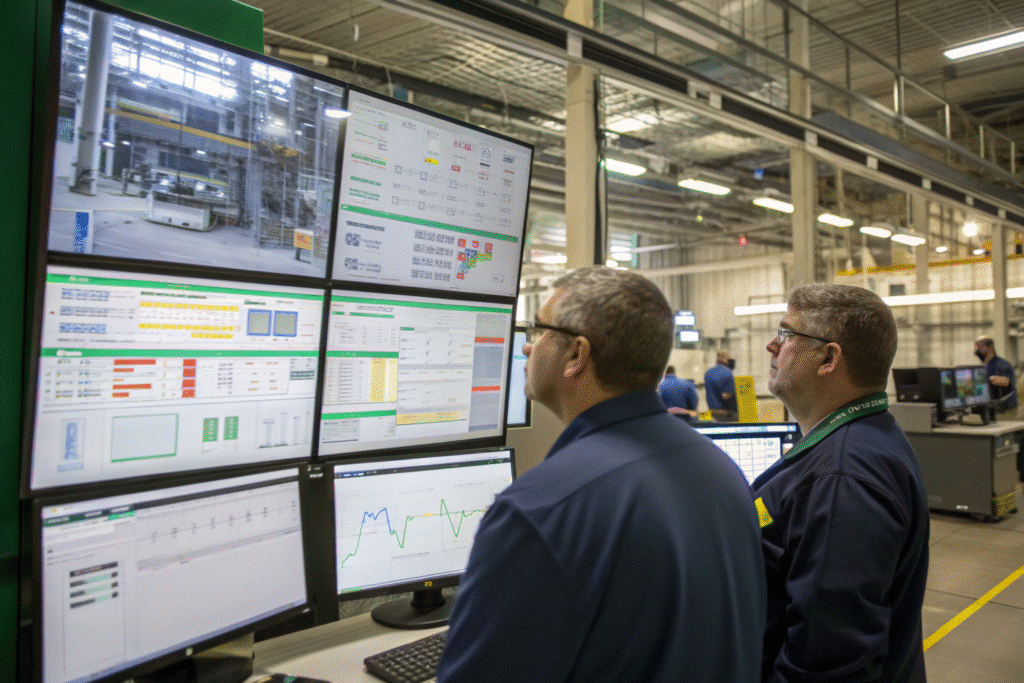
Dashboards and analytics improve production by showing real-time KPIs such as OEE, output, scrap rates, and downtime on a single screen, allowing managers to take action quickly.

These dashboards can be customized. A barrette factory can display machine status, number of barrettes produced per shift, and error rates in decoration lines.
Why Are Real-Time Dashboards Important for Barrette Production?
With real-time dashboards, managers know exactly what is happening. If one machine is slower, they can balance workload. Companies like ERP Today show how dashboards reduce bottlenecks. Another tool, Inspection Managing, highlights that dashboards help identify quality issues early. For barrette makers, this avoids defective shipments.
How Do Predictive Analytics Support Barrette Manufacturing?
Predictive analytics uses AI to forecast machine problems or quality defects. For example, if a cutting machine produces slightly longer cycle times, the system predicts possible failure. Tools like Academia Research show how AI improves predictive maintenance. Another platform, CRM Programmer ERP, offers solutions for hair accessory manufacturers to analyze production patterns.
What Challenges Do Manufacturers Face in Real-Time Monitoring?
Although real-time monitoring helps, manufacturers face challenges in adopting these systems. Cost, integration, and data security are the most common issues.
Manufacturers face challenges such as high initial investment, integrating IoT with old machines, managing big data, ensuring cybersecurity, and training staff to adapt.
Factories must balance cost and benefit. While initial investment is high, long-term savings in efficiency and reduced downtime make it worth the effort.
What Are the Cost Barriers to Real-Time Monitoring in Factories?
Installing IoT sensors and MES systems requires money. Many small accessory factories hesitate. However, platforms like DMeXPro offer modular systems that reduce cost. P3 Adaptive also explains that cloud-based monitoring helps reduce hardware investment. For barrette makers, choosing scalable solutions helps manage budgets.
How Do Factories Overcome Data Security Risks?
Since real-time systems connect machines to networks, cybersecurity is a major concern. Hackers can attack factory systems. TechRadar reports that many companies fail to secure industrial data. Solutions include encrypted communication and multi-layered firewalls. MTConnect also provides safer open standards for machine connectivity.
Conclusion
Real-time production monitoring is transforming barrette manufacturing. By combining IoT sensors, MES software, dashboards, and predictive analytics, factories achieve higher efficiency, better quality, and reliable delivery. Although challenges like cost and data security exist, the benefits far outweigh the risks.
If you are considering outsourcing barrette or head accessory production, we at Shanghai Fumao can help. With our advanced monitoring systems, large-scale factory, and global export experience, we ensure your orders are produced efficiently and delivered on time. For custom designs and bulk orders, please contact our Business Director Elaine at elaine@fumaoclothing.com to discuss your project.